
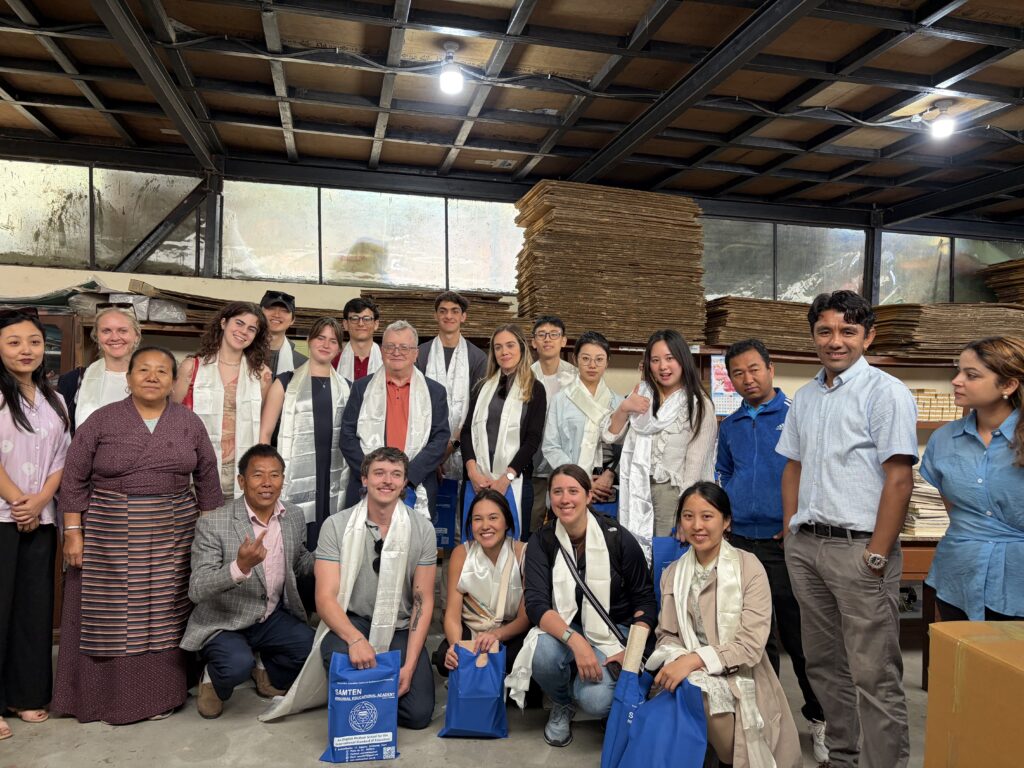
A couple of months ago, as part of the LBS Global Business Experience, I spent a week in Kathmandu – an immersive week exploring entrepreneurship. Nepal is not even considered an emerging market; it is classified as a frontier market, meaning its financial markets are still in the earliest stages of development, with limited access to capital, lower liquidity, and fewer institutional investors. The country is also one of the most remittance-dependent economies in the world, with roughly a quarter of its GDP coming from money sent home by Nepalese working abroad1, underscoring the shortage of domestic economic opportunities.
Coming from an emerging economy myself, I knew some of the struggles a company may face. But the reality in Nepal is entirely different. Entrepreneurship in frontier markets is not easier because the rules are fewer. It is harder because you have to build the rules yourself. And yet, across every founder I met that week, the ambition to grow was always accompanied by something harder to quantify: a sense of responsibility toward the communities and environment they operate in.
Handicraft and Paper
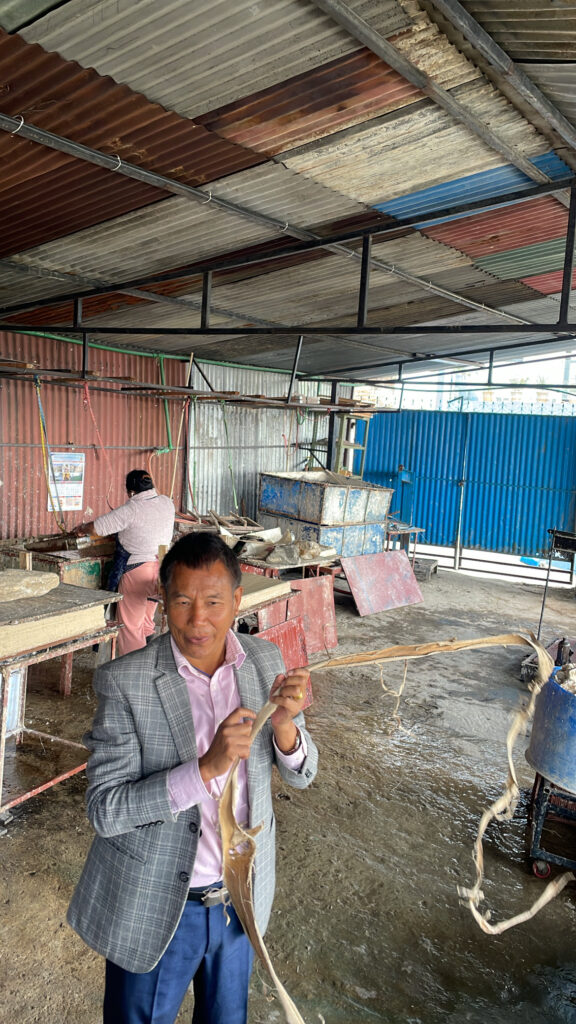
As part of the week’s schedule, we visited Tibetan Handicraft & Paper, a traditional producer navigating the tension between modernising for international growth and preserving the centuries-old craft that makes them unique. Established in 1995, they export handmade paper to markets across Europe, North America, and Japan – which is quite an ambition for a company in a space with limited infrastructure and scarce capital. But what impressed me most was their commitment to doing it responsibly.
Their paper is made from the bark of the Lokta shrub, a plant native to Nepal’s Himalayan forests that regenerates naturally after harvesting, making it entirely tree-free and biodegradable. Production is largely manual (sheets formed by hand, dried in the sun) keeping energy use low and the process close to its traditional roots. And one of the things they were most proud of was something that rarely makes it into a pitch deck: the fact that for decades, their work has supported the livelihoods of rural artisans in Himalayan communities, preserving a craft that might otherwise disappear.
A Business Built on Difficult Terrain
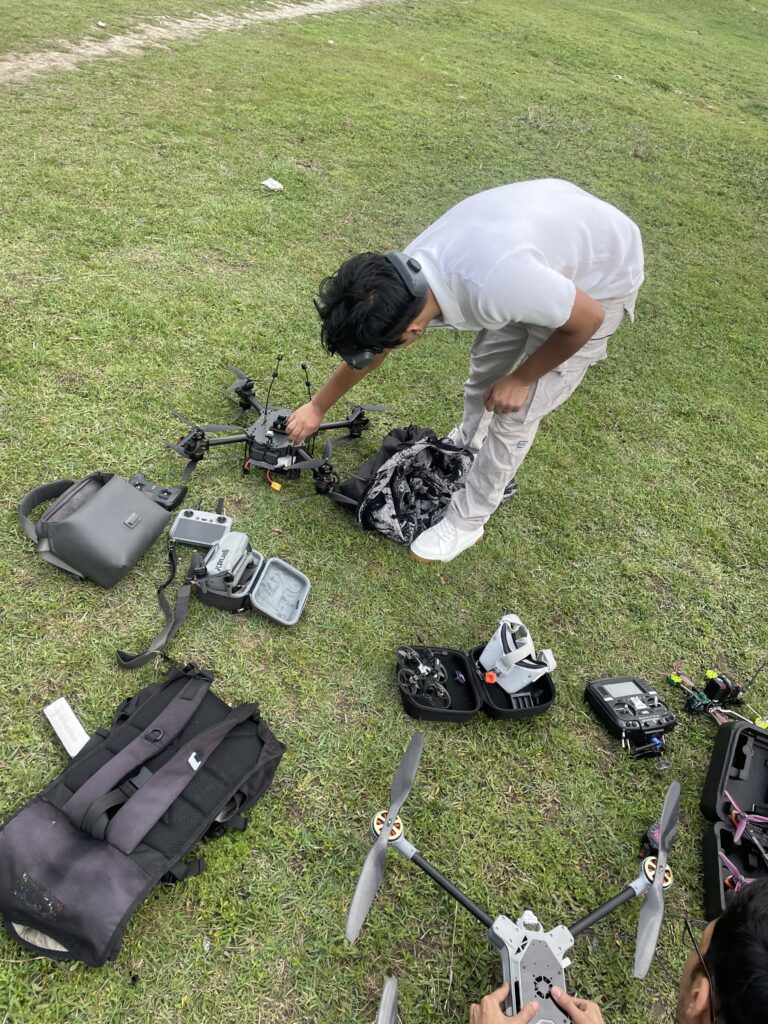
During the week, we also worked directly with GarudX, a Kathmandu-based drone startup that builds and operates drones in the extreme conditions of the Himalayas. GarudX is Nepal’s first drone manufacture, making it a true first mover in the industry. That alone is noteworthy. Competing against Chinese and Indian hardware in a regulatory environment that is still taking shape, with fragile roads, limited infrastructure, scarce capital(Nepal’s GDP per capita stands at approximately $1,1802 ),and no domestic drone industry to lean on, is already a remarkable undertaking.
But what caught my attention was not the business model. It was what Adarsha and Avash, founder and CEO respectively, are building toward: a vision to use drone technology to solve real, recurring problems in their own community and across the Himalayas. That vision has two faces: one pointed at the mountains, and one at the emergencies that Nepal faces every year.
The Waste Problem in the Mountains
Every trekking and expedition season, tens of thousands of visitors traverse some of the world’s most remote terrain, leaving behind empty oxygen cylinders, food wrappers, plastic packaging, and other expedition debris at altitudes where conventional collection is either prohibitively expensive or physically impossible. More than 50 metric tons of waste are estimated to remain on Everest alone3. The Sagarmatha Pollution Control Committee (SPCC) and other conservation organisations have long been active in waste management across the region, but the fundamental logistics challenge persists: getting waste down from high-altitude camps is dangerous, costly, and heavily reliant on manual human effort.
Drone operators have begun addressing part of this problem: supply delivery by drone is already happening in the Everest region, reducing dangerous porter trips. But the platforms currently deployed are general-purpose commercial systems, built for versatility rather than for altitude. They perform reasonably well at the lower camps, but thin air, cold, and wind push them toward limits that are hard to engineer around. GarudX, a company still carving out its own commercial path in a difficult market, chose to turn its attention to this problem anyway. Their bet is that designing specifically for Himalayan conditions, rather than adapting existing systems, produces a fundamentally different aircraft.
Their insight is straightforward: if drones are already flying up with useful supplies, they should not come back empty. The return leg (currently wasted) could carry waste down instead. In one move, the same flight becomes twice as useful, and the marginal cost of high-altitude waste collection falls significantly. Flying at altitude is technically demanding, so making the most of every flight is not just good logistics; in this environment, it is an engineering imperative.
The project is currently in the prototype and testing phase. However, the instinct behind it – to look at an existing system and ask how it could do more – extends well beyond the mountains.
Drones in Emergency Response
Nepal’s geography (steep terrain, remote villages, narrow river valleys, and mountain ridgelines that cut communities off from one another) creates emergency situations where conventional response is too slow and too dangerous. Floods and landslides have claimed over 10,000 lives in the past three decades, accounting for nearly 70% of all climate-related disaster mortality in the country4, and the 2024 monsoon season alone resulted in almost 250 deaths and over 17,000 people rescued5. Every monsoon season, roads are blocked, bridges destroyed, and entire villages left unreachable for days, often delaying life-saving assistance.
In this context, drones are beginning to play an increasingly important role in disaster response. GarudX has been working with Nepal Police and government stakeholders to develop SkyDrop SAR, a drone-mounted payload delivery system capable of transporting essential rescue items (including life jackets, ropes, medicines, food, and communication devices) to people stranded in locations that are inaccessible or unsafe for rescue teams.
Rather than replacing conventional rescue operations, the system is designed to provide immediate assistance while responders make their way to the scene.
The initiative also reflects a broader evolution within Nepal’s drone ecosystem. While much of the underlying technology has historically been imported, local companies are increasingly adapting and developing solutions around Nepal’s own operational realities. Designing systems for steep terrain, remote communities, and recurring climate-related disasters can make them better suited to local conditions, while gradually building domestic engineering capabilities. As climate risks intensify, this combination of local knowledge and technical expertise may become an increasingly important component of Nepal’s disaster resilience.
Looking ahead, GarudX sees this as part of a broader effort to strengthen Nepal’s capacity to respond to its own challenges. As the founders put it: “The goal is to create a system where Nepal does not need to wait for outside technology every time there is a difficult mountain emergency, environmental problem, or logistics challenge”.
Looking Ahead
What stayed with me most was not any single technology or business model, but the way commercial ambition and social purpose seemed to reinforce one another. Despite operating in a market where capital is scarce and the challenges are immediate; the founders I met were equally focused on building successful businesses and creating value for the communities and environments in which they operate.
Perhaps that is the broader lesson. Innovation does not always begin with abundant capital or the world’s largest markets. Sometimes it begins with a deep understanding of local problems – and a commitment to solving them in ways that create value not only for customers, but also for the communities and environments in which they operate. As climate and development challenges become increasingly location-specific, these locally grounded approaches may have just as much to teach the rest of the world as they have to gain from it.
References
[1] data.worldbank.org/indicator/NY.GDP.PCAP.CD?locations=NP
[2] ipdefenseforum.com/2026/02/drones-tackle-everests-trash-crisis/
[3] https://www.sciencedirect.com/science/article/pii/S221209632400086X
[4] reliefweb.int/disaster/fl-2024-000177-npl
About the writer

Carolina Amaral is an MBA 2026 candidate at London Business School and an Outreach Intern at the Wheeler Institute for Business and Development. She previously worked as a Consultant, where she advised clients across private and public sectors in Latin America. She is interested in how investment, policy, and business innovation can drive scalable economic development i006E emerging markets, particularly through nature-based and climate solutions at the intersection of technology, sustainability and in finance, and in how private capital and public policy can be leveraged to address climate change. At London Business School, she is Co-President of the Social Impact Club and an Investor Associate at the Student Impact Investing Fund.
Student voice
The Wheeler Institute for Business and Development is seeking to understand, illuminate and offer solutions to the challenges faced by the developing world, with an aim to identify the role of business in addressing these challenges and a focus on the implications and actions for those in developing countries. In support of our students, we approach this blog section as a reflective platform and a space where individuals can generate debate as long-term agents of positive change. This article is solely authored by a student and reflects their individual research, opinion and point of view and is not based on research led or supported by the Wheeler Institute.