
Artificial intelligence (AI) and digital tools are often presented as the future of healthcare. But for countries such as Nigeria and South Africa, the question is more urgent: can these technologies help address today’s gaps in access, quality, and affordability?
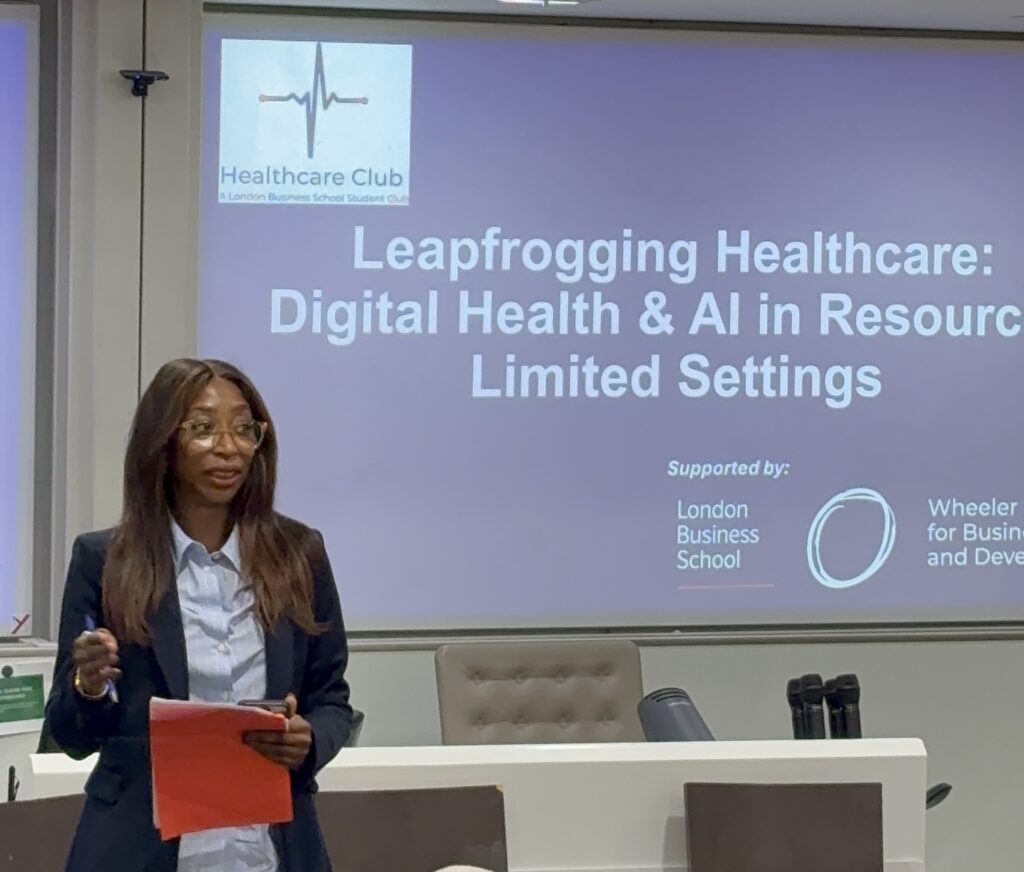
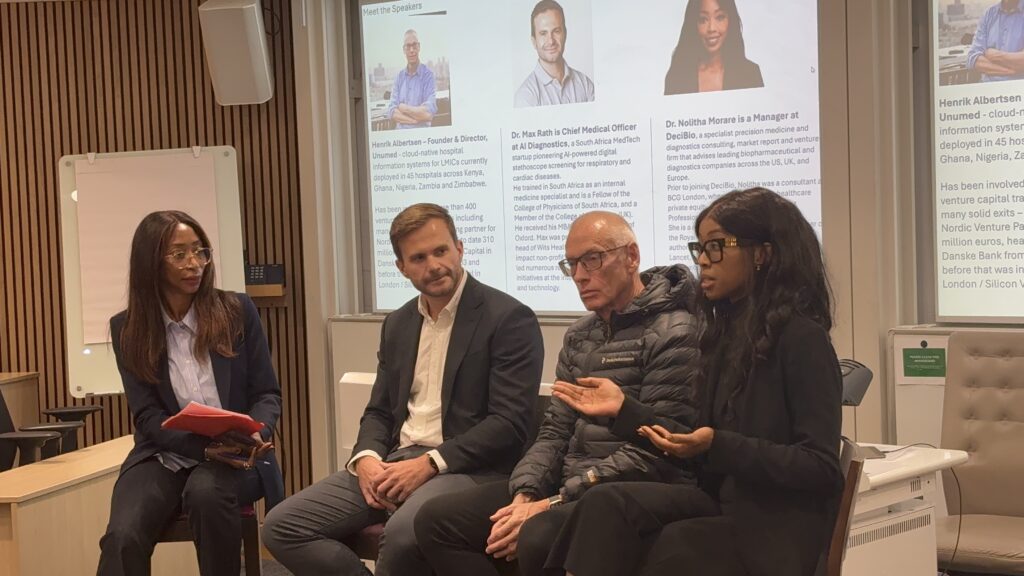
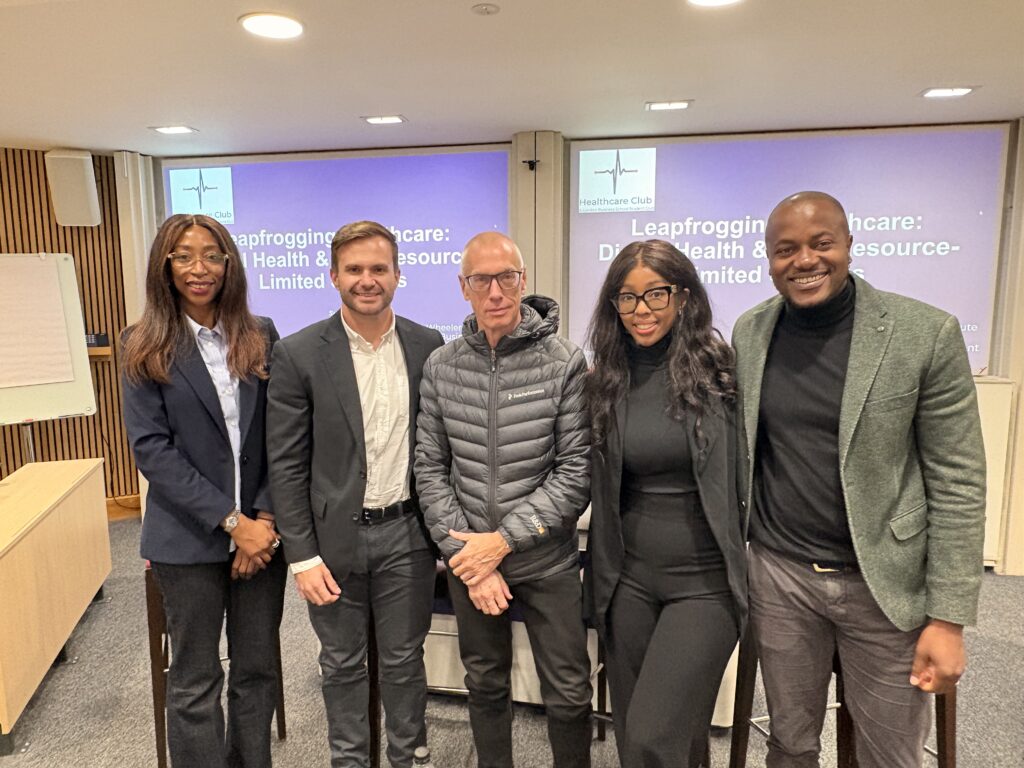
With the support of Wheeler Institute for Business and Development, London Business School Health Club organised a panel discussion with practitioners working on strategy, health systems and AI diagnostics to explore how digital innovation might help “leapfrog” traditional constraints in Africa. Moderated by Sloan Fellow Sephora Akako, the session brought together Nolitha Morare, consultant at Decibio, Henrik Albertsen, founder of hospital information platform Unumed; and Max Rath, Chief Medical Officer at AI Diagnostics.
Why Leapfrogging Matters
One of the core problems of health systems in Africa is structural inequality and fragmentation. South Africa operates a “two-tier” system, with a well-resourced private sector with advanced technology and reliable data, and an overstretched public sector that serves 80% of the population. Nigeria has a public–private mix with responsibilities split across federal, state and local government, with over 90% of healthcare privatly funded and out-of-pocket payments account for roughly 75% of total health expenditures – contributing to uneven standards, governance challenges and poor data continuity.
These constraints define the focus for innovation in Africa. While Europe is focused on cutting-edge treatments and technologies, Africa is still focused on delivering established treatments to populations who too often lack access. With the region’s population expected to grow rapidly, strengthening health systems becomes even more urgent.
Foundations for AI: The Work beneath the Iceberg
Albertsen argued that most discussions about AI start too high in the tech stack. AI is “the top of the iceberg” while the real foundations are data, connectivity and processing power. On all three dimensions, he sees emerging opportunities for Africa: Growing data availability as low-cost sensors and mobile devices can now capture continuous physiological data at scale; Improved connectivity as broadband and mobile infrastructure across Africa has advanced dramatically; Affordable processing power, as what required a supercomputer two decades ago now sits in an ordinary smartphone.
But AI tools cannot sit on top of paper. Albertsen stressed the need for a deterministic transaction layer, robust and structured electronic health records and hospital management systems, to anchor more “vertical” AI applications. Without that transaction layer, solutions remain siloed and hard to scale.
Looking ahead, Albertsen outlined a provocative “T1–T3” progression timeline. At T1, regulators might require clinicians to document that they consulted AI before issuing a diagnosis. At T2, direct human–patient diagnostic interactions could be restricted, with AI systems producing primary assessments and humans validating decisions. At T3, only AI‑guided robotics might be allowed to perform certain high‑risk procedures. Albertsen stressed that this trajectory makes it urgent to rethink business models and regulation in parallel with technology, rather than treating AI as a collection of pilots.
Beyond Hype: Where AI Adds Value Today
As AI tools are no longer a novelty, the real value of AI and its effect for African healthcare become the next real question. Morare argued that “integration is the new innovation”, as many technologies already exist, but impact depends on how to meaningfully integrate them into existing workflows.
Across African countries, the binding constraint is human capital. With doctor–patient ratios in Africa reported at 1:10,000 and even greater shortages in specialties, she sees immediate value in AI that relieves clinicians of low‑value tasks. For example, operational automation for note‑taking, discharge summaries and triage; point-of-care decision support for ECG, ultrasound, and maternal health; imaging and pathology support that provides a reliable read when specialists are unavailable. In tightly stretched public hospitals, even small efficiency gains can translate into more time for direct care.
Tuberculosis: A Practical Example
Using example of AI Diagnostics’ work for tuberculosis (TB) screening, Rath provided a case study of how AI can fill such gaps. AI Diagnostics has developed a digital stethoscope that uses machine-learning models to detect lung abnormalities, with TB as its first target. The model is undergoing validation in partnership with the Stop TB Partnership and the Gates Foundation across ten countries in Africa and Southeast Asia. He also noted that the only AI tool endorsed to date by the World Health Organization is also for TB: a computer-aided detection algorithm that interprets chest X-rays. This demonstrates that, with robust evidence, AI can pass global regulatory standards even in low-resource settings.
Rath cautioned against viewing AI as a replacement for clinicians in these contexts. In many communities there is no clinician to replace and the alternative to AI could be no diagnostic support at all. The real role of AI here is to fill gaps and extend scarce expertise, not displace it. He warned, however, about the proliferation of siloed tools. AI scribes that reduce documentation time “sound amazing,” but if they merely increase patient throughput without addressing downstream constraints, they risk worsening worker burnout. Real productivity gains come when systems connect, for example, when an AI scribe can automatically incorporate TB probability scores from an imaging model and generate structured referrals.
Data, Governance and Ethical Stewardship
Data was another shared concern across African healthcare systems. Albertsen believed that “not having information is never good”, and the lack of legacy systems is not an advantage for Africa to design cleaner, interoperable architectures from the start. The goal is robust, continuous, high-quality data that is securely stored and appropriately governed.
Lessons can be learnt from consumer genomics. Morare shared 23andMe’s troubles around secondary use of genetic data, poorly designed front‑end models of data collection can leave vast datasets legally unusable. Similar issues are emerging in clinical datasets collected without adequate consent frameworks. For African health systems, establishing clear rules on data ownership, acceptable use and benefit-sharing must come early.
Global norms are also shifting. WHO guidance now emphasises performance validation in the populations where models will be deployed and greater diversity in training datasets. Rath sees this as both a constraint and a strategic opportunity. African populations are genetically and epidemiologically diverse, yet grossly under‑represented with only 3% of clinical trials take place in Africa. Building ethically governed African datasets could make models more accurate locally while positioning the continent as a critical source of training data, provided value is not entirely extracted to richer markets.
Hospitals are also increasingly treating data governance as a strategic matter. Some have rejected “free” software that demanded unrestricted access to patient data, preferring platforms like Unumed, where patient records are encrypted and ownership stays with providers.
Scaling Innovation: Commercialisation, regulation and funding
While technical potential is substantial, the panel agreed that commercialization and regulation are now the main bottlenecks. Rath described the venture investment landscape as difficult as many investors view TB and similar conditions as philanthropic, and African markets as fragmented and low margin. This creates the risk that African data will help build globally valuable models without local benefit. Regulatory fragmentation adds complexity. Every African country maintains its own diagnostic approval processes, creating high costs for scale. Rath advocated for regional regulatory harmonization, highlighting efforts by the Africa Centres for Disease Control and Prevention to coordinate standards and the potential for “one regulator” model.
With the recent cuts in US funding for TB and HIV exposing the fragility of donor‑dependent models, a payer-centric view becomes critical. Large‑scale adoption of AI and digital tools by African governments and insurers will depend on a clear, data‑backed payer-centric narrative: superior clinical performance, measurable health‑economic gains such as fewer admissions, shorter stays and reduced mortality, and a credible return on investment for both public budgets and private capital. She pointed to South Africa’s value‑based insurers, such as Vitality, as examples of payers already receptive to interventions that move these metrics.
Albertsen framed the issue as “who is financially aligned with my health?” He suggested experimenting with models where governments fund a basic package and private insurers offer affordable products reach further down the income distribution, an approach emerging in South Africa.
Looking Ahead: Designing digital-first health system for Africa
AI and digital health will not, on their own, close Africa’s health gaps. But where countries invest in data infrastructure, ethical governance, coordinated regulation and viable commercial models, these technologies can act as powerful multipliers, to extend clinical capacity, support earlier diagnosis and help build more resilient systems. Rather than repeating the trajectory of high‑income systems, Nigeria, South Africa and their neighbours in the continent have a chance to design digital‑first health architectures that are better suited to their context rather than retrofitting imported ones. The question now is whether policymakers and innovators will move quickly enough to shape systems that genuinely serve local populations, and ensure that the benefits of the digital health revolution accrue to African health systems themselves.
Speakers

Sephora Akako a Sloan Fellow in Leadership and Strategy at London Business School. A commercial advisor and strategy leader, she focuses on market entry and healthcare partnerships that connect innovative health solutions with emerging markets. Over the past decade, she has served as a senior commercial advisor to the Embassies of Denmark in Nigeria and the UK, most recently as Principal Advisor for the healthcare sector, helping Danish companies scale internationally through tailored market insights, regulatory navigation and partnership models. She works across public and private stakeholders to align governments, providers, investors and industry around sustainable healthcare growth.

Nolitha Morare is a life science expert in DeciBio, with experience across medicine, clinical care, consulting, and venture capital. She holds an MRCS degree from the Royal College of Surgeons in England and an FCS Intermediates Medal from the College of Surgeons of South Africa. She has advised healthcare and life sciences clients on strategy, innovation, and value-based care, now with a focus on precision medicine and healthcare venture capital, helping to evaluate and scale data-driven and personalised health solutions.

Henrik Albertsen is a serial entrepreneur, board members, venture capital investor focus on high-growth technology and software businesses. As Partner and CEO at acta.vc, he manages venture funds with over €300 million in assets. He is also the Founder and CEO at Unumed, which provides cloud-based, AI-driven health management systems for hospitals. He has led and exited multiple software and technology companies to global strategic acquirers. He holds an engineering background from the Technical University of Denmark (DTU).

Max Rath is a physician and health technology leader working at the forefront of AI-enabled diagnostics and global health. He is Chief Medical Officer at AI Diagnostics, a South African Medtech company, where he leads clinical strategy and innovation for AI tools that aim to improve access and accuracy in disease detection. He is a specialist in internal medicine with extensive clinical practices, research and innovation experiences in South Africa’s health system. He holds an MBA from the University of Oxford, an MMed and MBBS degree from University of Witwatersrand.
Writer
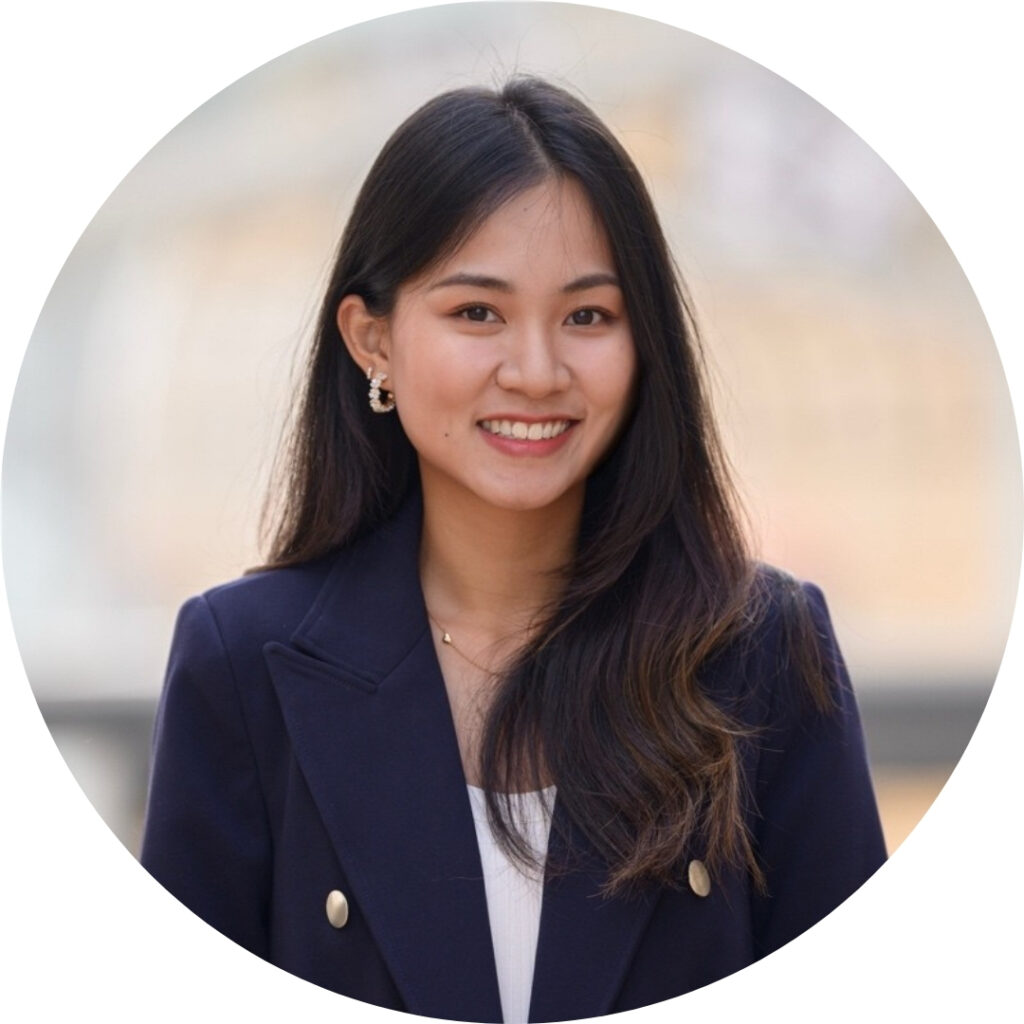
Luise Lin is an MBA 2026 candidate at London Business School and an Outreach and Communication Intern at the Wheeler Institute for Business and Development. Prior to joining London Business School, she worked at Boston Consulting Group as Consultant in Australia, where she advised clients across private and public sectors as well as social enterprises. Luise is passionate about leveraging innovative business models and financial solutions to drive scalable economic development impact in developing regions. She is particularly interested in the intersections of management, policies, and social impact, exploring how private sector solutions can contribute to sustainable development.