
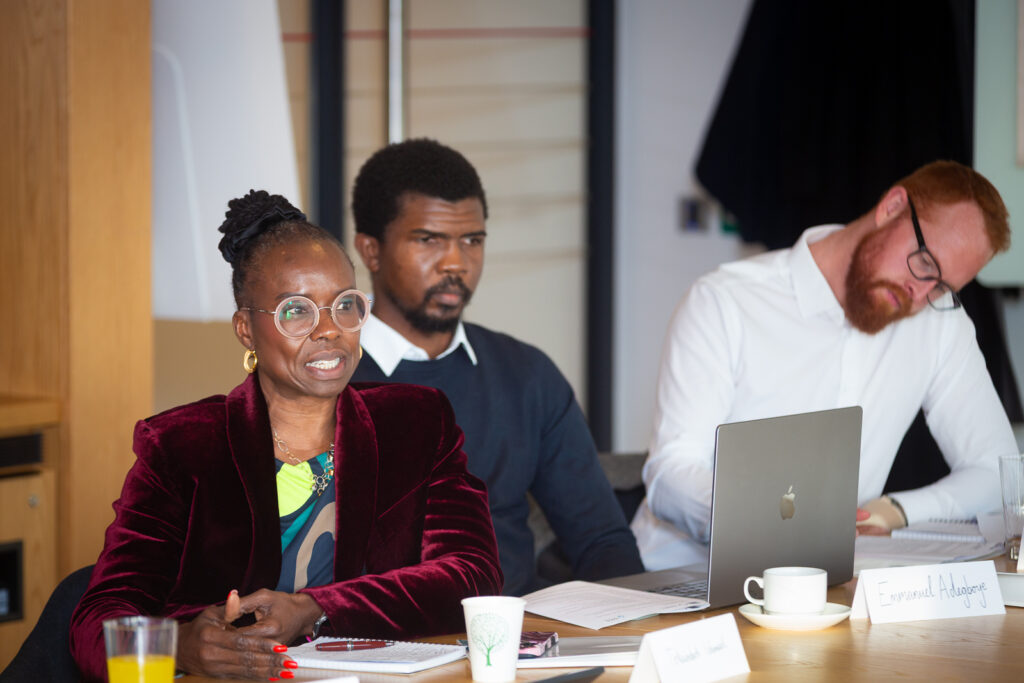
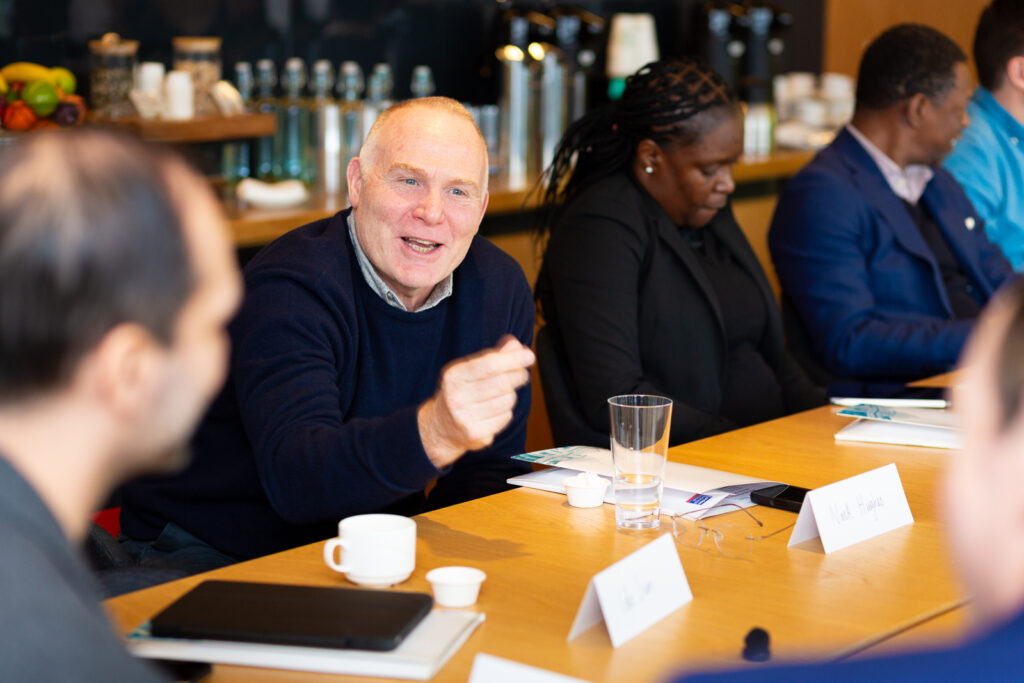
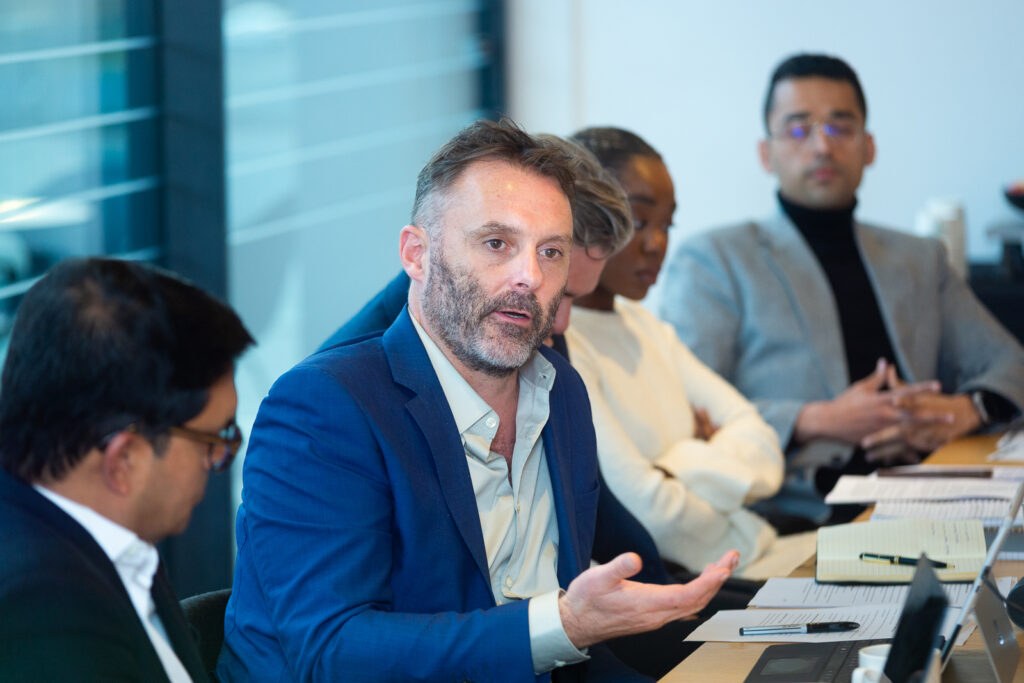
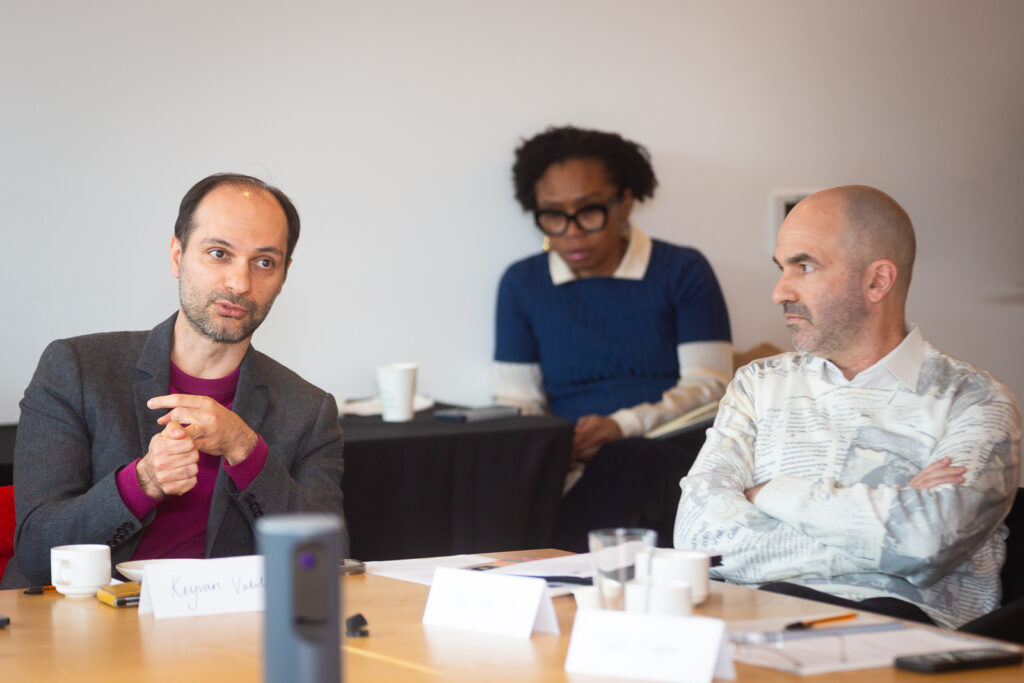
The Wheeler Institute, together with DFS Lab and the Data Science and AI Initiative at London Business School, hosted a roundtable bringing together academics, business leaders, investors and policymakers to discuss AI’s role in Africa’s future. The session aimed to explore how AI might help address some of the continent’s most persistent constraints in productivity, skills, and economic participation. Jake Kendall, General Partner of DFS Lab, and Rajesh Chandy, Professor of Marketing, Tony and Mauren Wheeler Chair of Entrepreneurship and Co-Academic Director of the Wheeler Institute, hosted the session and the list of participants is available in the report.
The conversation has since been published as a report, AI for Africa: A Moment of Transformational Possibility, which you can download below. Several of the roundtable’s participants also went on to speak at the Institute’s public event, “Harnessing AI for Inclusive Employment and Growth”, which opened the conversation to a wider audience and examined similar questions around jobs, investment, and Africa’s role in the global AI economy.

AI as a human capital multiplier
Much of the discussion centred on AI’s potential to close long-standing gaps in training and productivity rather than automate work away. Joseba Martinez, Assistant Professor of Economics at LBS, pointed to research showing that if AI is given to both the worst and best performing worker in a firm, the weaker performer catches up – describing this as a potentially “colossal injection of human capital into African economies.” Ido Sum, Co-Founder of AfricAI Group, made a related point about Africa’s demographic strength, arguing that bridging the gap between training and productivity for carers, nurses, mechanics, and engineers represents “a gigantic opportunity enabled by AI.”
Strengthening, not disrupting, traditional sectors
Participants argued that AI’s most valuable applications in Africa are likely to come not from futuristic automation, but from strengthening the everyday sectors that employ the most people – agriculture, construction, and financial services among them. Kevyan Vakili, Professor at LBS and Co-Academic Director of the Data Science and AI Initiative, observed that there is “a lot of low-hanging fruit in more traditional sectors rather than tech-heavy sectors.” Ruby Nimkar, Partner at GreenHouse Capital, raised construction and housing delivery as a clear example, asking how AI could help when “regulation is slow” and the continent “can’t build fast enough.”
Africa’s distinct competitiveness
Several participants made the case that Africa’s advantage in the AI era won’t come from competing in the global compute race, but from assets that are difficult to copy: local operating knowledge, human distribution networks, and context-specific data drawn from the continent’s large informal economy. Adam Wills, Co-Founder & CTO at Learn.ink, argued that Africa’s most defensible AI advantages will come “from combining data with the trust embedded in human networks,” and that the opportunity lies in making existing agent networks more capable rather than routing around them.

The constraints are real
The roundtable was candid about the barriers still facing adoption, from the cost of compute and patchy connectivity, to AI systems trained predominantly on English-dominant data that leaves much of the continent’s linguistic diversity poorly served. There was also a sharper warning about inequality. Henry Obi, CBE, Partner at Helios Investment Partners, cautioned that AI “could be so efficient that it could result in net job losses instead of job creation in Africa.” Tanaka Chiimba, former McKinsey & Kearney Partner and Board Member at WorldSkills, put the underlying challenge plainly: with 85% of Africa’s economy informal and largely outside digital systems, “the real question is how we bridge that gap.”
A framework for action
The report closes with four enabling conditions for realising Africa’s AI opportunity: building vocational pathways at scale so workers can learn while earning; shifting from a disruption mindset to one of partnership between startups and large incumbents; ensuring regulation and capital move fast enough to keep pace with innovation; and sustaining domestic investment in compute, research, and digital public goods. Ywande Odumosu, Managing Partner of HoaQ Ventures, summed up the underlying thesis of the discussion: real economic impact “will not come from a small number of people building AI models, but from millions of people using AI tools effectively in their daily work.”