
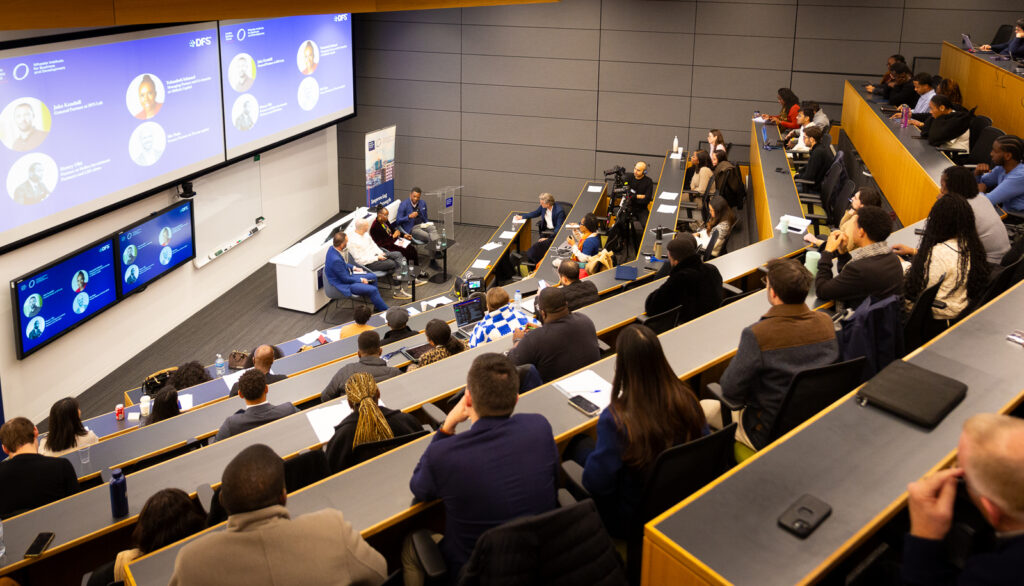
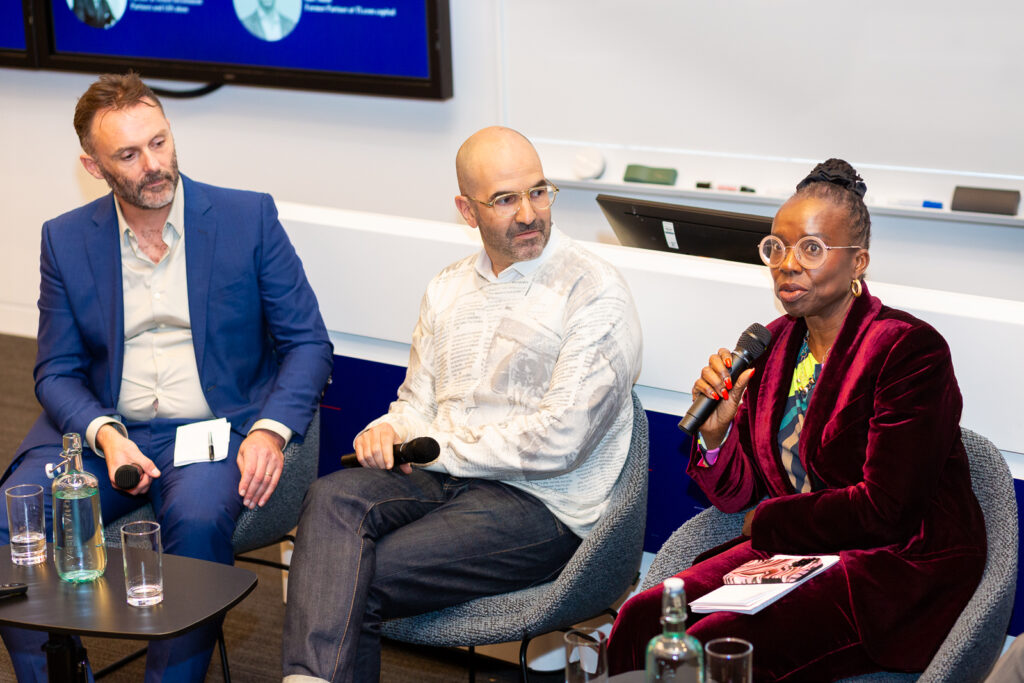
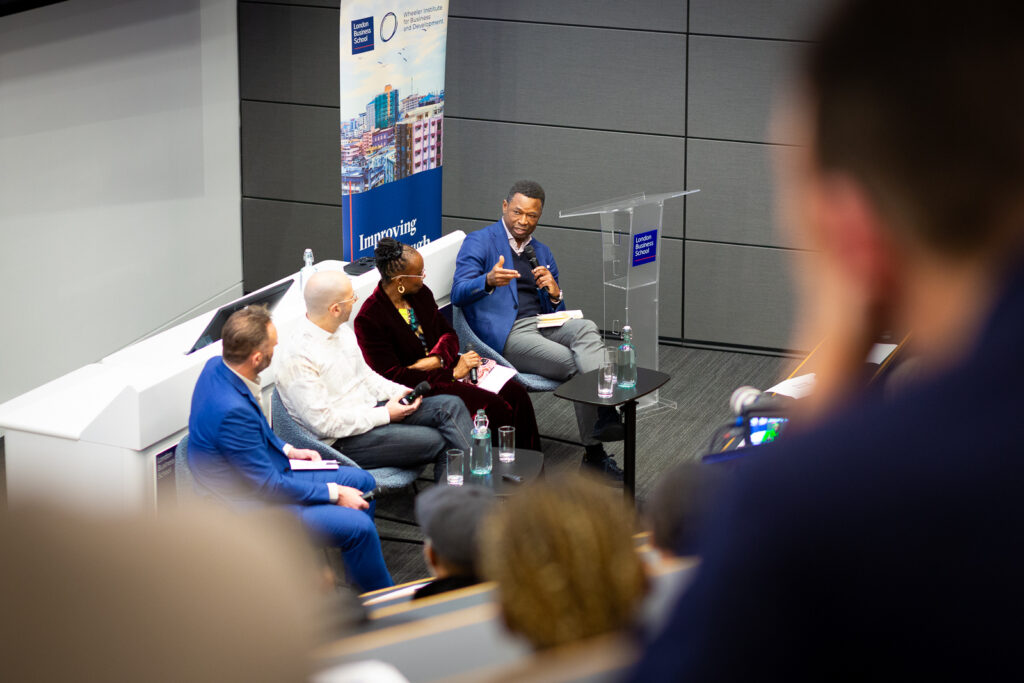
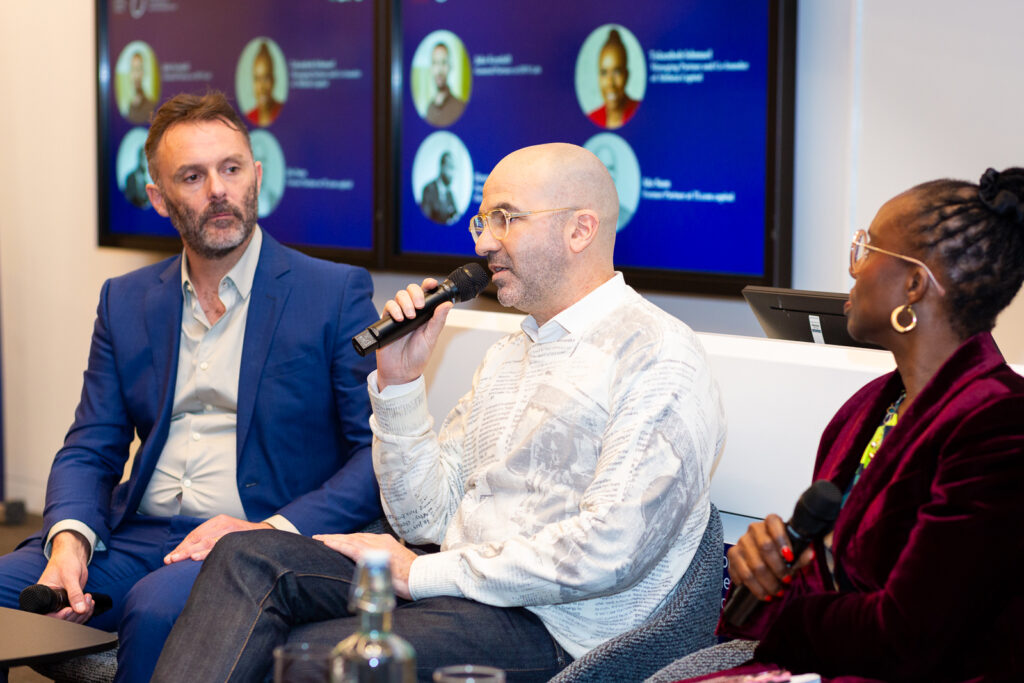
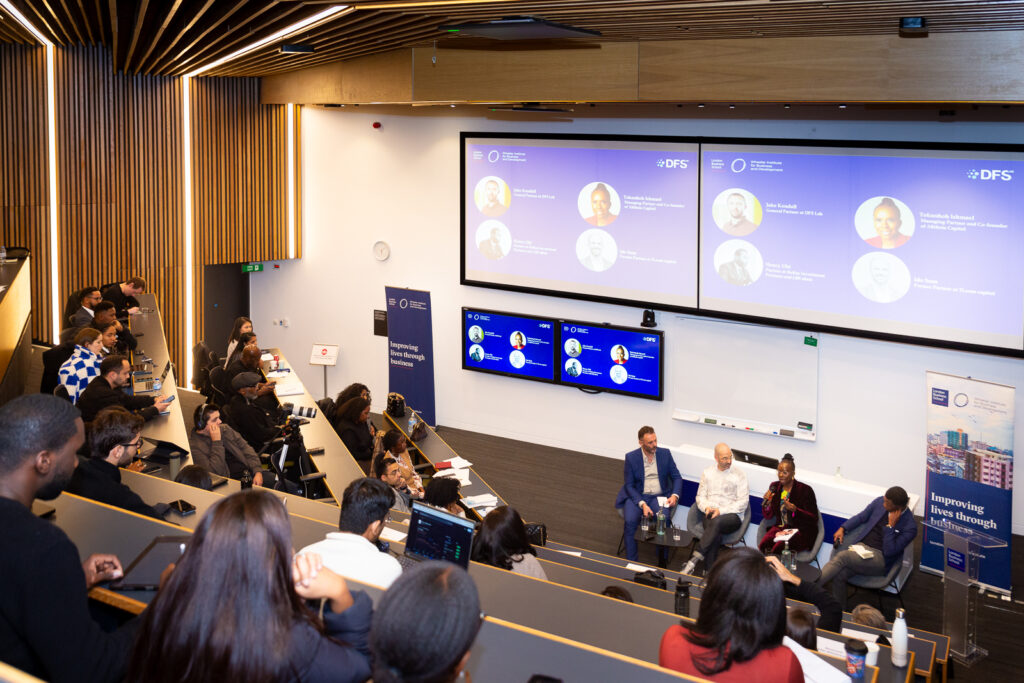
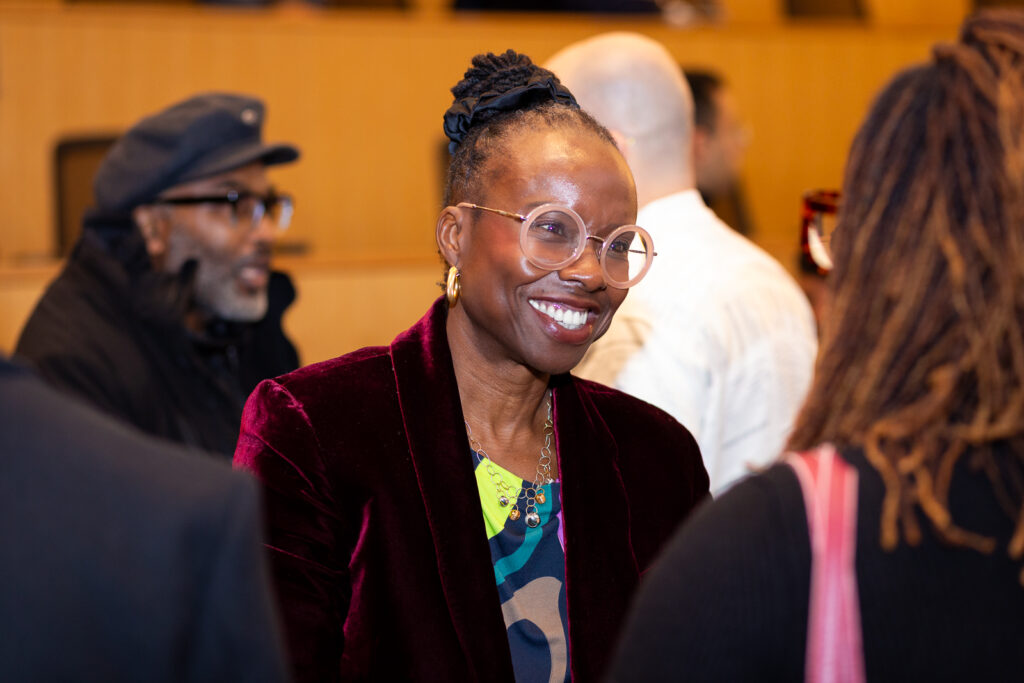
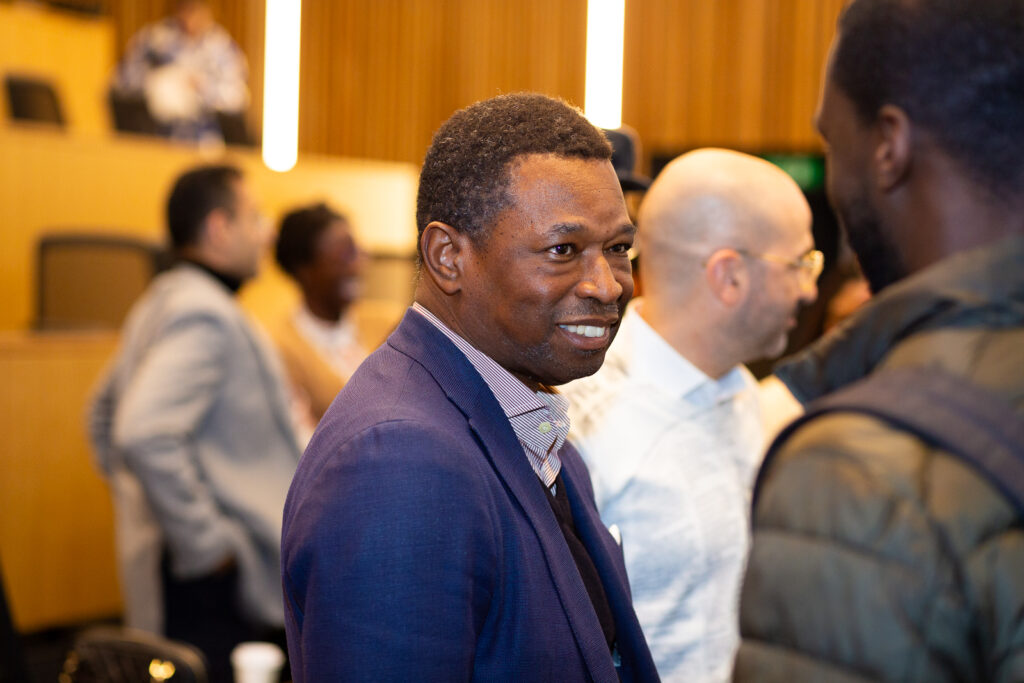
Artificial intelligence is reshaping labour markets worldwide. For African economies, where more than 20 million young people will enter the workforce each year between now and 2050, the stakes are especially high. The Wheeler Institute for Business and Development, DFS Lab, and the LBS Data Science and AI Initiative recently held a panel discussion that brought Henry Obi CBE, Partner at Helios Investment Partners and LBS alum, Ido Sum, Former Partner at TLcom capital, Tokunboh Ishmael, Managing Partner and Co-founder of Alitheia Capital, and moderator Jake Kendall, General Partner at DFS Lab. The panel explored how AI may influence employment, competitiveness and investment across the continent, and what it will take to ensure these changes are inclusive.
How AI changes work: automation, augmentation and new roles
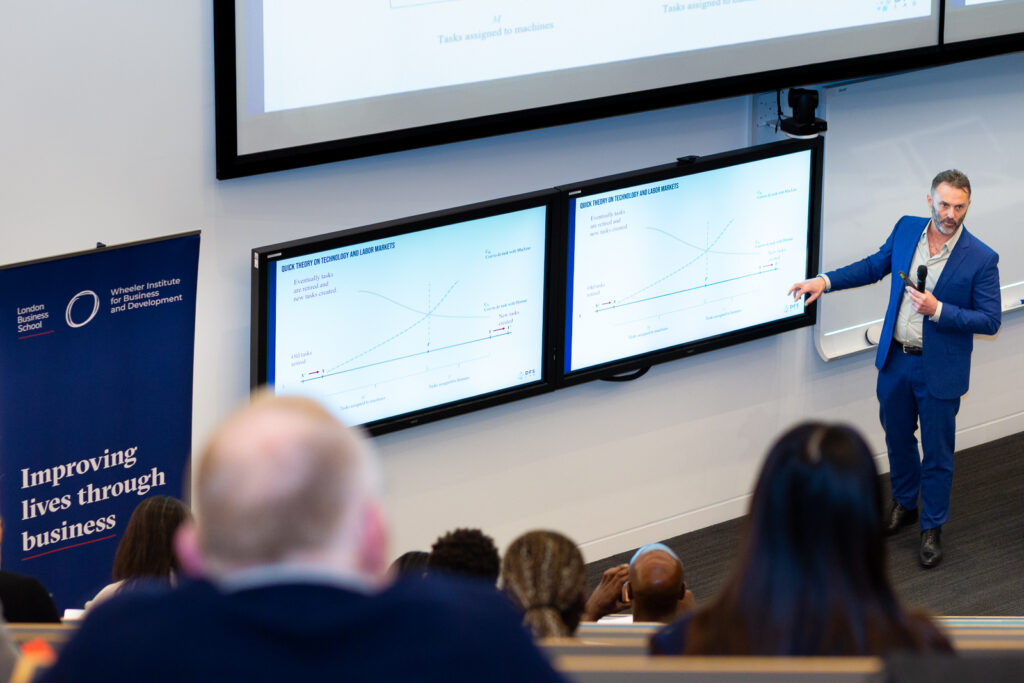
Kendall opened the conversation with an “Econ 101” framework for understanding AI’s impact on labour markets. As a general-purpose technology, AI shifts tasks from humans to machines when machines become cheaper or more efficient, reshape work through three main channels: automation of some tasks and jobs, augmentation of workers in remaining roles, and the creation of new roles.
Evidence from the US illustrates this complexity. Software development employment has continued to grow overall, yet junior roles have taken a significant hit since 2022, coinciding with widespread adoption of tools such as ChatGPT. At the same time, randomised trials across call centres, consulting, and software engineering show substantial productivity gains when workers use AI, with the largest improvements among the least experienced. AI can therefore compress pathways into skilled work, but also erode traditional entry-level opportunities.
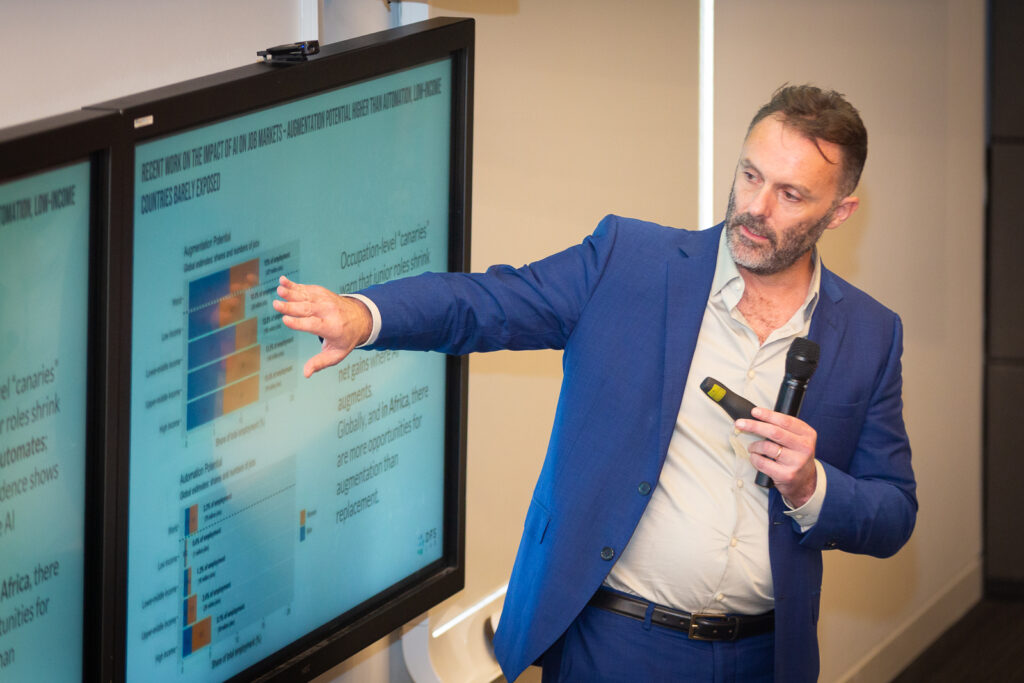
Data from International Labour Organization points in a similar direction. Low-income countries tend to have fewer fully automatable jobs, given their higher share of physical and non-routine work, and across all income groups, augmentation opportunities far exceed pure automation risks. For Africa, this means AI is more likely to change how people work rather than remove most jobs outright.
Kendall cautioned that model performance deteriorates when applied outside their training data, a particular concern for African contexts under-represented in global datasets.
Demographics and structural change: why Africa’s context is unique
Africa’s demographic outlook made the strategic decisions for AI especially urgent. African economies will need to absorb an estimated 500 million new workers over the next 40 years, creating both a challenge and, as Ishmael described, a potential “youth dividend” or “people dividend” if opportunities can be expanded. Past labour absorption, however, has struggled to keep pace with population growth.
Structural transformation adds further complexity. Labour has been moving out of agriculture largely into services, while manufacturing has remained stagnant. Many traditional services have limited productivity potential, though modern tradable services—IT, finance, outsourcing—are expanding rapidly in developing economies, in some cases faster than in richer countries. Kendall argued that AI could support African service providers by reducing language barriers, simplifying localisation, and helping firms navigate diverse regulatory regimes. This could position African economies to benefit from services-led export growth if skills, firms, and ecosystems are deliberately developed.
Competing in the AI economy: adapt, don’t replicate
Given the soaring cost of training frontier AI models, the panel agreed that African governments and businesses should prioritise adaptation and application rather than attempts to compete with the US and China in building foundational models. Training cutting-edge systems has become a “superstar game,” Kendall noted, but the cost of using those models is falling quickly. This makes strategic adoption, particularly tailoring existing models to local challenges, a far more viable path for African firms.
Ishmael and Obi raised that AI deployment requires foundations that however remain uneven. Electricity is a major barrier; power can represent up to 40% of a firm’s operating costs. Many SMEs, which are the backbone of African economies, still lack reliable connectivity, digital literacy, and even basic devices. Ishmael warned that AI hype risks skipping the fundamentals. Without digitising millions of SMEs, building connective infrastructure and expanding affordable power, “the real economy cannot participate in the AI boom.” AI adoption could otherwise remain concentrated among corporates and urban elites.
Export strategies, talent pathways and industrial policy
The panel also linked AI to broader questions of Africa’s competitiveness in today’s global economy. Obi pointed to India’s long-term investment in engineering and technology institutes and its strategy of “exporting engineers and technologists” as a model for how talent development, managed migration and remittances can reinforce each other. Similar patterns are emerging in Africa, for example a company in Rwanda has trained specialised engineers who now deliver AI consulting services to international firms.
Sum argued that African countries should also identify human-intensive sectors that are unlikely to be fully automated, such as care, logistics, complex interpersonal work, and train workers for global labour markets experiencing shortages. Africa can also position itself in the “physical” parts of AI-related value chains, including minerals, power systems, hardware-adjacent manufacturing, and infrastructure.
The panel also discussed business-process outsourcing (BPO) as an entry point, not an end-state, for African talent. Sum and Kendall noted the rise of hybrid models, where AI and human agents jointly deliver outsourced services. Ishmael welcomed the opportunity but cautioned that Africa must not be “reduced” to call-centre work; long-term competitiveness requires critical-thinking skills, multi-sector capabilities, and pathways into higher-value roles.
To increase Africa’s competitiveness, the panel aligned on the need for targeted industrial policy. Kendall emphasised the value of “export discipline,” for example, some East Asia countries are tying state support to actual export performance. Rather than broad “AI capacity building,” governments should back specific use cases aligned with export potential and national strengths.
Inclusion, inequality and Africa as producer—not just consumer
When asked whether AI risks are widening global inequality as wealthy countries adopt it from a stronger starting point, Kendall stressed that outcomes are not predetermined. Effective policy, investment, and civil society engagement can “bend the curve,” while inaction could entrench global divides. Ishmael added that intentional approaches to infrastructure, regulation and digital access are critical to ensure benefits reach ordinary citizens.
Affordability remains another major barrier to an inclusive and equitable AI future. Despite declining subscription prices, data and connectivity in Africa remain several times more expensive than elsewhere. Without subsidies, inclusive business models or public investment, Sum argued, widespread use of AI tools on mobile devices in Africa will remain challenging due to high cost.
Ishmael warned of a further risk: African data could be extracted cheaply, processed abroad, and resold back to the continent, deepening dependency. To counter this, Africa must participate as architect and producer, including through African-specific language models and richer local datasets that improve both applications and policymaking.
Applications across sectors: examples in finance, health, manufacturing, and agriculture
Despite challenges, concrete opportunities are emerging, with use cases showing how AI can support various sectors:
- Finance: AI can be used to improve credit risk assessment, reduce the cost of payments and credit, expanding financial inclusion in under-banked populations;
- Health: A Nigerian-led platform partners with Mayo Clinic to use AI for early cancer screening, an example of African innovators contributing to global health solutions;
- Manufacturing and energy: Transitioning to solar and other clean energy sources and combining with AI digital transformation has reduced costs by up to 50% in some of Alitheia Capital’s portfolio companies;
- Agriculture: Some agro‑processors have built plants near smallholder farmers, providing power to local communities and using technology to improve yields, quality, and planning. Sum argued that AI is most valuable for aggregation, logistics, yield forecasting, and weather‑indexed insurance at scale, while farm‑level advisory tools alone have not yet fundamentally changed smallholder productivity.
Risks: cyber threats, disinformation
Beyond job displacement, panellists highlighted ethical and security concerns with AI. AI lowers the barrier to sophisticated cyberattacks, a significant concern for banks and critical infrastructure providers. Disinformation, political manipulation, and online radicalisation could intensify in contexts of high youth unemployment. Obi stressed the need for strong regulation and adequate local data centres as countries adopt rules requiring sensitive data to remain within national borders.
Building resilience for an AI-enabled future
Across the discussion, resilience emerged as a unifying theme. For Ishmael, African AI strategies should emphasise strengthening firms, workers, and systems against shocks, whether economic, climatic, or geopolitical. This requires embedding AI within broader SME digitalisation strategies, ensuring companies have the power, connectivity, and skills to adopt new tools. For Africa, success with AI means prioritising augmentation over pure automation, investing in foundational infrastructure, developing local data assets, and building institutions capable of managing both opportunity and risk. With the right policy and conditions, AI can maximise its potential as a tool for more inclusive growth, helping Africa not only navigate technological change but also reshape its competitiveness in the global AI economy.
Speaker and moderator

Jake Kendall is a co-founder and General Partner at DFS Lab, an early-stage investor supporting technology companies building the digital commerce and financial infrastructure for Africa. He has been investing in African digital platforms since the early days of mobile money, drawing on prior roles at the World Bank, CGAP, and the Gates Foundation. At the Gates Foundation, Jake led teams that deployed more than $1 billion into mobile money and digital payments initiatives globally, backing leading players such as M-Pesa, Equity Bank, and bKash. Jake holds a BS in Physics from MIT and a PhD in Economics from University of California, Santa Cruz.
Panellists
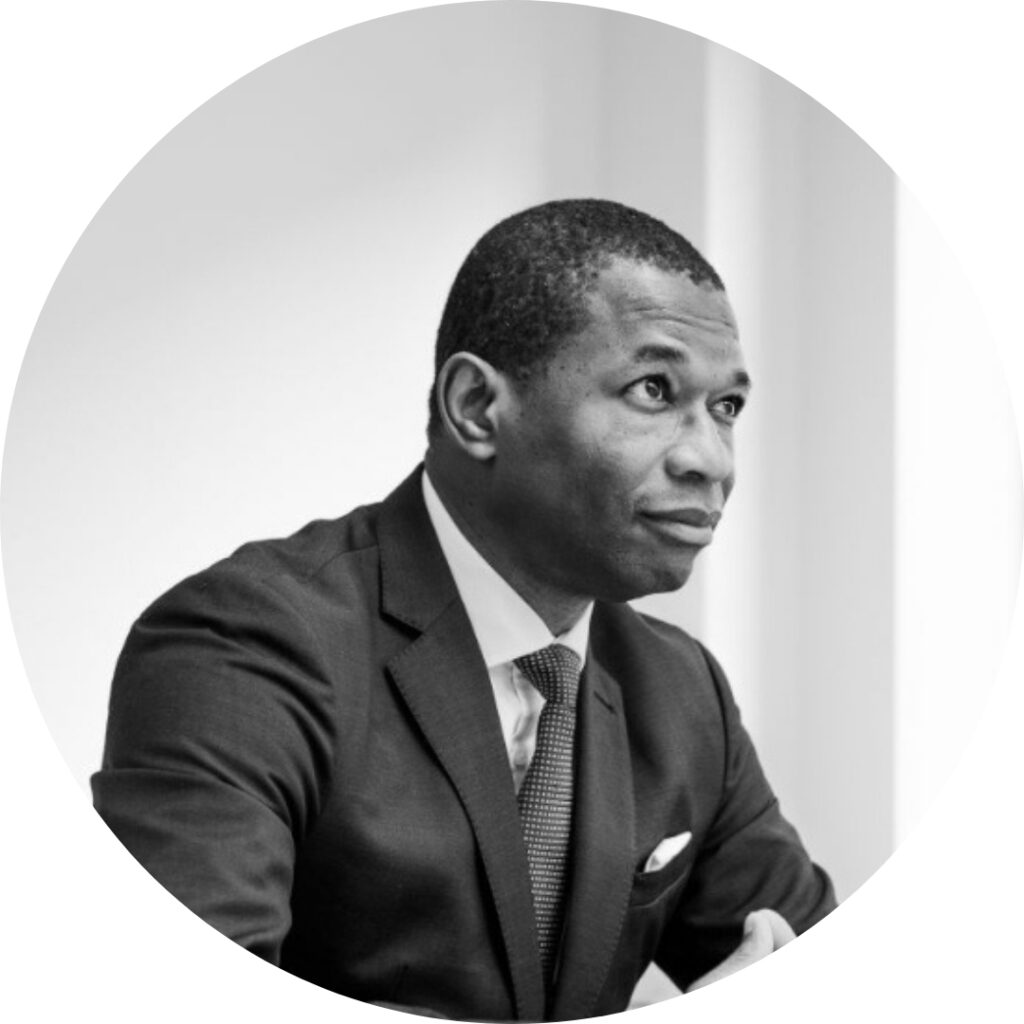
Henry Obi CBE is a Partner at Helios Investment Partners and a member of the firm’s Investment Committee. He has over two decades of experience in African private equity and emerging markets investing, including serving as Partner and Chief Operating Officer at Helios from its inception in 2006 to 2018. Prior to Helios, he was a Partner at Aureos Capital and held investment roles at CDC (now BII), Actis, and Dynegy, building deep expertise in infrastructure, energy, and growth capital across Africa. Henry is a Governor at London Business School, where he earned his MBA, and was awarded a CBE in 2021 for services to public and political service. He also serves as a Trustee of Prostate Cancer UK and contributes to industry bodies shaping African private capital markets.

Ido Sum is a Former Partner at TLcom Capital, one of Africa’s most active tech-focused venture capital funds investing from seed to growth stages across the continent. He is part of the TIDE Africa fund team, backing mission-driven technology companies such as Andela, Twiga Foods, Kobo360, uLesson and other leading African startups. An entrepreneur turned investor, Ido previously co-founded and led Airlines WiMAX Communication, an East Africa-based mobile broadband operator, and built and advised web start-ups in Israel and emerging markets. His work spans business building, strategy, and operations across Europe, Israel, and Africa, with a focus on technology that expands access and affordability. Ido holds an MBA from Stanford Graduate School of Business and a BSc in Industrial Engineering from Tel Aviv University.
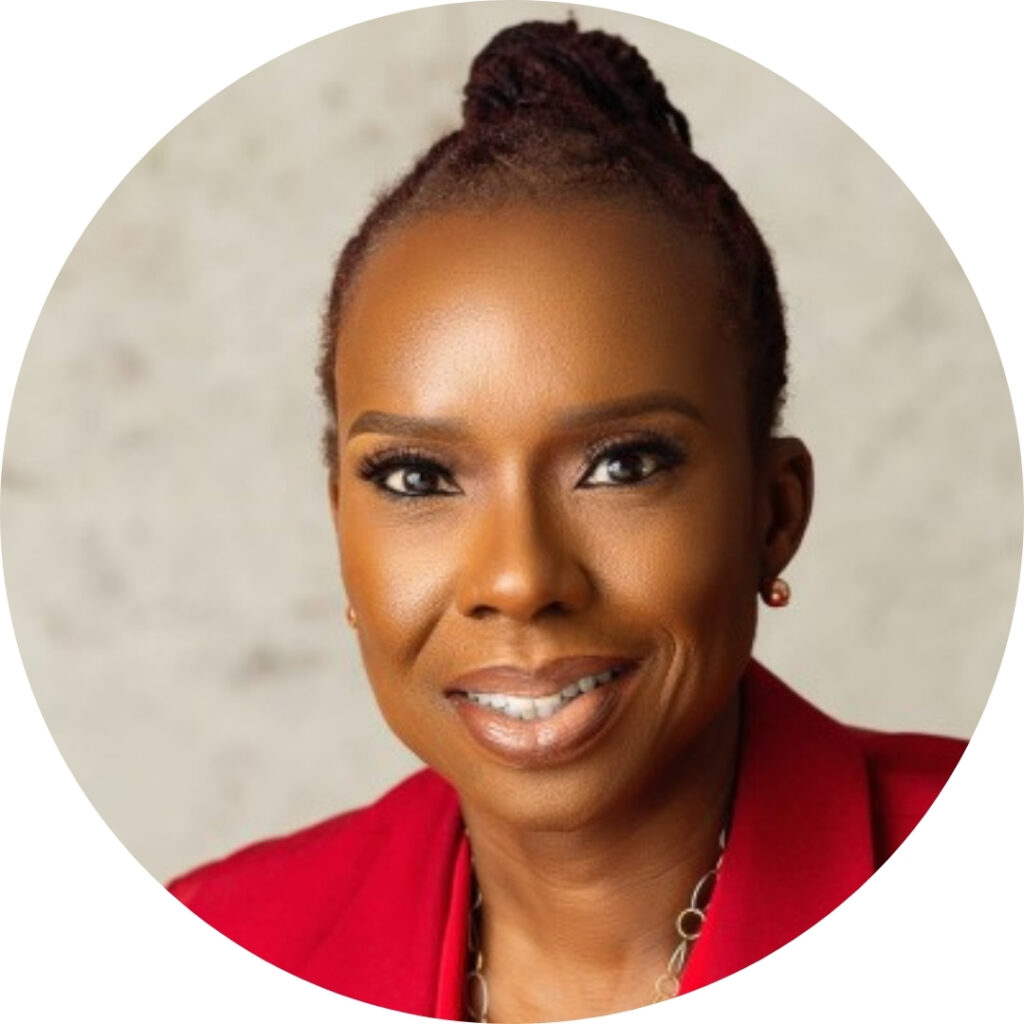
Tokunboh Ishmael is an impact investor and professional in inclusive and sustainable finance, with over 20 years of experience across investment banking, private equity, technology, and business development. She is Managing Partner and Co-founder of Alitheia Capital, a Nigeria-based, female-led impact investment firm channelling capital into small and growing businesses across Africa. Under her leadership, Alitheia has built one of Africa’s largest gender-lens investment platforms, including Alitheia IDF, and manages hundreds of millions of dollars to back companies providing essential goods and services to underserved markets. Tokunboh is a CFA and corporate financier with experience across UK, US, and Africa, including landmark deals in the oil and gas sector. She is a recognised global voice on gender-lens investing and the role of capital in driving inclusive growth.
Writer

Luise Lin is an MBA 2026 candidate at London Business School and an Outreach and Communication Intern at the Wheeler Institute for Business and Development. Prior to joining London Business School, she worked at Boston Consulting Group as Consultant in Australia, where she advised clients across private and public sectors as well as social enterprises. Luise is passionate about leveraging innovative business models and financial solutions to drive scalable economic development impact in developing regions. She is particularly interested in the intersections of management, policies, and social impact, exploring how private sector solutions can contribute to sustainable development.