For over half a century, the doctrine of shareholder primacy has offered a simple moral compass for corporate executives: make as much money as possible. Popularised by Milton Friedman in his seminal 1970 New York Times article, the theory posits that by maximising profits within the bounds of law and custom, companies maximise social welfare. If shareholders wish to save the whales or support the arts, Friedman argued, they should do so with their own dividends, not the company’s ledger.
But does this division of labour still hold in a world of complex externalities? And in an era where voting power is increasingly concentrated in the hands of a few giant asset managers, whose preferences are being served?
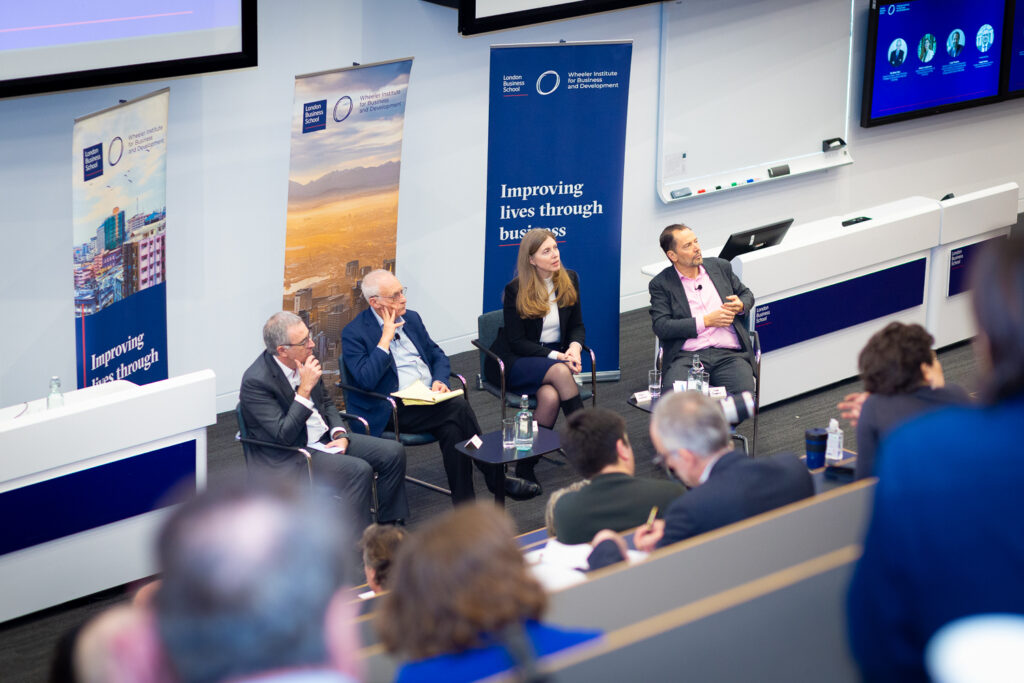
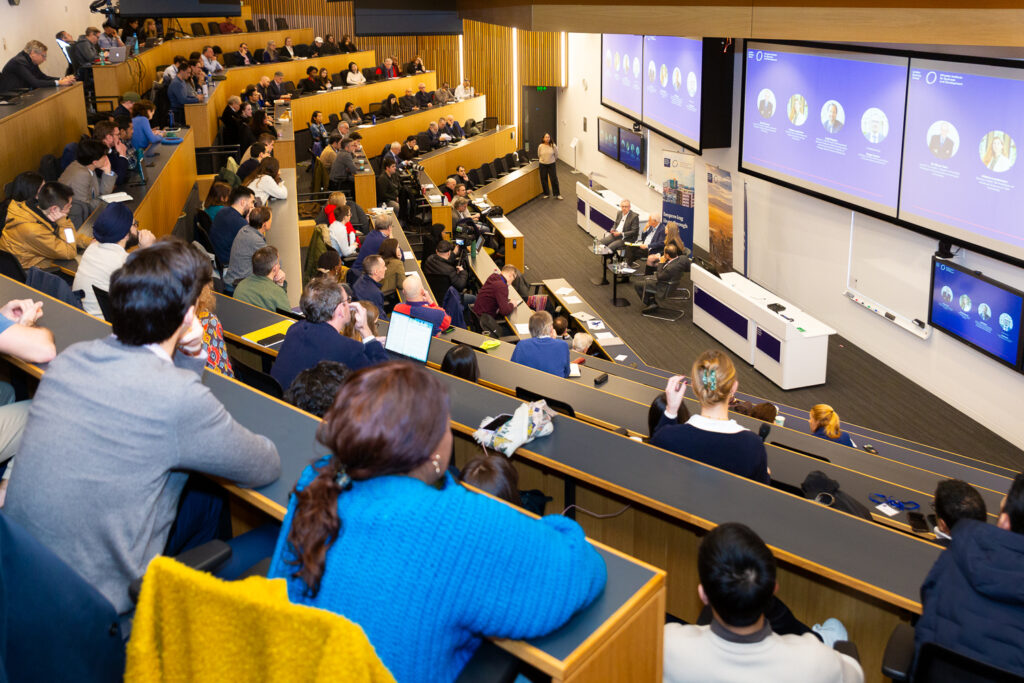
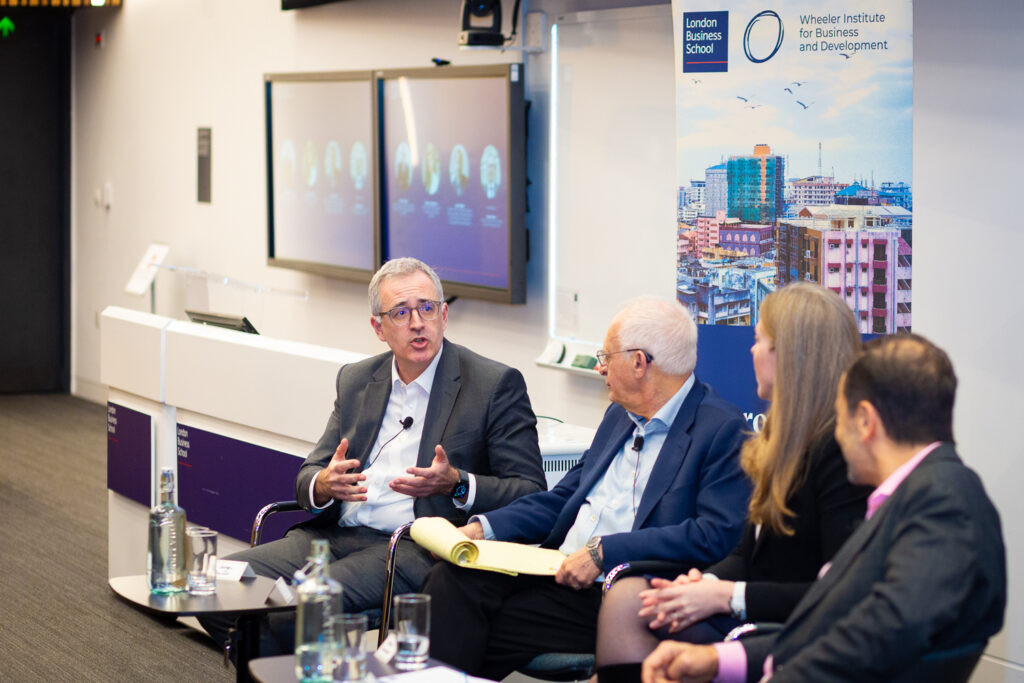
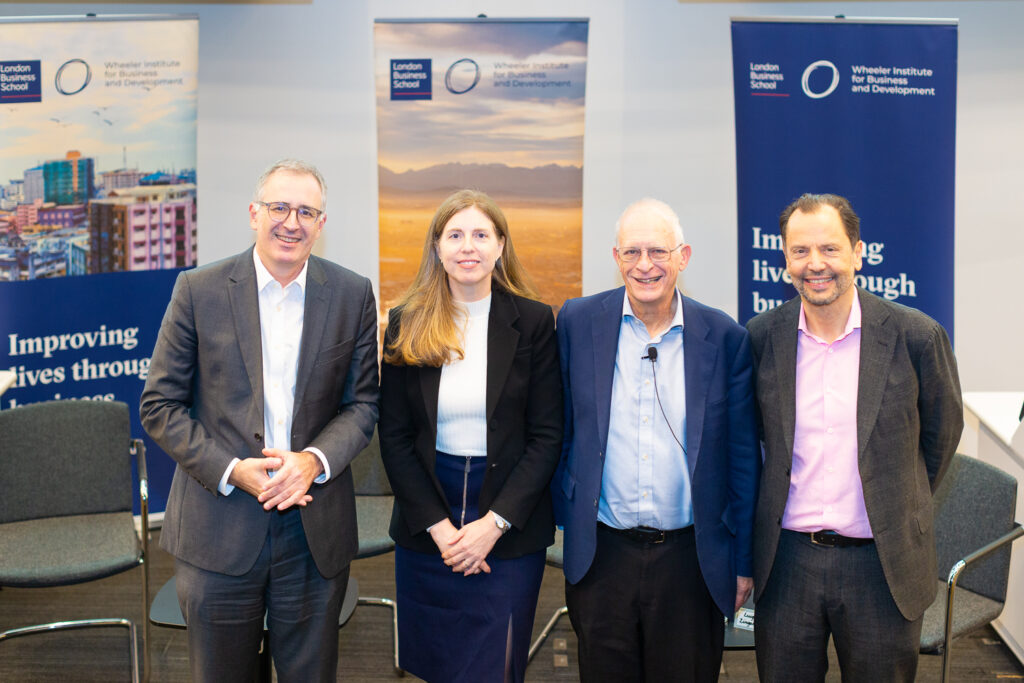
In a recent discussion at London Business School, chaired by Professor Sergei Guriev, Dean of the School, three leading academics, Sir Oliver Hart, Hélène Landemore, and Luigi Zingales, presented a novel solution. Their proposal, detailed in a working paper by the three of them and a forthcoming book by Oliver and Luigi, Citizen Investors, challenges the conventional wisdom of corporate governance. They argue for the introduction of Investor Assemblies, deliberative bodies of randomly selected shareholders, to bridge the widening gap between what investors want and what companies do. The event was part of the Wheeler Institute Rethinking Capitalism series.
Act I: Revisiting Friedman
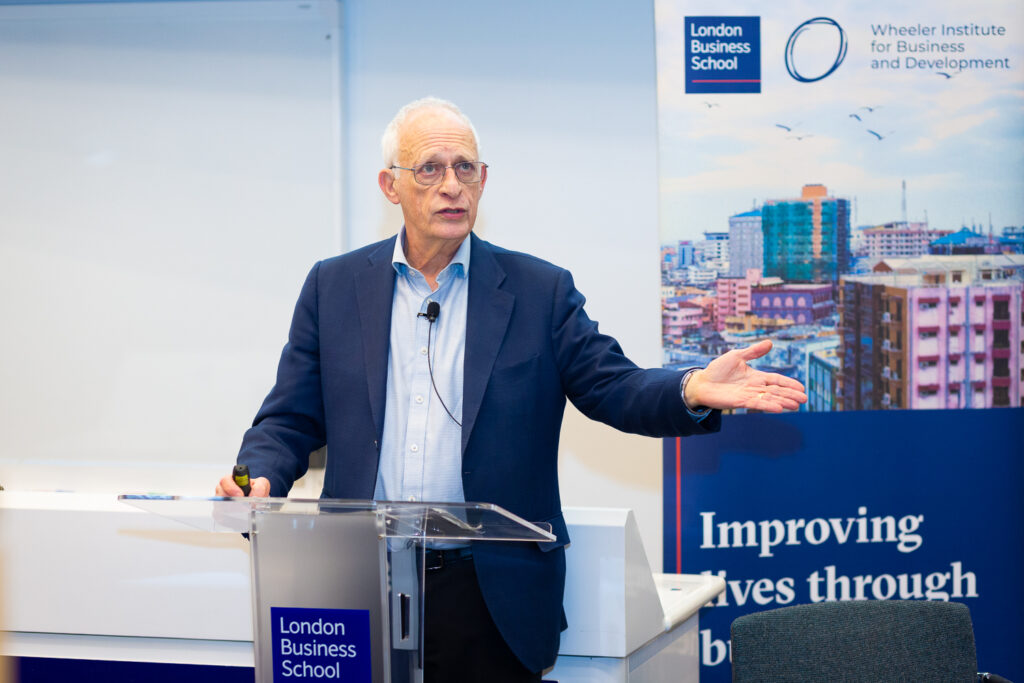
The session began with Nobel Laureate Sir Oliver Hart, who dismantled the economic assumptions underpinning Friedman’s doctrine. Friedman’s logic relies on the idea that companies possess no comparative advantage in social responsibility; it is more efficient for a corporation to generate cash and for the shareholder to donate that cash to charity.
Hart argued that this holds true for simple charitable giving but collapses when we consider non-separable activities such as environmental damage. Consider a dry-cleaning business whose profits could be enhanced by disposing of toxic waste in a nearby river. The owner, knowing the harm this would cause, might choose to forgo those profits, a decision that violates Friedman’s prescription yet reflects the owner’s broader values.
The core of Hart’s argument is that shareholders are not merely profit-maximising automata; they are people with moral preferences. They may well be willing to sacrifice a fraction of their returns to avoid catastrophic climate change or social harm. The panel introduced the concept of “shareholder welfare” as distinct from “shareholder value”, encompassing not merely profits but also the ethical dimensions of how those profits are generated.
Hart illustrated the stakes with ExxonMobil, which has historically funded organisations casting doubt on climate science. Such activities may have been profitable, but do they reflect what shareholders truly want? For a small shareholder, the marginal dividend gain is dwarfed by the consequences of living in a hotter, more unstable world. Exxon does not ask its shareholders whether they wish the company to pursue these strategies. Yet it could, and the panel argued that it should.
Act II: The Agency Gap
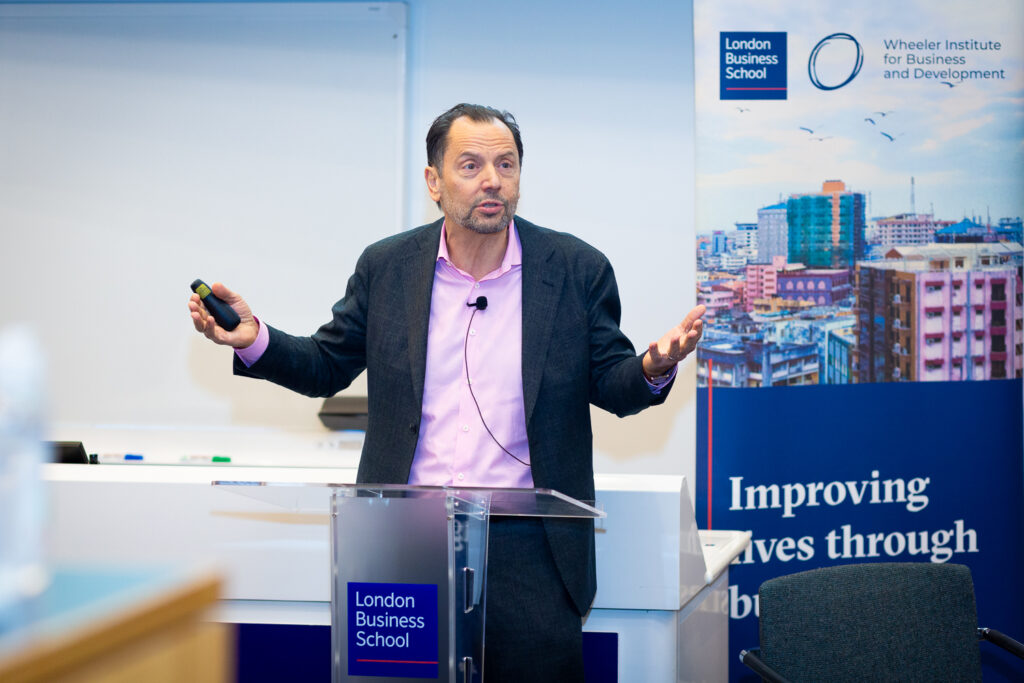
If shareholders care about more than profit, why don’t they vote accordingly? Professor Luigi Zingales of the University of Chicago Booth School of Business explained that the mechanism of transmission, voting, is broken.
Approximately sixty per cent of Americans invest in stock markets, many through workplace pensions, similar can be said for the UK. Yet most individual investors hold shares through mutual funds rather than directly, and these funds vote on their behalf without consultation. A February 2025 survey revealed a stark generational divide: whilst fifty-four per cent of investors aged forty-five and above knew that fund managers vote on their behalf, only thirty-six per cent of younger investors shared this awareness.
Zingales presented data illustrating a profound concentration of power. The six largest mutual fund managers, Vanguard, BlackRock, State Street, Fidelity, Capital Group, and JP Morgan, now control over a third of all votes in major American corporations, despite owning somewhat less than twenty-eight per cent of the equity. Their voting power consistently exceeds their economic ownership.
For most retail investors, the time required to read proxy statements and cast ballots far outweighs the marginal impact of a single vote, a phenomenon economists term “rational apathy.” Vanguard offers “pass-through voting,” yet the default options defeat this purpose: fewer than one per cent of retail investors make any active choice. The proxy advisory market itself is concentrated and conflicted, with firms advising both investors on how to vote and companies on how to behave. Simply giving more power to these intermediaries cannot be the solution.
Act III: The Deliberative Solution
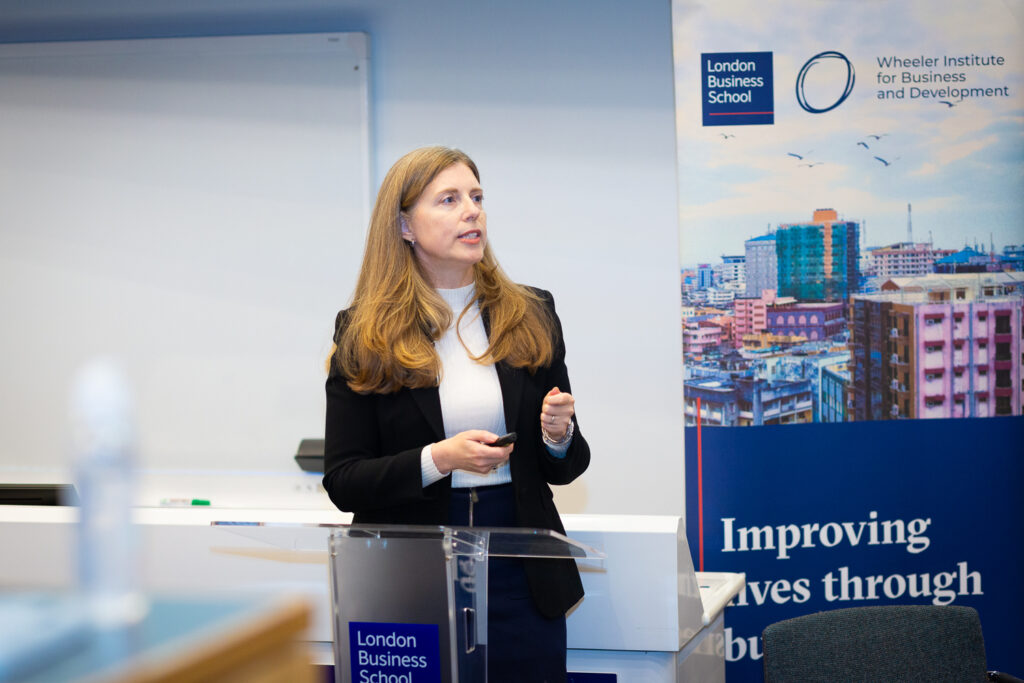
How do we solve the twin problems of rational apathy and concentrated power? The answer, according to Hélène Landemore of Yale University, may lie in a revival of ancient democratic tools adapted for the modern market.
Landemore drew on France’s Citizens’ Convention on Climate, convened by President Macron in 2019. One hundred and fifty ordinary citizens, selected randomly through stratified sampling to ensure demographic representativeness, deliberated for seven months on reducing greenhouse gas emissions. Participants were compensated, provided with childcare and transportation, and heard from experts before debating in small groups facilitated by professionals trained to draw out quieter voices. Critical to the model’s legitimacy was Macron’s pre-commitment to explain publicly why any recommendations were not adopted.
The panel’s proposal adapts this model for corporate governance. An Investor Assembly would comprise approximately sixty randomly selected shareholders, with selection probability proportional to shareholding. These citizen investors would deliberate on contentious issues where trade-offs between profit and broader values arise, hearing from experts, company representatives, and stakeholders before reaching recommendations.
The logic is akin to a jury. Just as we trust a random sample of peers to deliberate on complex legal matters, an Investor Assembly would gauge the true welfare preferences of shareholders. Investors who strongly disagreed could opt out, voting directly through existing mechanisms. The assembly’s recommendations would bind the mutual funds holding shares on behalf of all other investors, ensuring that ordinary shareholders’ preferences, rather than fund managers pursuing institutional interests, would shape corporate behaviour.
Democracy Has a Cost
The proposal attracted searching questions. Critics argued that assemblies might be captured by those with strong views, leaving out the busy single parent. Landemore responded that proper compensation and randomisation mitigate this risk; parliaments are far less representative than randomly selected assemblies with demographic quotas.
A more fundamental objection arose: does aggregating shareholder preferences constitute justice? The panel acknowledged the limitation, emphasising that their aim is to improve shareholder democracy, not solve broader questions of corporate accountability to society. This is a reformist agenda seeking incremental improvement rather than perfection. Hart, Zingales and Landemore conceded that democracy has a cost, but countered that the price of the alternative, a market that systematically ignores the non-monetary values of its participants, is far higher. Technology might reduce costs over time, though the value lies not merely in efficiency but in the legitimacy that comes from genuine deliberation. By acknowledging that shareholders are citizens with values as well as financial goals, companies may finally be able to act in the true interest of their owners.
About the speakers
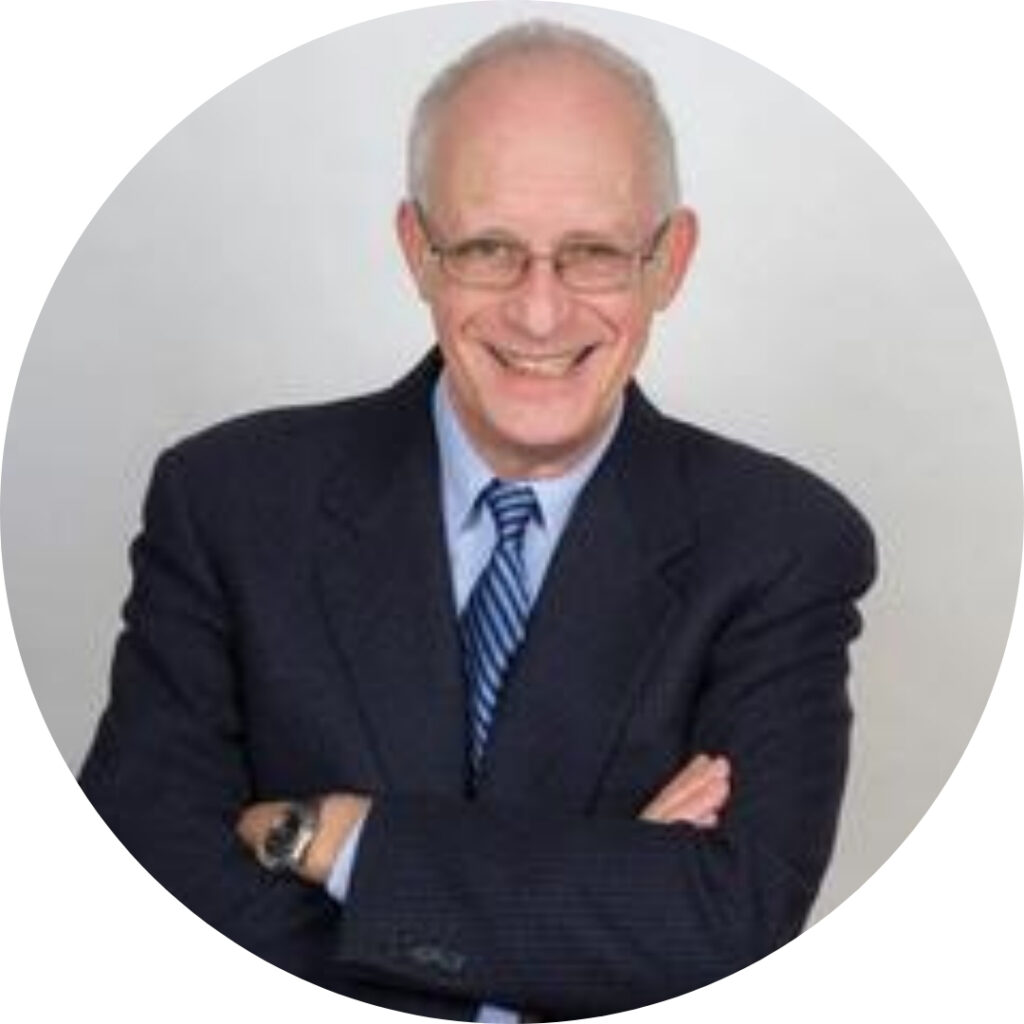
Sir Oliver Hart is the Lewis P. & Linda L. Geyser University Professor of Economics at Harvard University and co-recipient of the 2016 Nobel Prize in Economic Sciences for his pioneering work on contract theory and the boundary of the firm. He holds numerous honorary degrees, is a Fellow of the Econometric Society, the American Academy of Arts & Sciences, the British Academy and the National Academy of Sciences. He has held major leadership positions in economics departments, chaired key committees in governance and law & economics. Sir Oliver Hart is one of the most influential economists of his generation, shaping how scholars and practitioners understand contracts, ownership, and firm structure globally.
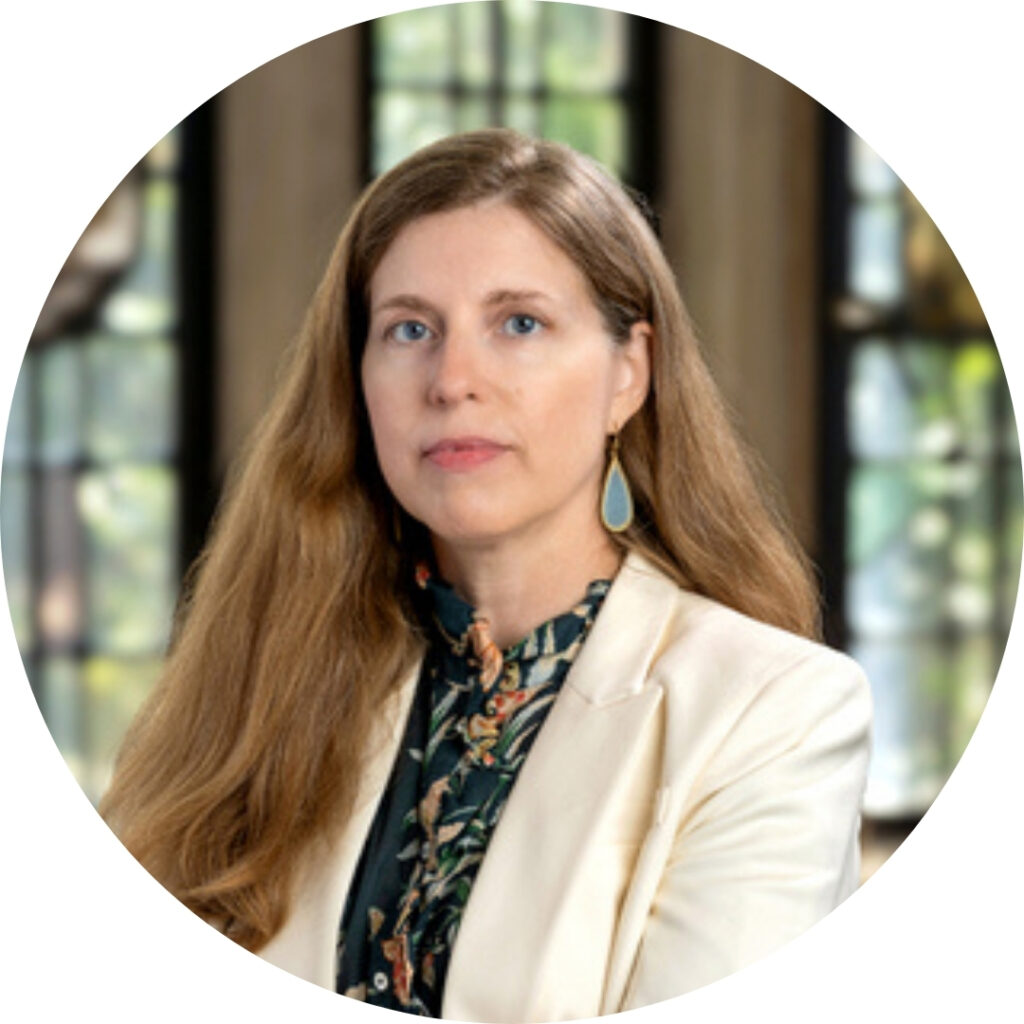
Hélène Landemore is Damon Wells ’58 Professor of Political Science at Yale University and a leading authority on democratic innovation, having developed work on citizens’ assemblies, deliberative democracy, and inclusive institutional design and influenced governments, institutions, and civic organisations worldwide. Her books include Open Democracy: Reinventing Popular Rule for the Twenty‑First Century and Democratic Reason: Politics, Collective Intelligence and the Rule of the Many. She is a Faculty Fellow at Yale’s Institute for Social and Policy Studies, and a Distinguished Research Fellow at Oxford University’s Institute for Ethics in AI. Professor Landemore is internationally regarded as a leading voice on democracy, constitutional reform, and the ethical and political implications of artificial intelligence.
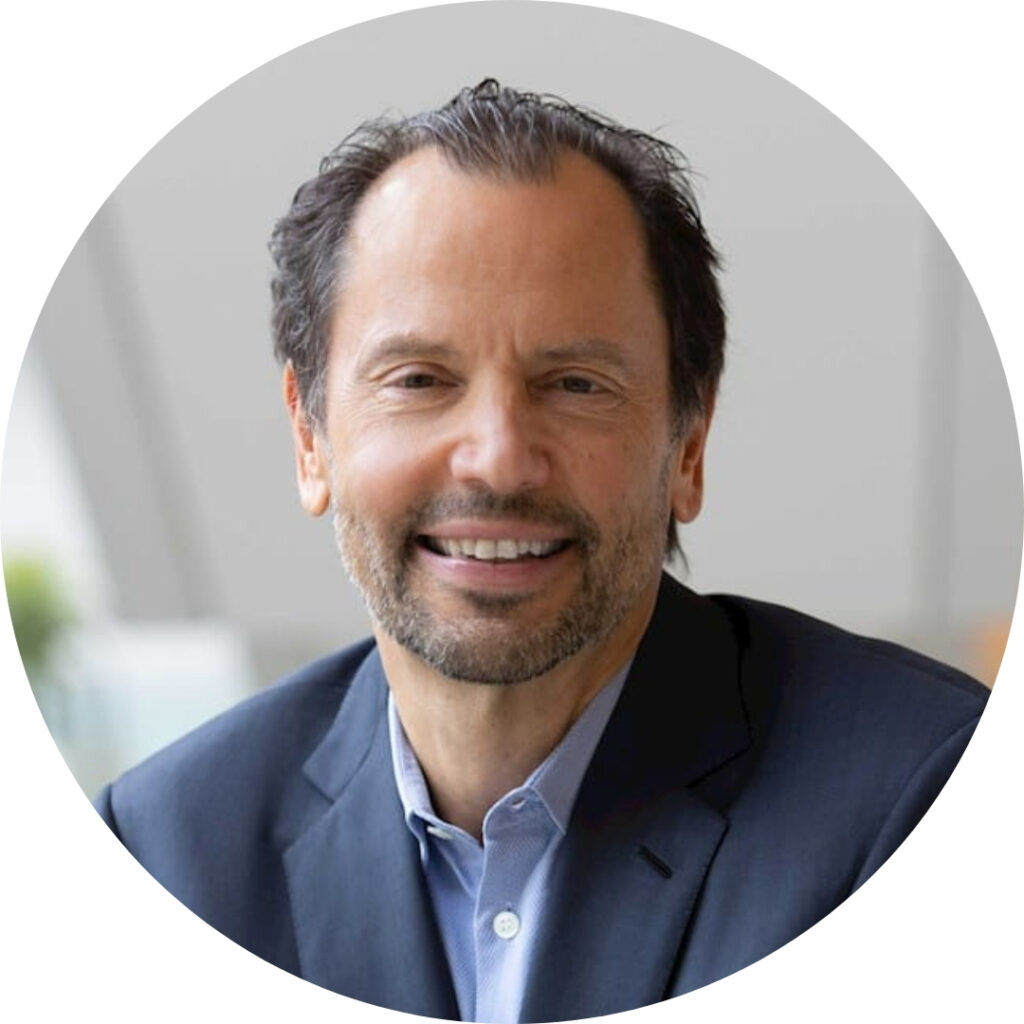
Luigi Zingales is the Robert C. McCormack Distinguished Service Professor of Entrepreneurship and Finance and Director of the Stigler Center for the Study of the Economy and the State at the University of Chicago Booth School of Business
He is one of the most influential voices in corporate governance, financial markets and the political economy of capitalism. He served as President of the American Finance Association in 2014, is a Faculty Research Fellow at the National Bureau of Economic Research, a Research Fellow at the Center for Economic Policy Research and a fellow of the European Corporate Governance Institute. He also co‑hosts the podcast Capitalisn’t and is the author of the best-selling books Saving Capitalism from the Capitalists and A Capitalism for the People. Professor Zingales is widely recognised for shaping public debate on the interplay between markets, institutions and regulation, and is one of the most cited scholars in finance and political economy globally.
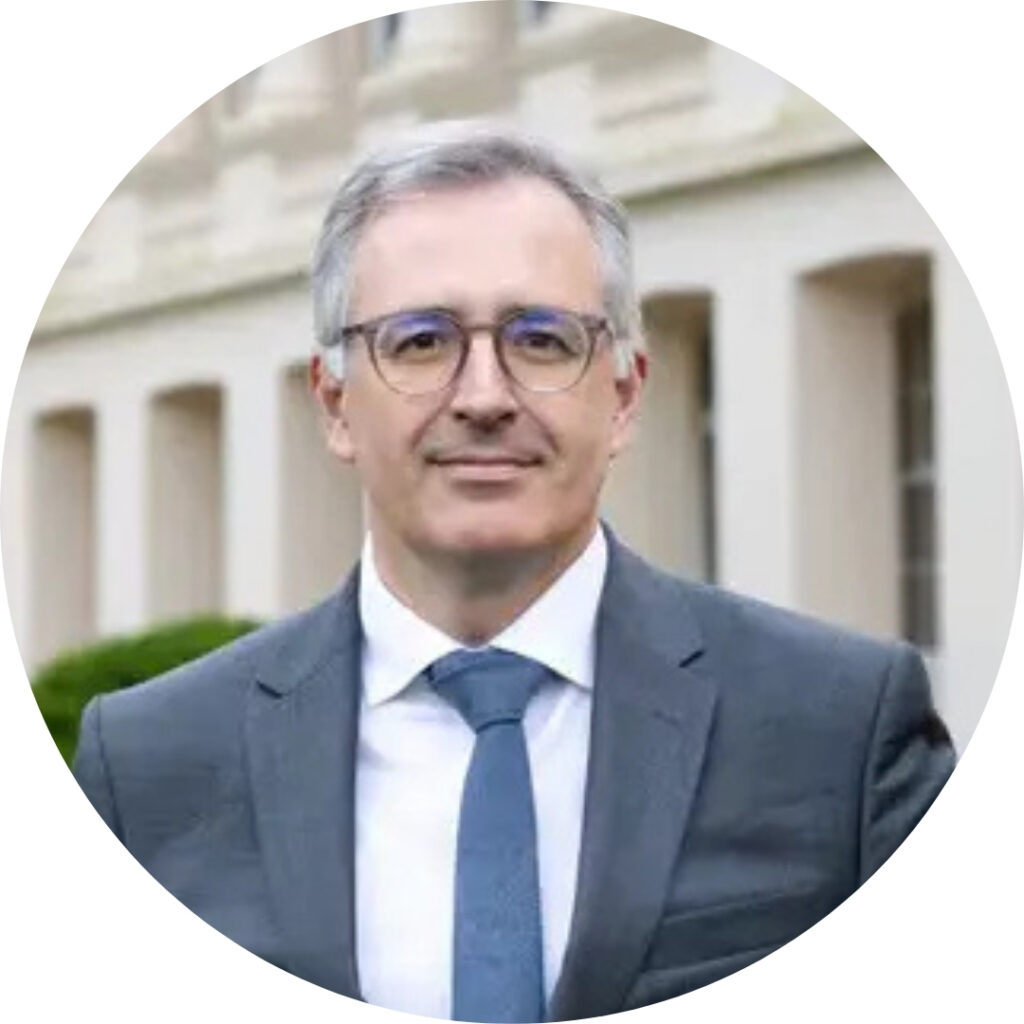
Sergei Guriev is Professor of Economics and Dean of London Business School. Prior to joining LBS, he was a tenured professor of economics at Sciences Po in Paris and served as its first Provost. Previously, he served as the Chief Economist of the European Bank for Reconstruction and Development. He is a Research Fellow at the Centre for Economic Policy Research, a Senior Member of the Institut Universitaire de France, an Ordinary Member of Academia Europaea, an Honorary Foreign Member of the American Economic Association and a member of the Group of Thirty. Professor Guriev’s work spans political economy, development economics, and institutional reform, and he has served as an advisor to governments and international organisations. You can watch here and here previous Wheeler Institute events with Sergei Guriev.
About the writer

Nasreen Begum is an MBA 2027 candidate at London Business School. Prior to joining the school, she worked at Engine AI as a Product Manager, where she directed the development of autonomous data agents for the financial sector. Nasreen is focused on advancing equitable education in developing economies. She has a particular interest in leveraging technology and AI to overcome infrastructure barriers and improve access to learning in underserved regions
About the series
The Wheeler Institute’s Rethinking Capitalism series is a series that fosters important debates surrounding existing notions and assumptions about capitalism. The series invites prominent guests and thought leaders to contribute their insights and perspectives on different approaches to creating a more equitable and sustainable economic system. By bringing together diverse viewpoints and expertise, the Rethinking Capitalism series aims to spark meaningful dialogue and inspire new solutions for the challenges facing our world today.
Many leading voices from the world of economics and business have contributed to this discussion already, including Daron Acemoglu, Andrei Shleifer, Gita Gopinath, Oded Galor, Esther Duflo, Abhijit Banerjee, Thomas Philippon, and Rebecca Henderson.
Gofrex