Some lives are shaped by the country one comes from. Saad Mohseni’s was shaped by the countries he did not. Born in London in 1966 to an Afghan diplomat and his wife, he turned three in Damascus, midway through his parents’ drive from England to Kabul. By the time he reached secondary school the family had passed through Islamabad and Tokyo before settling at last in Melbourne, where his father laid down the diplomatic life and the Mohsenis became, almost by accident, refugees in a country chosen for its weather. Nothing in this itinerant childhood foreshadowed the trajectory that would later see him introduced at London Business School as a man who, in the words of one Pulitzer-winning journalist, has done more to change Afghanistan than any single diplomat or politician of his era.
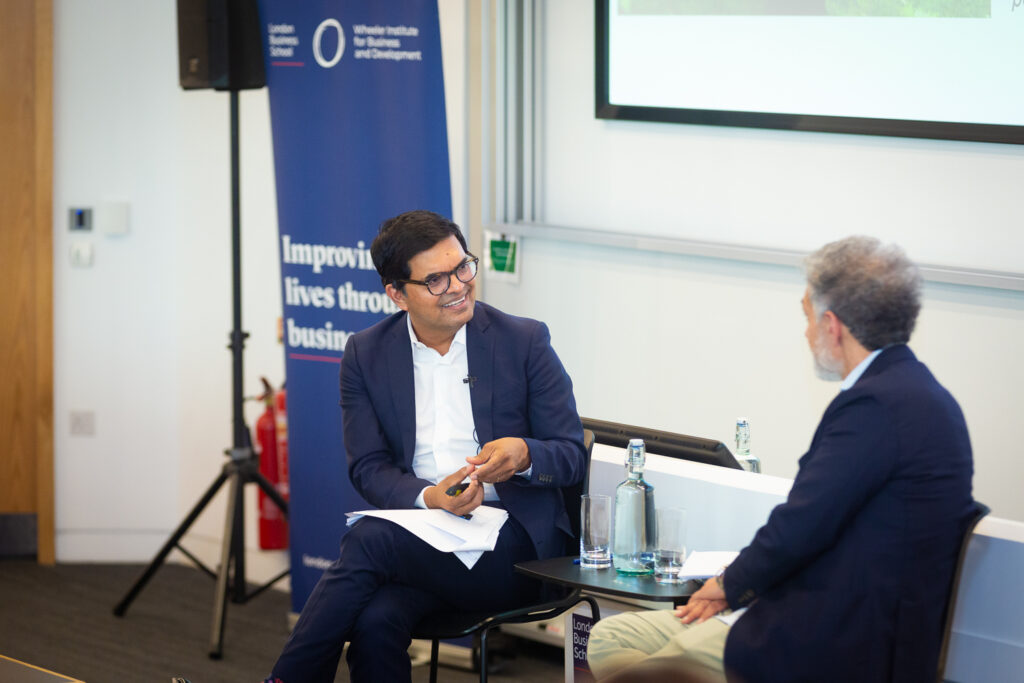
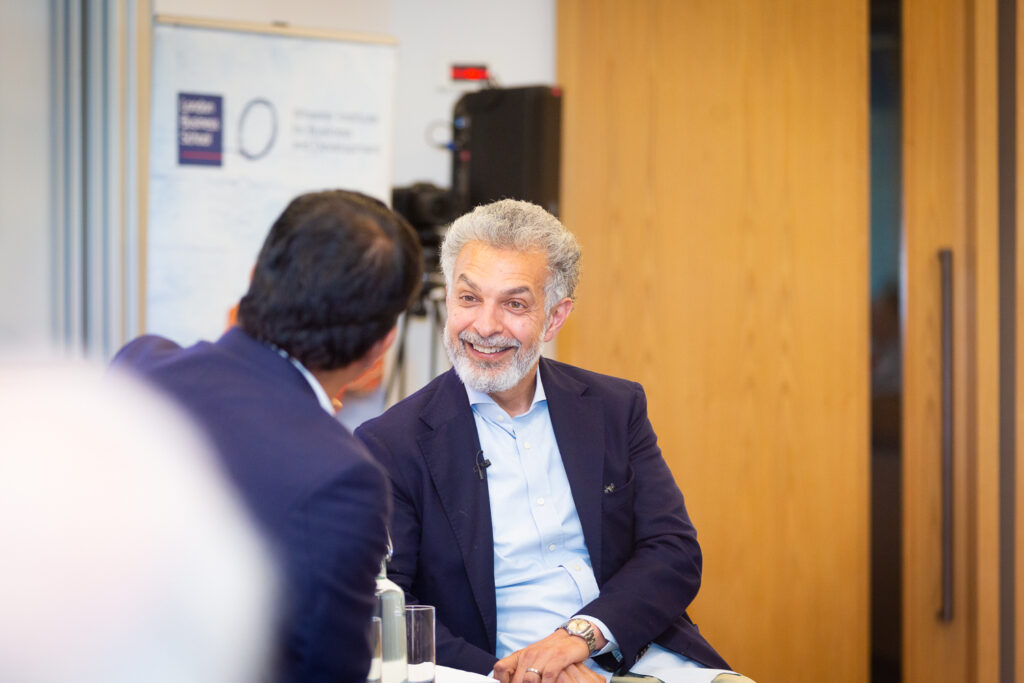
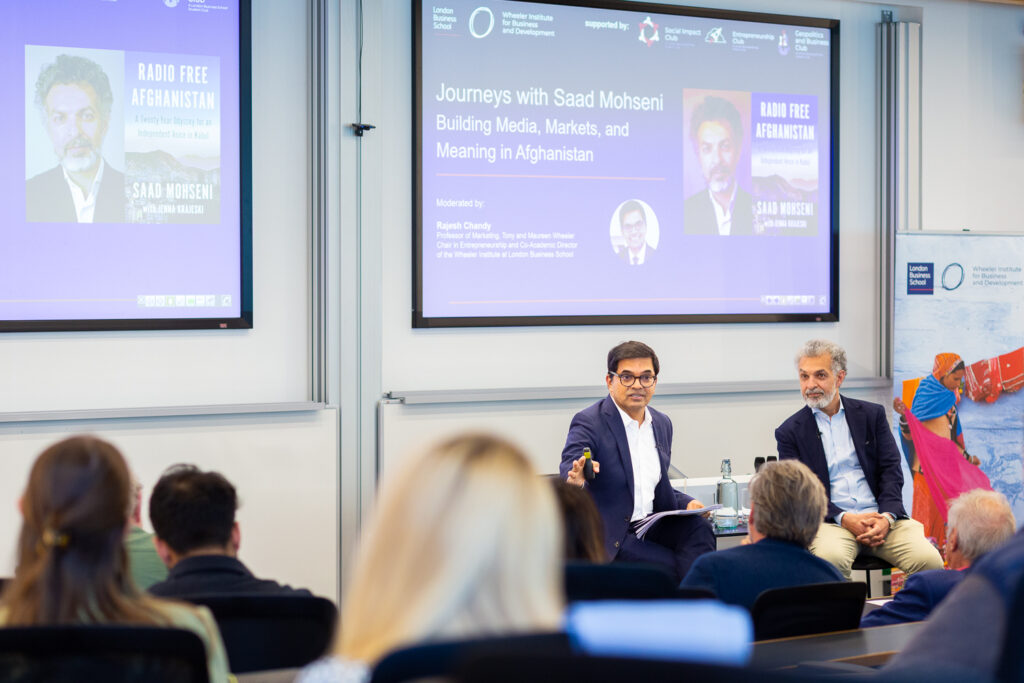
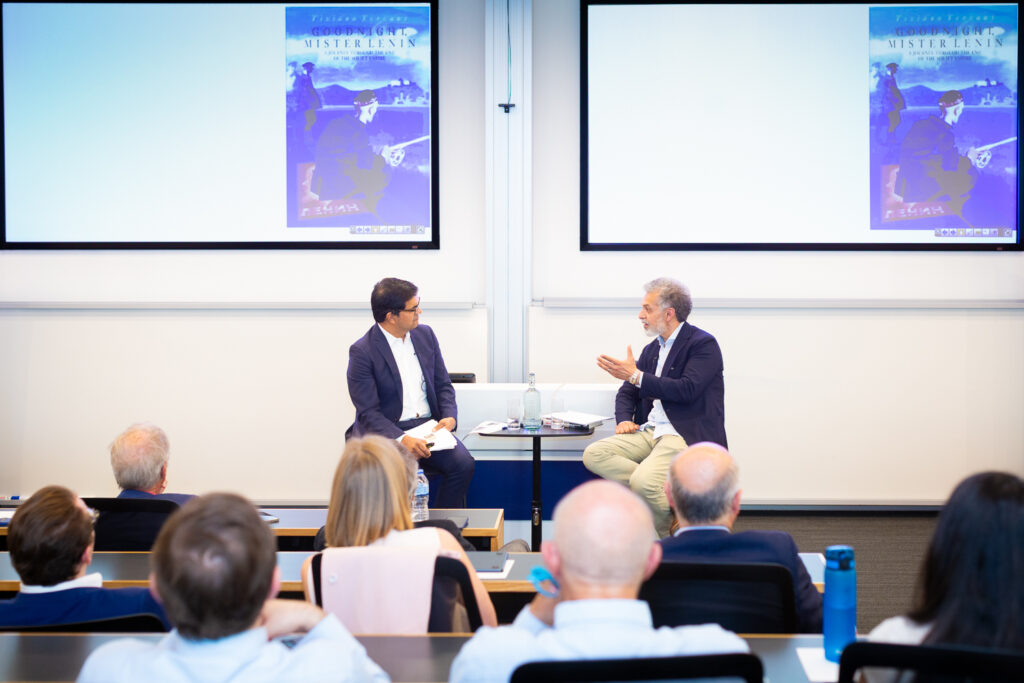
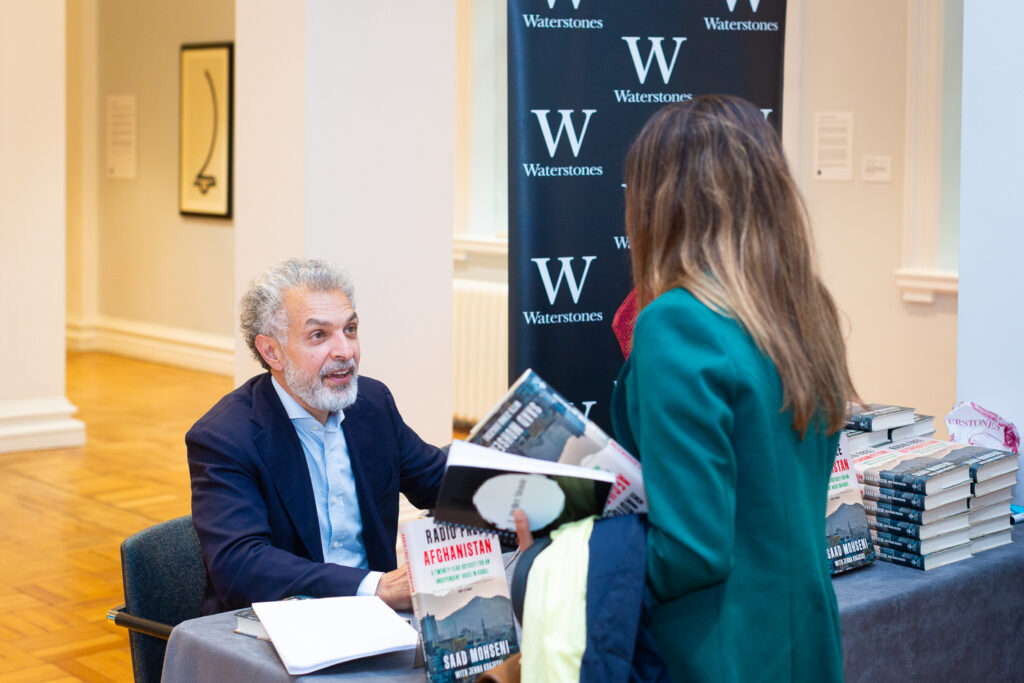
In a wide-ranging conversation with Rajesh Chandy, Professor of Marketing at LBS, Tony and Maureen Wheeler Chair in Entrepreneurship and Co-Academic Director of the Wheeler Institute, Mohseni traced that trajectory for an audience drawn together by the Wheeler Institute’s Journeys series. Made possible by Tony and Maureen Wheeler’s enduring commitment to frontier markets, the series asks how individual lives reshape the places they touch. Mohseni, author of Radio Free Afghanistan and founder of the MOBY Group, has reshaped his with unusual force. The book chronicles how he and his siblings built that company from a single radio station into Afghanistan’s most influential media network, across more than two decades of war, reconstruction and regime change. What followed on stage was part memoir, part masterclass in commerce under constraint, delivered with humility.
From Finance to Frontier
Mohseni did not set out to be a media mogul. After eleven years in finance, including a spell at an investment bank, he walked away at thirty, took up golf, and read a book about the collapse of the Soviet empire titled Goodnight Mister Lenin. The book stirred something familial. His great-uncle, Abdulaziz Khan, had been the first to export Afghan and Central Asian goods to Europe in 1910, building a small commercial bridge along the old Silk Road. When the Emir of Bukhara was overthrown by the Soviets and sought refuge in Afghanistan, the Mohseni family took him in and continued to trade with him. The connection had endured for generations.
Inspired by both the book and that inheritance, Mohseni moved to Uzbekistan to set up a trading venture. The business itself was a modest affair; what mattered was where it put him, at the edge of Afghanistan as its history was beginning to turn. He watched a steady stream of Afghans pass through during the civil war, met figures from the Northern Alliance, and absorbed the cadence of a country in flux. By 1999 he had returned to Australia and to finance. Then came September 2001, and the country he had been circling for a decade was suddenly the centre of the world.
Mohseni first flew back to Kabul in early 2002, on an Ariana Afghan flight out of Dubai. Passengers, he recalled, kissed the ground on arrival. Afghanistan was a blank canvas, and the optimism of those first months is difficult to convey now. He arrived with vague plans to invest in almonds and a few other ventures. The radio station that would become the foundation of the MOBY Group was almost an afterthought.
The opening came over dinner with Ahmed Rashid, whose book Taliban had become essential reading on the region. Rashid introduced him to Andrew Natsios. The minister of information at the time happened to be an old friend of his father. A few hundred thousand dollars in seed capital later, the station was on the air. It was, Mohseni admitted, an accidental business in a market that did not yet exist.
The early years brought a steep curve. He and his three siblings, none of whom had any media experience, moved to Kabul and shared a house for the first time since 1978. His brother Zaid, a lawyer, and his brother Jahid, a financial analyst, joined his sister, who took on marketing. The team commissioned a thousand-household survey to find out what Afghans wanted to listen to. The results suggested documentaries and religious programming. Mohseni set the report aside and resolved to follow his own judgement instead. The lesson he drew, and repeated to the audience, was that people often cannot articulate what they want until they have been exposed to it. A young business must be nimble enough to discover what works in real time. What emerged instead defied the survey. The station played Ahmad Zahir, the so-called Afghan Elvis whose music had survived the regimes that tried to silence it, alongside Shakira and Julio Iglesias. The morning show was hosted by a cousin with an improbable trajectory. A sculptor by training, he had fled Afghanistan when that vocation became impossible, returned as a driver, and proved so hazardous behind the wheel that the family redeployed him to the microphone. He took to it instinctively. Within a few years the cousin behind the mic was, by some accounts, as recognisable as the president.
An Accidental Empire
From that single station in 2003, broadcasting in Pashto and Dari, the country’s two main languages, the MOBY Group expanded into television and pushed outwards into the Persian, Pakistani, Indian, Ethiopian and Arab markets. By the time of the talk it operated across twenty-four countries. The flagship show Afghan Star, launched in 2005, brought a generation of musicians out of hiding and went on to win best directing and audience documentary awards at a major international festival, an outcome that a senior MTV executive who had backed the project thought so unlikely he left the ceremony before it was announced. The group has since launched sports leagues, food programmes, travel shows, game shows and female-led town halls.
Cultural reach notwithstanding, Mohseni insisted that the venture remained, at its core, a commercial one. The first year produced a hundred-thousand-dollar loss. Every year after that turned a profit until 2022, when the Taliban’s return to power forced the business back to breakeven. The discipline that kept the company alive lay, in his telling, in the quieter mechanics of the trade. Costs were watched with meticulous care, and clients were cultivated with the patience that only a long view affords. He recalled once offering an early-stage educator ten thousand dollars of airtime in return for a two-thousand-dollar budget, a gesture that eventually produced a seven-figure account. On larger projects, including a billion-dollar new city development, the group took a marketing stake rather than a fee, a model the Times of India has used to similar effect.
Inside the Possible
If the first half of the conversation traced an entrepreneurial ascent, the second confronted the harder question of what it now means to run a media company under Taliban rule. Mohseni was unsparing about the costs. The group has lost twelve employees to violence, including seven killed in a single suicide bombing. Women are technically barred from formal education beyond primary school. A recent morality crackdown precipitated a nationwide internet shutdown.
Yet his account resisted the simpler Western framing. There is, he argued, an important distinction between challenging a regulation and operating within what is possible. Afghanistan is home to forty-three million people with a median age of eighteen. Six or seven million returnees have been pushed back from Iran and Pakistan. In that setting, women’s economic participation is not a luxury but a necessity, and there has been a striking uptake in female entrepreneurship as a result. The group employs more women now than before the Taliban’s return, partly because remaining staff have proved so loyal. Women on screen wear surgical masks to comply with the rules, a quiet protest, since the implication of a mask is that the arrangement is temporary. The men, in solidarity, have started wearing them too.
It is in education, however, that Mohseni’s most ambitious work is now being done. In partnership with NYU and UNICEF, the group has built a televised curriculum that reaches five million students. The programmes are short, roughly twenty minutes apiece, scored with music and animation, and pitched to children who might otherwise spend their days at home with nothing to read. The subjects covered are mathematics, physics and chemistry, chosen because the religious schools have deemed them uncontroversial enough to teach.
A more ambitious experiment runs alongside the broadcasts. A pilot programme delivers tutorials over WhatsApp, supported by an AI chatbot named Lalah, built on Google’s Gemini model and tuned to the Afghan curriculum. Baseline studies conducted with both academic partners found that children who received the chatbot tutorials improved their learning outcomes by two hundred per cent against those who watched the television lessons alone. The most telling finding, however, sits between the numbers. Girls formally barred from school are outperforming the boys who still attend. Television, Mohseni stressed, is not a substitute for the classroom. It is a bridge, a way of keeping a generation of girls in reach of knowledge until the day the classroom is opened to them again. Halfway through the session, Mohseni played a short film. In it, a young girl tells her father that she wants to go to school. She wants to become a doctor, or an engineer, or a teacher. Her father replies that only boys can go to school. The girl pushes back. Men, she tells him, have destroyed the world. Men should stay at home. It is the women who will rebuild the city. Mohseni let the moment land before turning to where the country now stands.
His account of the country today, however, was more nuanced than the film alone allowed. Violence has subsided, and one can now travel through the country in relative safety. The Taliban remain, in his telling, more nuanced than their 1990s incarnation. They allow satellite television and recognise that they are the custodians of a country whose people have already glimpsed the wider world. The tension between what they decree and what they tolerate in practice will, he believes, eventually have to converge. Which way it converges remains, by his own admission, uncertain.
Asked what he would invest in today if he were starting again, Mohseni pointed to familiar ground. Technology and media still appeal to him. Afghanistan itself holds extraordinary mineral wealth, including rare earths, copper and gold, though the political risks are considerable. The country is also home to four million people on the verge of starvation, a humanitarian emergency from which the international community appears to have moved on.
Questions also returned to the role of women. Was the editorial commitment to female voices deliberate, or had it emerged organically? It is, Mohseni answered, entirely deliberate. The group has run more than five thousand programmes since the 2022 ban on girls’ secondary education, airing voices on why Afghan girls need to return to school. He acknowledged that the work is difficult, that no foreign journalist is being granted a visa, and that media operations like his are now among the few channels through which the country can speak honestly to itself and to the world.
It was a fitting place to end. The Journeys series, as Professor Chandy reminded the audience, was conceived in the spirit of the Wheelers themselves, once young travellers whose curiosity opened markets others had ignored. Today’s equivalents, he suggested, may well be the influencers, broadcasters and improbable founders willing to set up shop where institutions have failed. Mohseni’s career suggests there is room for both stubborn idealism and disciplined commerce in such places. The two can sit side by side, and the most consequential ventures often arrive looking like nothing more than chance.
This event was supported by the LBS Entrepreneurship Club, Social Impact Club and Geopolitics and Business Club.
About the series
The series Journeys spotlights inspiring individuals who have pursued impact-driven business careers — often in challenging and transformative contexts. Please read here about the previous event of the series with Maureen and Tony Wheeler, Founders of Lonely Planet.
About the speaker
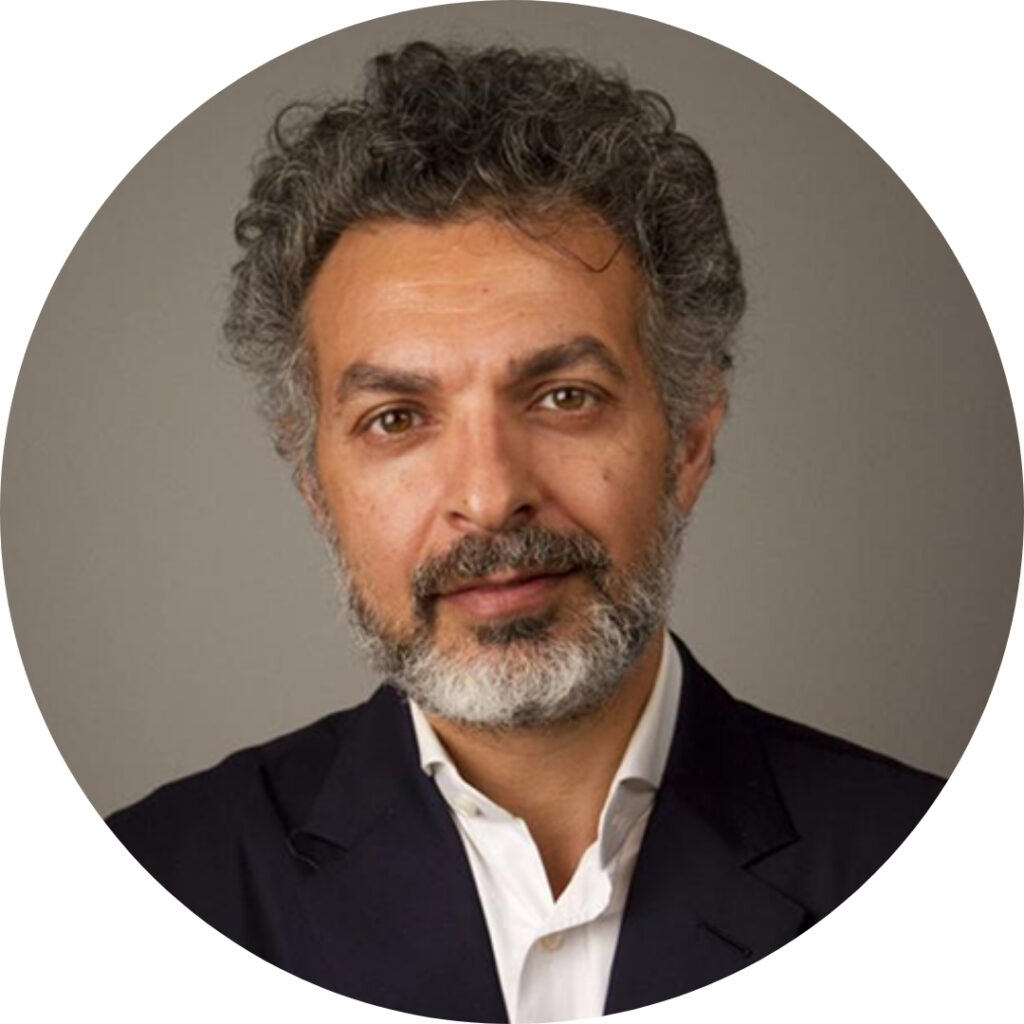
Described by the Asia Society as a ‘Game Changer’, Saad Mohseni has built a reputation as a dynamic and innovative entrepreneur.
As Chairman and Chief Executive of MOBY GROUP, Saad has been widely applauded for his role in advancing press freedom, empowering civil society and defending women’s rights. Time Magazine recognized him in 2011 as one of the 100 most influential people in the world, while in 2013, Foreign Policy magazine named him among 100 Global Thinkers. In 2016, he was featured in the Business Insider 100 “The Creators” list, and recognized by the BBC as one of 10 men globally championing gender equality.
Saad currently serves on the boards of the International Crisis Group (ICG) and the Washington DC-based International Center for Journalists (ICFJ).
One of four children of an Afghan diplomat, Saad spent his early years in the United Kingdom, Kabul, Islamabad and Tokyo, before emigrating to Melbourne, Australia.
About the moderator

Rajesh Chandy is Professor of Marketing and the Tony and Maureen Wheeler Chair in Entrepreneurship at London Business School, where he is also the Co-Academic Director of the Wheeler Institute for Business and Development. Rajesh’s current research lies at the intersection of business and development. His recent projects have covered the impact of business skills among micro-entrepreneurs in South Africa, novel financing approaches in Ghana, property rights in slums in Egypt, innovation among farmers in India, highways and private education expenditures in India, and using big data for development outcomes.
Rajesh is a member of the advisory board of the Journal of Marketing and a Co-Editor of the journal’s special issue on “Better Marketing for a Better World”. He is also co-editor of the Management Science special issue on “Business and Climate Change,” and previously served as an Area Editor for the Entrepreneurship and Innovation area at Management Science. His research and publications have received several awards, including the Mahajan Award for Lifetime Contributions to Marketing Strategy Research and the 2026 William L. Wilkie “Marketing for a Better World” Award by the American Marketing Association (AMA).
About the writer

Nasreen Begum is an MBA 2027 candidate at London Business School. Prior to joining the school, she worked at Engine AI as a Product Manager, where she directed the development of autonomous data agents for the financial sector. Nasreen is focused on advancing equitable education in developing economies. She has a particular interest in leveraging technology and AI to overcome infrastructure barriers and improve access to learning in underserved regions