
Opening Doors at the Last Mile
Talent, determination, and drive exist everywhere, but opportunity does not. Team4Tech was built to close that gap by working through community-based organizations to open doors for learners who are too often the last to be reached. What started as a social impact program inside Intel has since grown into an independent NGO that is helping shape how technology serves our future. Rajesh Chandy, Professor of Marketing at LBS, Tony and Maureen Wheeler Chair in Entrepreneurship and Co-Academic Director of the Wheeler Institute, sat down with Team4Tech’s co-founders to talk about how they got here: Julie Clugage, Team4Tech’s Executive Director, and Lila Ibrahim, Chief AI Readiness Officer at Google DeepMind.
Team4Tech is an impact accelerator that partners with NGOs that are closest to learners and know them best, and equips them with tech-supported, evidence-based training and resources. With that support, these organizations help learners build durable employment skills. The ultimate goal is improved socioeconomic mobility, with lifelong skills taking root from a young age.
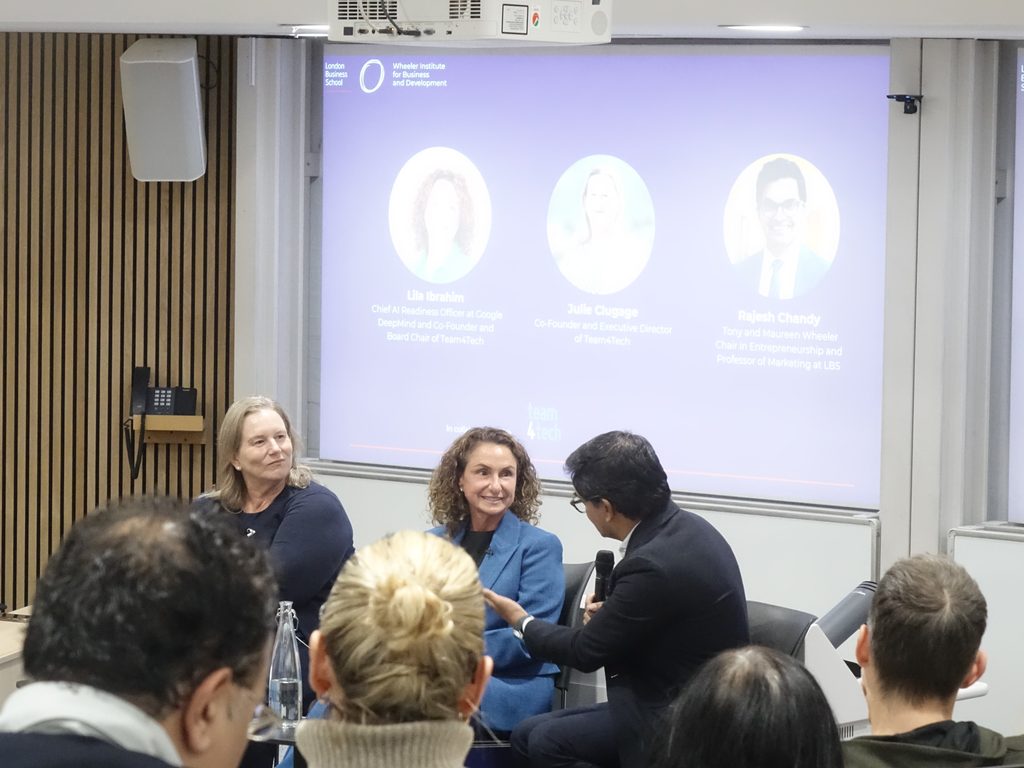
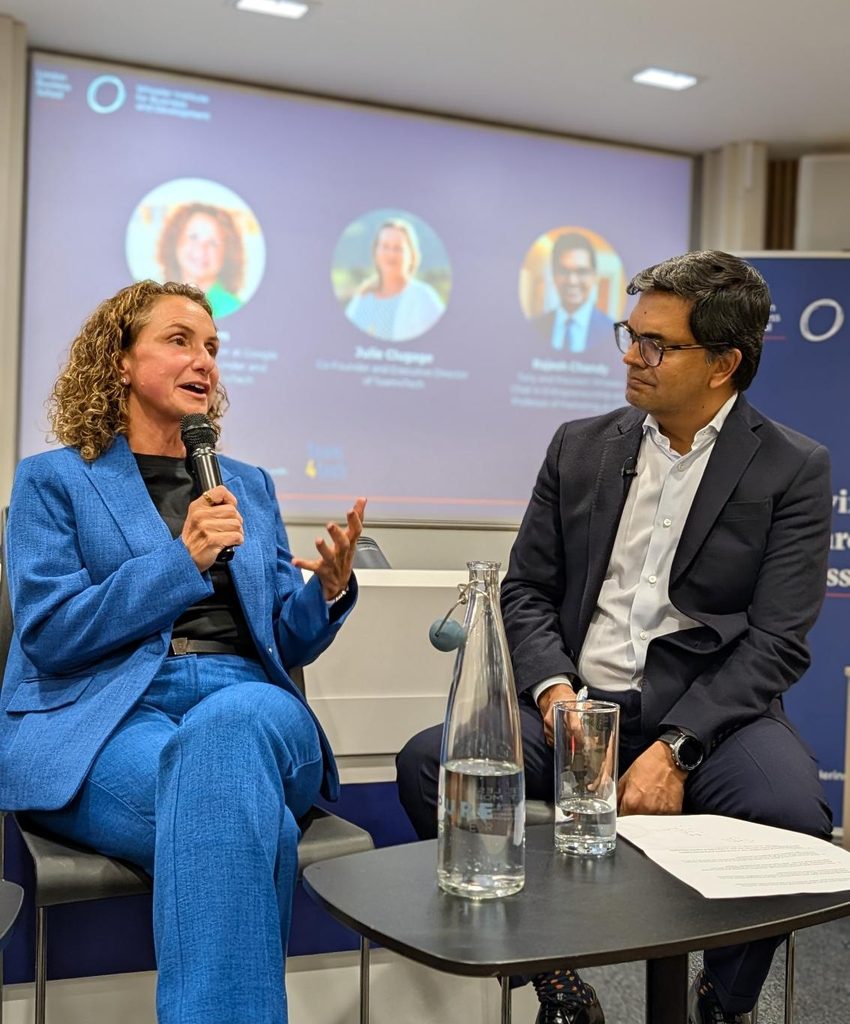
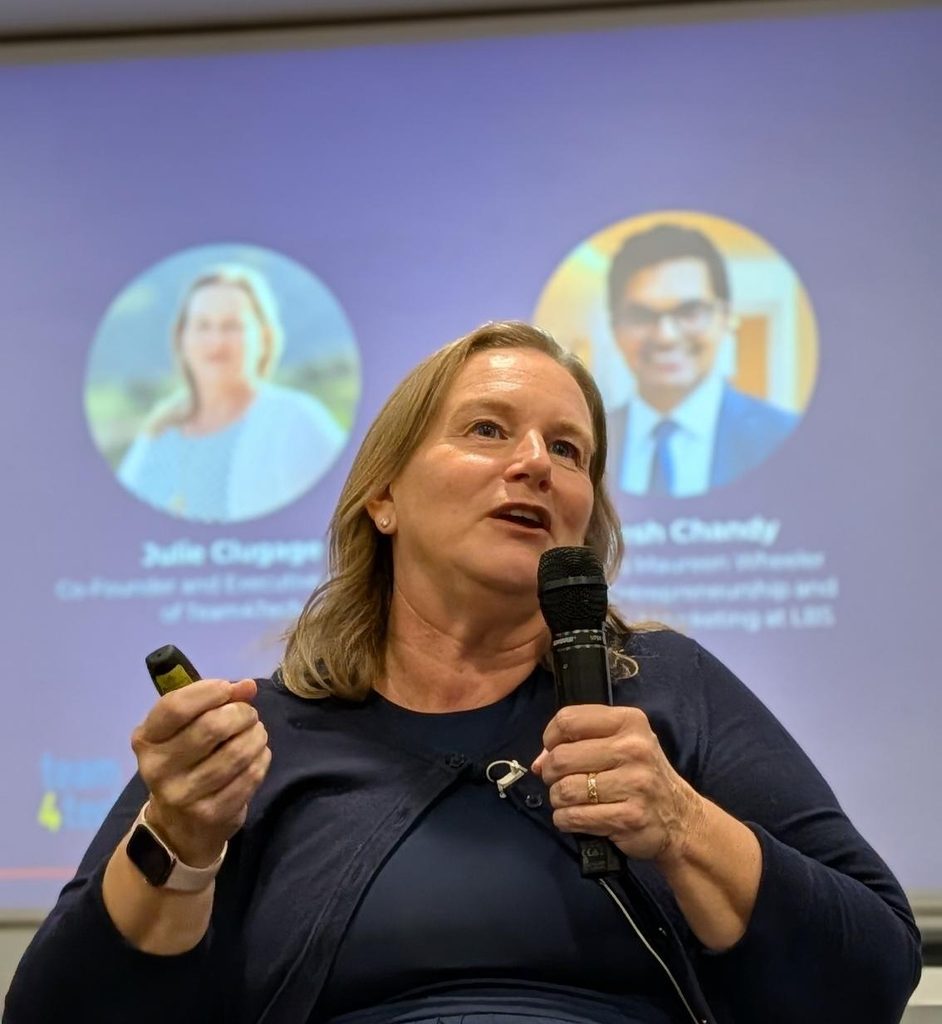
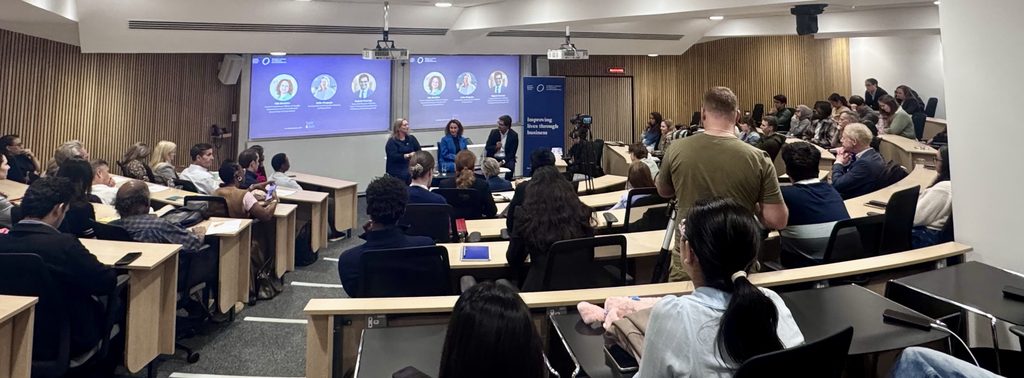
Two Journeys, One Mission
Julie and Lila’s stories unfolded on opposite sides of the world, yet they run in parallel. Right out of university, Julie taught at a newly built secondary school in Guatemala, where she helped set up a computer lab to teach word processing and digital literacy. Long after she left, the project lived on. Her students went on to university and to jobs with leading think tanks. That experience showed Julie the transformational power of education and made her determined to keep unlocking potential for others.
Lila’s path began with curiosity. As a child, she wondered about the devices her father designed, such as heart pacemakers and in-car safety devices. She came to realize that her father, an orphan from Lebanon, was saving millions of lives. That stayed with her, and she followed in his footsteps as an engineer. Later, she took time off work to travel to Lebanon and build a computer lab, so that students there could develop the skills to find work and build better lives for their families.
When their paths crossed at Intel, the two launched a social impact program within the organization with three projects and just 15 spots, and more than 500 people applied. The demand, along with the confidence that came from being entrepreneurial inside Intel, gave them the push to go out on their own, and that is when Team4Tech was born.
Proof in Practice
Fourteen years on, Team4Tech’s footprint spans the globe, from Africa to South America. It now counts 1,500 NGOs in its community, runs programs in more than 100 countries, and reaches 60 million learners. The success stories show what is possible when technology is paired with local insight. One AI- powered coaching platform helps teachers plan evidence-based lessons. Another uses voice recognition to listen to primary school students read, then offers tailored feedback and practice on the phonetics they find hardest. Scale matters too, which is why the cohort’s solutions are built to work with governments. In Rwanda, AI analytics mapped to the Labour Market Information System (LMIS) can identify struggling teachers in hours instead of weeks, and support can then reach them early, rather than when it may be too late.
Several organizations in the cohort have earned recognition along the way. Yiya in Uganda won Best Emerging Markets Solution at the 2026 Global EdTech Startup Awards. In Kenya, Kenya Connect and its partner schools in Machakos County have won the Kenya Robotics Olympiad two years out of the last three and have gone on to compete internationally in Turkey and Singapore.
Behind these results is a patient approach. Julie and Lila know that real community change takes regular check-ins and commitments over several years. Team4Tech brings the technology know-how, and it leans on partners who understand the local community, culture, schools, and students. The result is programs with local nuance, rather than a generalized approach in which the hammer goes looking for a nail.
Technology With a Purpose
Technology has always been an enabler, and its value has depended on how well it is adopted. Julie and Lila saw this firsthand with their computer labs: the machines mattered, but the skills students built on them mattered more. The wider world tells the same story. M-Pesa transformed access to financial services in Kenya because it was designed around how people already lived, letting them send money with nothing more than a basic mobile phone. During COVID-19, radio lessons kept learners connected to school when classrooms closed, because they reached students on a device they already had. In each case, the technology succeeded by meeting people where they were.
AI is the latest test of that lesson, and it drives the question Team4Tech tackles daily: how do we use AI to enable learning, not erode it? Their answer starts with using AI to accelerate evidence-based teaching strategies that build durable human skills. It also means making sure every stakeholder is AI literate and understands both the benefits and the risks.
The founders do not shy away from the controversy. They talk about risks up front and problem-solve early about what could go wrong. Yet abandoning AI entirely makes little sense. It is speeding up drug discovery, helping neurodiverse learners engage with content in ways that were previously out of reach, and giving teachers time back while improving outcomes for students. The key is to meet students where they are, with guided learning that walks them through the steps rather than handing over the answer. That requires accountability built into the system, along with research across different contexts and environments. AI should not simply happen to people, but rather it should be something they understand, question, and use on their own terms.
Shaping What Comes Next
We are at a critical moment in history, and it is worth asking how we are spending our time and what we are doing to build a better future. The lesson from every earlier technology is the same: the returns go to those with the skills to use it. Julie and Lila are answering this moment with intention, through patient partnerships and a commitment to responsible technology. Their aim is ambitious, that learners, across the globe, can share in what new technology makes possible.
About the speakers

Lila Ibrahim is Chief AI Readiness Officer at Google DeepMind and Co-Founder and Board Chair of Team4Tech. She was previously Chief Operating Officer of Coursera, which she joined as its first President in 2013, and spent 18 years at Intel in engineering and marketing leadership roles, rising to Chief of Staff to Intel’s CEO and Chairman before later leading the company’s education product sector. She began her career as a Pentium microprocessor designer and holds a bachelor’s degree in electrical engineering from Purdue University.

Julie Clugage is Co-Founder and Executive Director of Team4Tech, responsible for growing the organisation’s partnerships with tech companies and non-profits around the world. She brings more than 20 years of experience in education, technology and economic development, including roles at Intel, the World Bank and the Inter-American Development Bank, and two years teaching at a high school in rural Guatemala.

Rajesh Chandy is Professor of Marketing and the Tony and Maureen Wheeler Chair in Entrepreneurship at London Business School, where he serves as Co-Academic Director of the Wheeler Institute for Business and Development. His research sits at the intersection of business and development, spanning projects on micro-entrepreneurship in South Africa, innovation among farmers in India, and the use of big data for development outcomes. He is an elected Fellow of the British Academy and of the American Marketing Association.
About the writer

Joanne Ngotho is an MBA class of 2027 candidate at London Business School and a Research Intern at the Wheeler Institute for Business and Development. She previously worked at McKinsey & Company (Nairobi), advising clients across Africa on projects in both the private and public sectors. Joanne is driven by a desire to tackle the root causes of Africa’s development challenges and shape solutions that operate at scale, with a core focus on strengthening education systems as a foundation for long-term growth.