
Jérémie Gallien is the author of several research papers that address healthcare problems in developing economies. He is collaborating with an academic team hailing from London Business School and other institutions in the USA and Liberia and an implementation team of people from the Ministry of Health in Liberia on a research project on reducing infant and maternal mortality in sub-Saharan Africa.
Background
Across the globe, two women die every minute from complications related to pregnancy and childbirth, with about 90% of these deaths from rural areas in low-income countries. The current global maternal mortality ratio is 194 deaths per 100,000 live births, more than double the United Nations Sustainable Development Goal (SDG) goal of “reducing the global maternal mortality to less than 70 [deaths] per 100,000 live births.”
In Liberia, the situation is even more severe, with an average of approximately 854 maternal deaths per 100,000 live births, over twelve times the SDG target. Reducing these deaths is critical, and one important step is increasing the presence of skilled health personnel during childbirth.
The Challenge
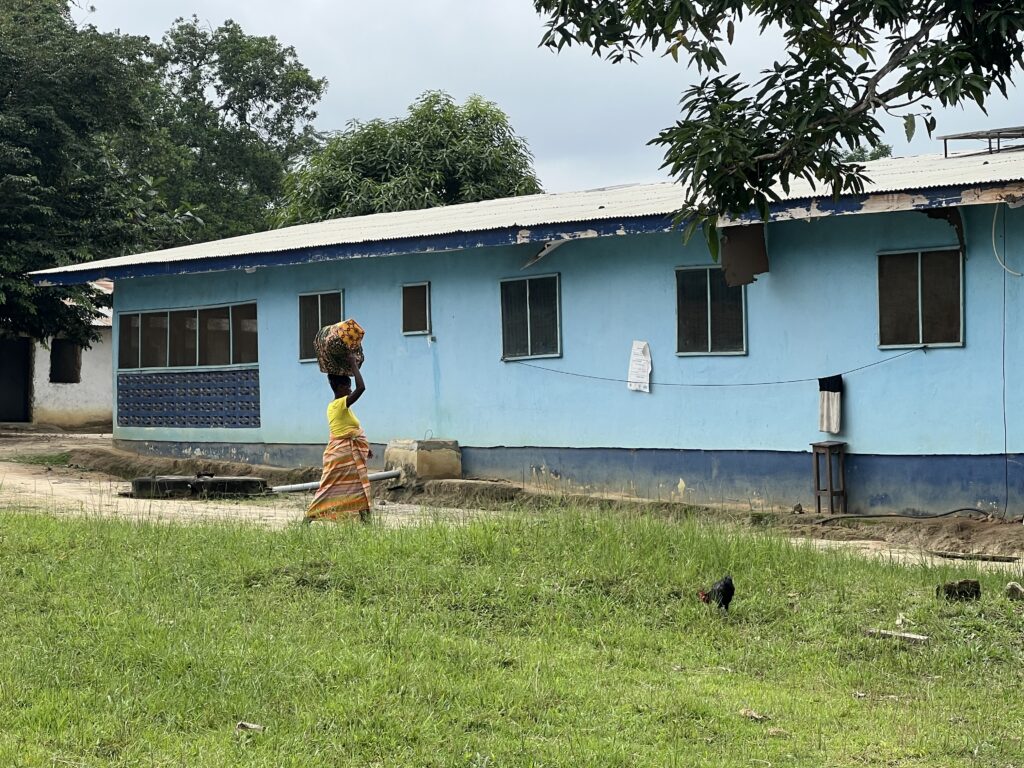
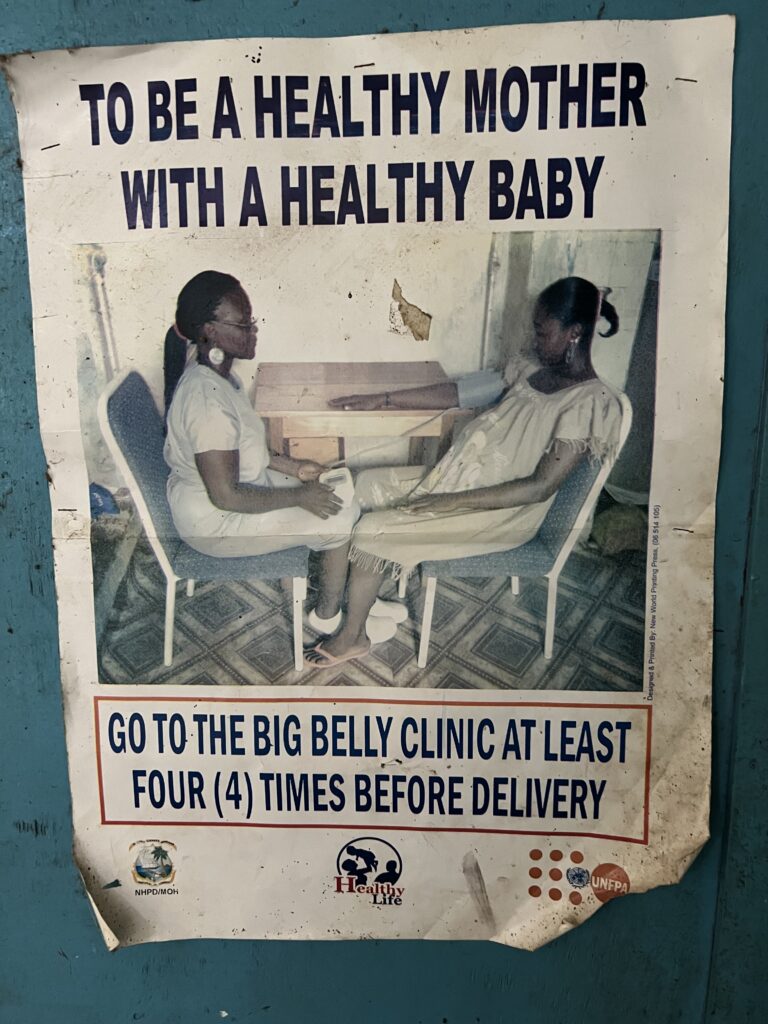
Bong County in Liberia has a maternal mortality rate of approximately 1,208 deaths per 100,000 live births, making it one of the highest in the world. The study focusses on this region to better understand how maternal mortality can be reduced by increasing the proportion of births attended to by skilled health personnel. However, achieving this is not straightforward, as many rural areas have a limited number of healthcare facilities, and Liberia is no exception. For instance, some women must travel over six hours on foot to reach a clinic where they can receive professional medical assistance. A key challenge is that many women leave for the clinic too late in the labor process. As a result, the likelihood of reaching skilled care in time is significantly reduced.
The Intervention and Impact
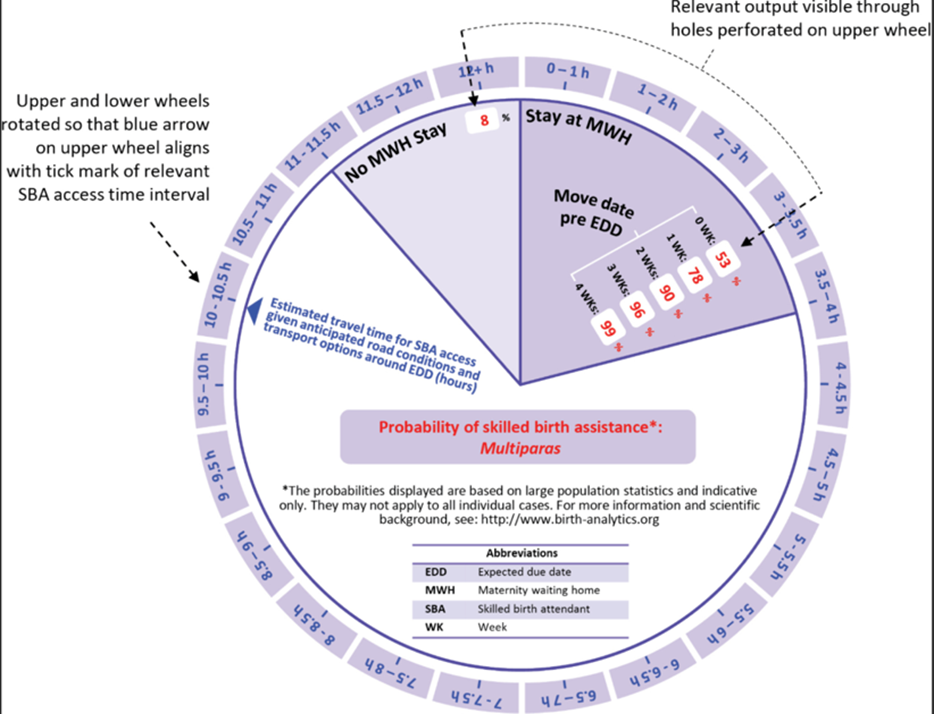
Through extensive research conducted as part of the Maternal Health Operations Project, Jérémie and the broader team of collaborators have explored innovations to reduce the risk of births occurring before arrival at a medical facility. One important area of focus has been how to better leverage existing Maternity Waiting Homes (MWHs) which are residential facilities located near healthcare centers where pregnant women can stay as they approach delivery. While MWHs have practical limitations, evidence suggests they have had a meaningful impact, with studies indicating 80% fewer maternal deaths and 70% fewer stillbirths among women who use them. Building on this, the team’s work examines how networks of MWHs can be used more effectively to improve access and outcomes. In parallel, the team developed the Skilled Birth Assistance (SBA) Wheel, a cardboard-based tool designed for both healthcare providers and pregnant women. The tool estimates the baseline risk of unassisted birth for an individual woman based on factors such as location, parity, and transportation access, using a labor timeline model. It also illustrates how this risk can be reduced through different lengths of stay at a maternity waiting home.
Beyond individual decision-making, Jérémie worked with the broader research and development team (see collaborators below) to develop a population-level tool: the Artemis Facility Network and Unassisted Birth Risk Mapping Tool. This system works with regional and national health administrations to help quantify the risk of birth before arrival in specific communities and design effective MWH referral policies. It supports decision-making in two key areas: determining which women should be referred to MWHs based on their profiles, location, and local capacity, and when they should be referred during pregnancy. The tool also assists with capacity planning for healthcare networks, helping policymakers evaluate where additional MWH beds or facilities would have the greatest health impact. To support these efforts, the team developed an open-source mapping and data analysis platform that generates visual maps and analytical insights for health administrators. The Artemis system is currently being disseminated and deployed to maximize its potential benefits across healthcare systems.
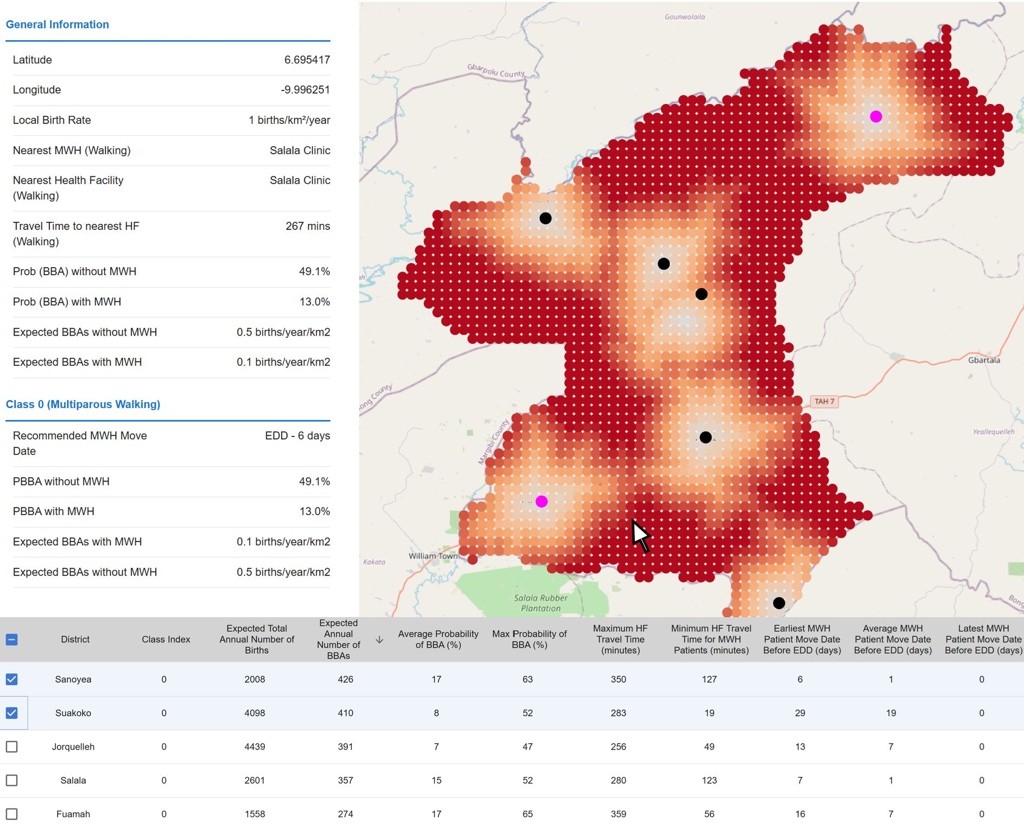
From individual decision-making to population-level planning, this research demonstrates how data-driven tools, developed in collaboration with broader research and development teams can strengthen health systems and expand access to care for underserved communities.
For more information, including links to research papers and access to the physical and digital practitioner tools, please visit the project website.
Contributors
Research Team:
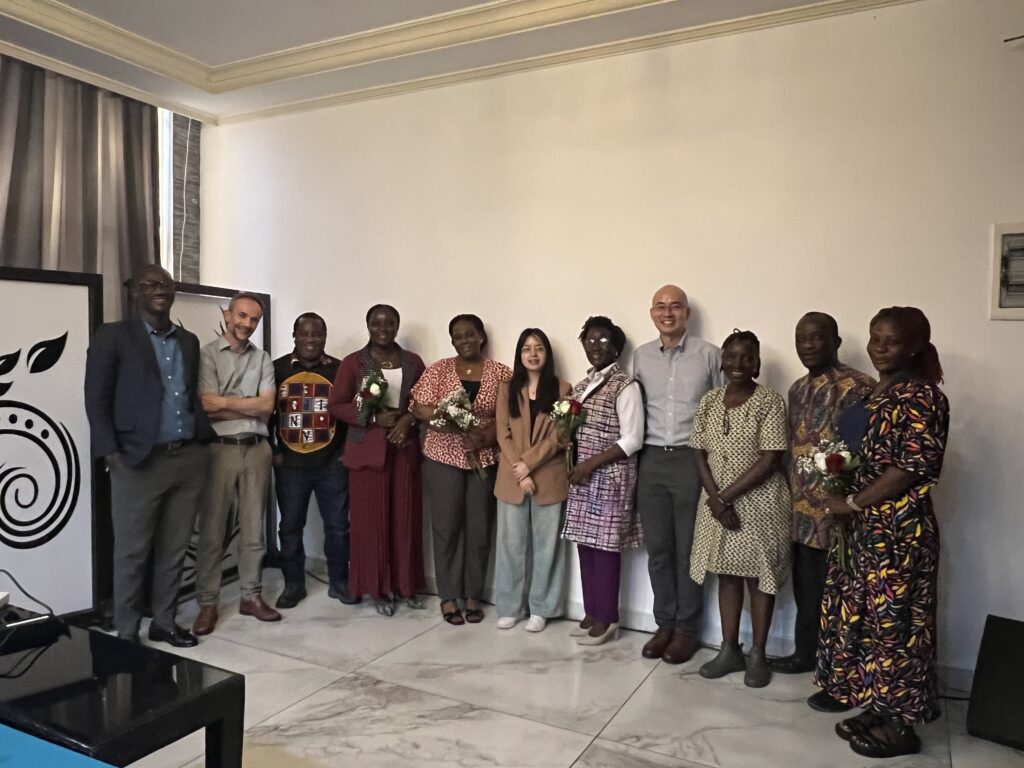
- Jérémie Gallien, Professor, London Business School
- Qi (George) Chen, Assistant Professor, London Business School
- Yuhang Du, PhD Candidate, London Business School
- Jody Lori, Professor, University of Michigan
- Joseph Sieka, Director of Research, Office of Sponsored Research Services; Instructor of Epidemiology, University of Liberia
Development Team:
- Dimitris Panayiotou, Software / Data Engineer, London Business School
- Demetris Kouppas, Software / Data Engineer, London Business School
- Alexander Brown, Software / Data Engineer, London Business School
- Efstathios Panayiotou, Software / Data Engineer, London Business School
- Yi Zhang, Data Analyst, London Business School
Implementation Partner:
- Family Health Division, Ministry of Health, Republic of Liberia
Funding: London Business School

Jérémie Gallien is Professor of Management Science and Operations; Chair, PhD Programme at LBS. Professor Gallien’s research focuses on pushing the frontier of supply chain management and global health delivery through collaborations with leading firms and organisations. He has published, consulted and taught extensively in the areas of operations and supply chain management and serves on the editorial boards of the journals Management Science, Operations Research and Manufacturing & Service Operations Management.
He is a native of France but has lived in the United States and the United Kingdom since 1996. Professor Gallien holds a PhD in Operations Research from the Massachusetts Institute of Technology and an Engineering Degree from the École des Mines de Paris.
The writer

Joanne Ngotho is an MBA class of 2027 candidate at London Business School and a Research Intern at the Wheeler Institute for Business and Development. She previously worked at McKinsey & Company (Nairobi), advising clients across Africa on projects in both the private and public sectors. Joanne is driven by a desire to tackle the root causes of Africa’s development challenges and shape solutions that operate at scale, with a core focus on strengthening education systems as a foundation for long-term growth.
Reference