
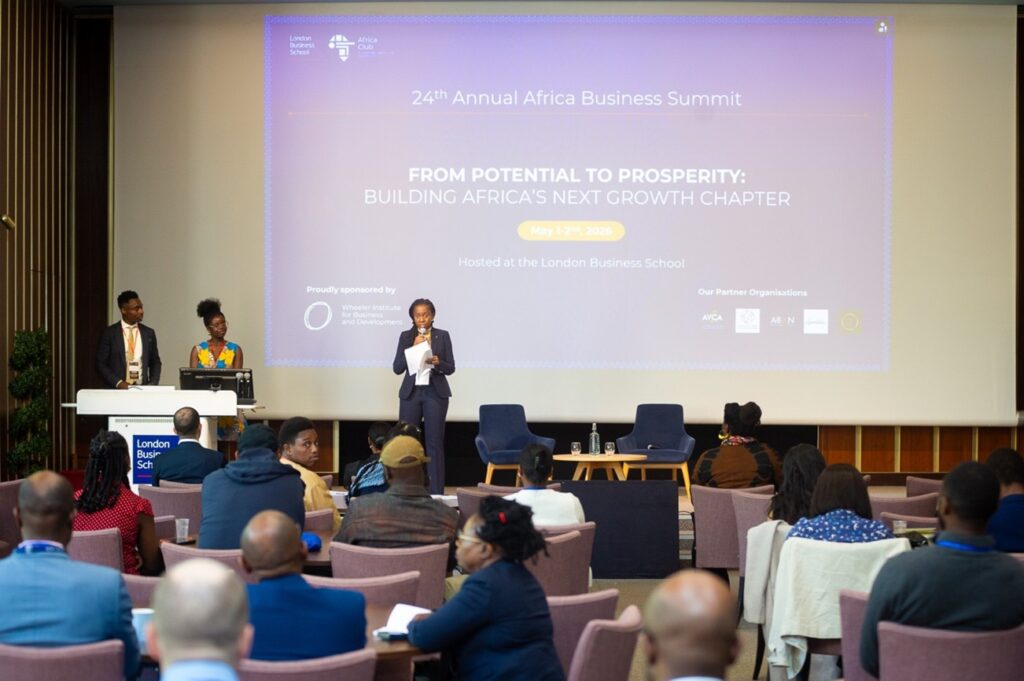
The 24th Africa Business Summit, organised by the Africa Business Club at London Business School (LBS) with the support of the Wheeler Institute, brought together influential leaders and a new generation ready to translate Africa’s potential into prosperity. As the event unfolded on May 2, 2026, one question cut through every conversation: how long can a continent afford to wait on itself?
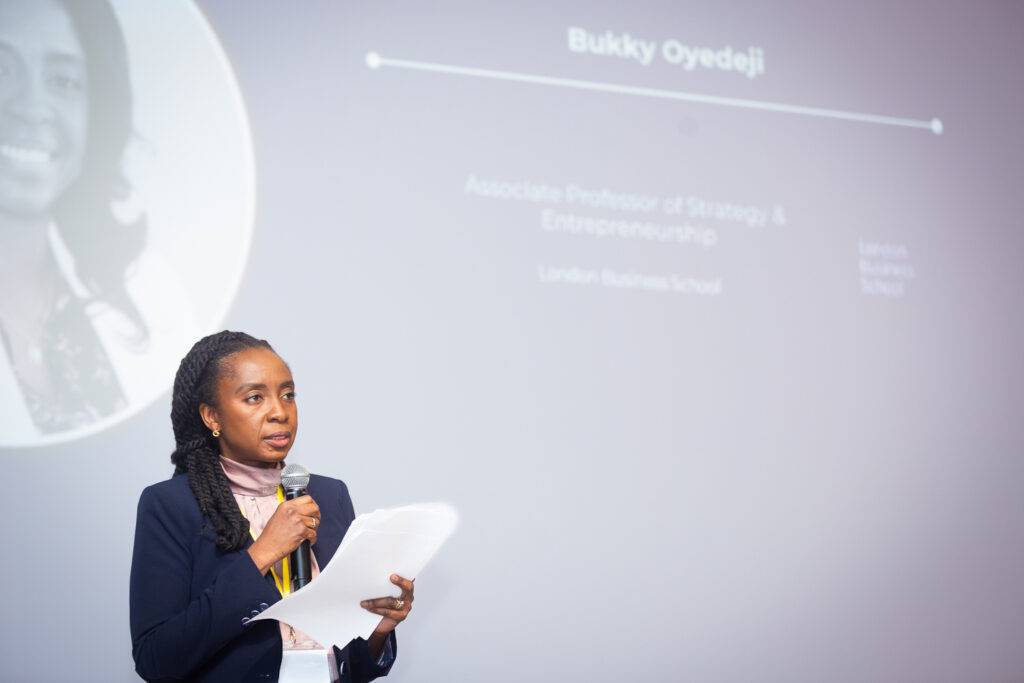
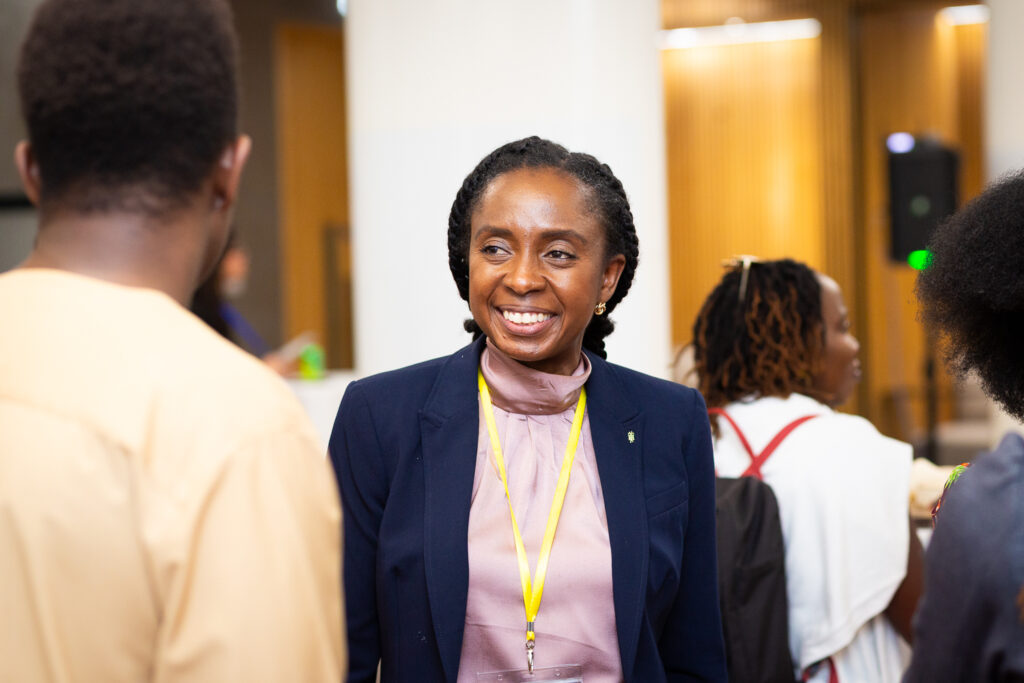
For too long, the global conversation has treated Africa’s greatness as a future tense: something arriving, something imminent, something almost here. Bukky Oyedeji, Assistant Professor of Strategy and Entrepreneurship at LBS, challenged that framing directly in her opening remarks. Potential, she argued, is too often deferred rather than realised, producing a waiting posture that stalls progress. And progress in one domain, without alignment in others, rarely produces outcomes that last.
“If the last decade was about proving that innovation can emerge from Africa, this decade has to prove that we can sustain it.” – Bukky Oyedeji, Assistant Professor of Strategy and Entrepreneurship at LBS
Setting the Precedent
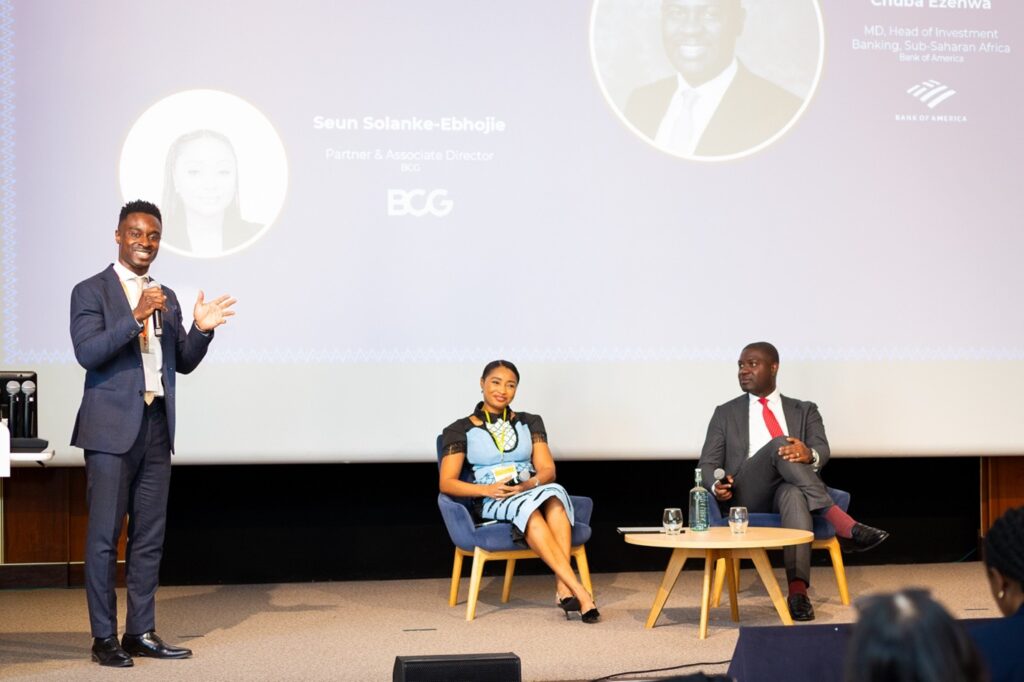
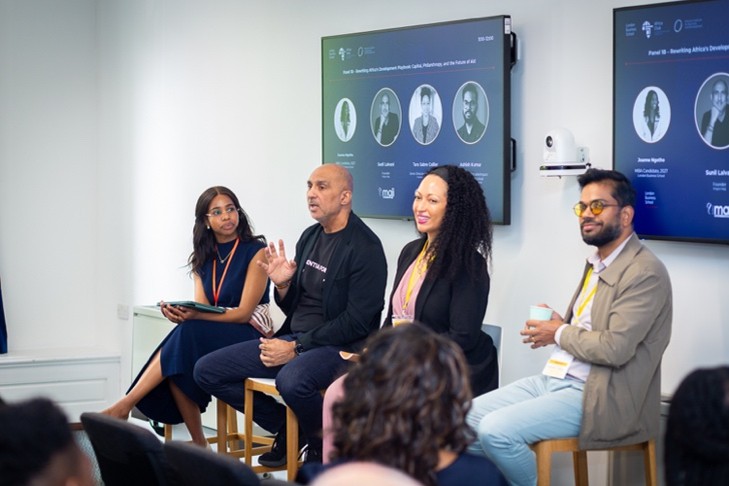
Why now? And what aspects of Africa’s development remain untapped? These were burning questions addressed by Seun Solanke-Ebhojie, Partner and Associate Director at BCG Lagos.
Africa holds an unbelievable share of the world’s wealth, capturing 60% of the global arable land, some of the planet’s best solar resources, and vast mineral deposit. Yet, it remains the world’s most uninvested market across multiple capital source, with $1.17 Trillion in domestic pension assets largely trapped in local investments, FDI lagging significantly behind Asia, and development finance increasingly at risk due to geopolitical constraints[1].
This raises an urgent imperative: we must prioritise growing our domestic markets and strategise towards talent retention and development. The journey from potential to prosperity is ultimately an execution problem and execution starts with us, particularly as AI emerges as a meaningful lever for Africa’s growth.
Against that backdrop, the summit explored six interconnected areas where decisive action is needed: capital markets, the entertainment industry, financial ecosystems, natural resources, the diaspora’s role in technology, and healthcare.
Opportunities in the Capital Markets
If execution is the bridge between potential and prosperity, then capital is its foundation. Chuba Ezenwa, Head of Investments (SSA) at Bank of America, noted that for the next decade, the most promising commercial opportunities are sitting right in front of us: telecommunications being the necessary digital backbone, alongside food security, onshore asset management, and fintech.
However, identifying these sectors is only half the battle. Private sector growth is inherently dependent on the strength of public institutions. For instance, even the most successful company’s borrowing costs are artificially limited by its home country’s sovereign debt rating. To overcome these systemic bottlenecks and revitalise local capital markets, we need to tackle the root issues: building mutual trust for our capital markets, easing out regulatory processes, and shifting investor mindsets beyond pension funds to revitalising local exchanges.
A true ‘magic wand’ solution to the continent’s severe fragmentation of capital would be elevating an existing market to serve as a unified, Pan-African stock exchange with unified regulations.
The Business of Entertainment: How Africa Can Finally Own Its Entertainment Industry
Africa’s creative influence, from Afrobeats to Nollywood, is exploding globally, but the business infrastructure supporting these industries continues to lags behind. Foreign middlemen heavily dominate the distribution pipeline, and massive financial value leaks out of the continent before it reaches creators. We must build robust local systems so artists can actually profit from their own culture and innovations.
Achieving this requires actively educating emerging artists about content rights and diverse global revenue streams. The film industry urgently needs ‘patient capital’ to craft globally competitive stories without rushing production. This is exactly where an organised, culturally aligned African diaspora can step in to fund assets built for both impact and solid returns.
We can’t build an entertainment empire on vibes alone. Shockingly, there are currently only six A-grade arenas on the entire African continent. Building world-class venues and pushing global digital distribution is an absolute prerequisite to capturing the full commercial value of Africa’s talent.

Building a Scalable Financial Ecosystem
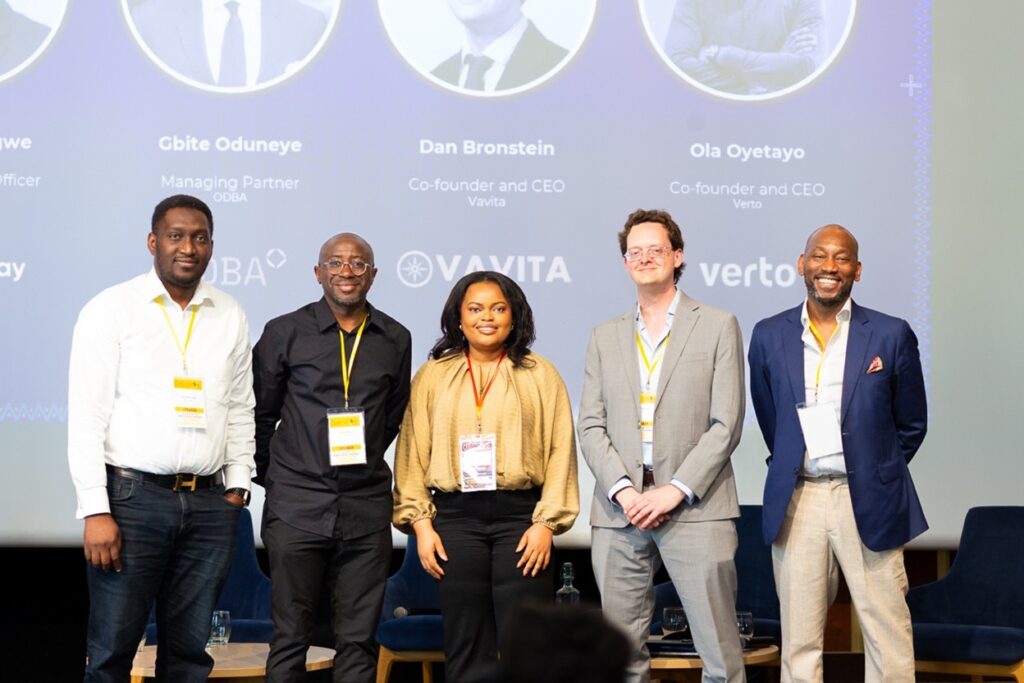
Despite Africa’s momentum, scaling its financial ecosystem faces hurdles like FX liquidity, regulatory constraints, and limited capital access. Collins Igwe, CFO of BudPay, highlighted that digitising formal structures for cross-country currency payments is foundational for trade growth. By easing the flow of these payments, we can catalyze true continental scale.
Expanding current payment systems through robust credit mechanisms is essential for the next phase of our financial evolution. Furthermore, rethinking our reliance on foreign currencies is critical for building resilient investment structures. Not every international transaction within the continent should have to pass through the US Dollar.
Unlocking Hard Resources for Industrialization
The energy transition is driving massive demand for African minerals, with copper demand from data centers alone projected to reach four million tons by 2030. However, moving from mere extraction to true value capture requires tight coordination between policy and energy infrastructure. Without established infrastructure, resource projects become exponentially more expensive and difficult to bank.
To achieve bankability, African projects need exceptionally strong sponsor teams with proven operational and technical abilities. Concurrently, natural gas will play a pivotal role, offering a modular solution for essential energy addition. This energy base is necessary to spark the kind of industrial revolution already seen in the West.
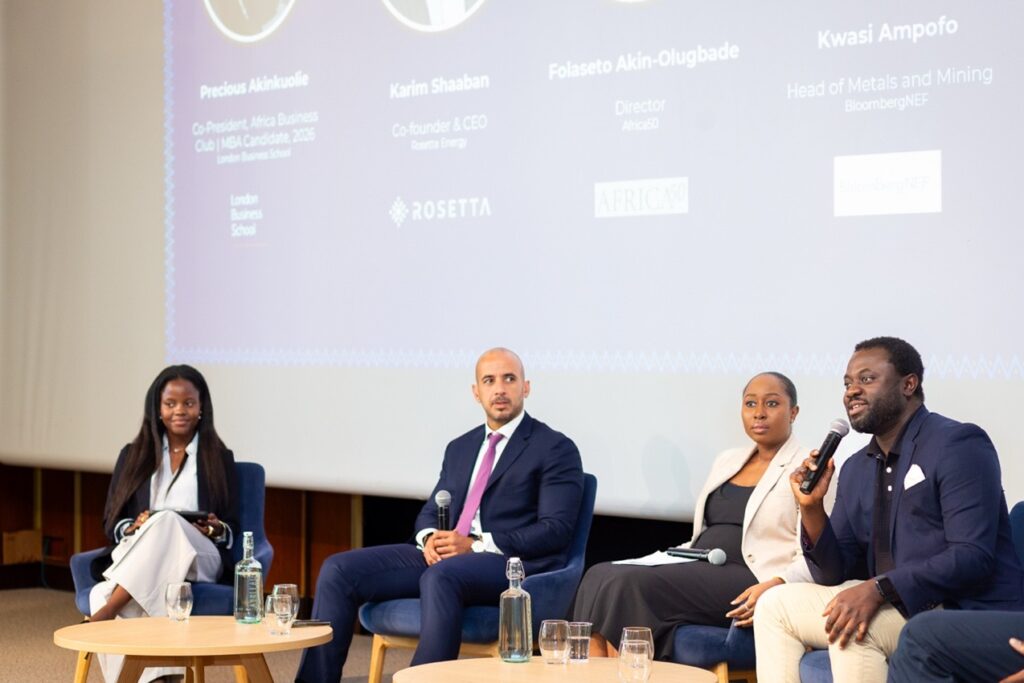
The Diaspora and the Software Revolution
The African diaspora is playing an instrumental role in scaling the continent’s tech ecosystem by bridging local innovation with global capital. It was emphasised that our primary focus should be on the software industry, which effectively flattens the development curve. Competing in hardware is highly inefficient against established manufacturing giants like China.
Instead, the strategy must be raising capital in regions like Europe to help African software businesses scale rapidly and reach international markets. This approach goes beyond providing funding; it offers the structural support needed to build massive companies. Ultimately, this represents a unique opportunity to take African tech to the world.
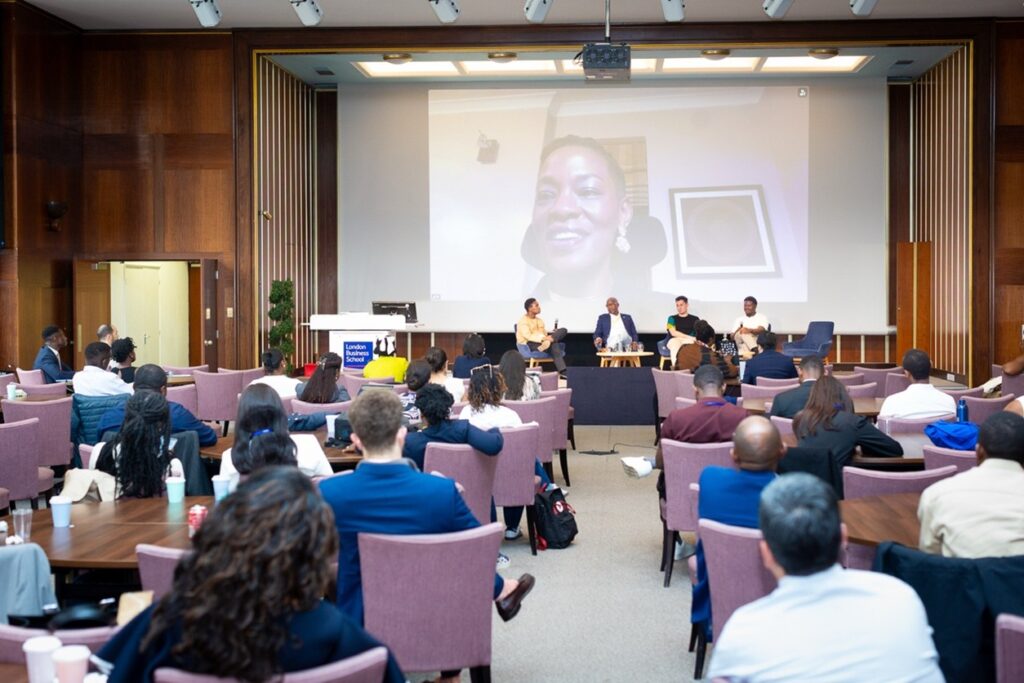
Delivering a Sustainable Health Dividend
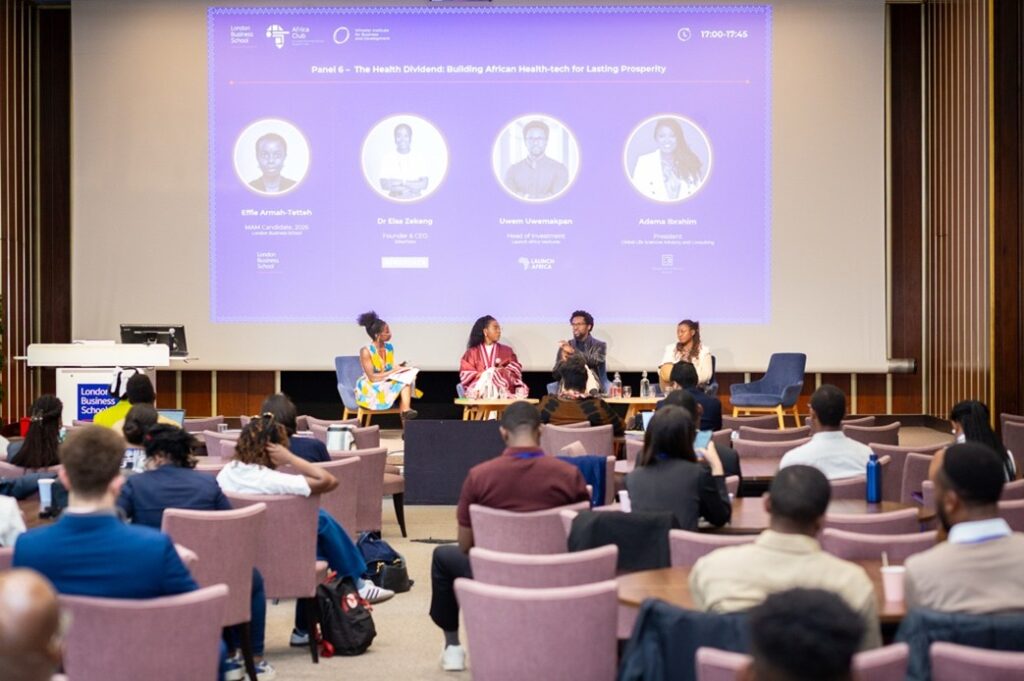
Healthtech in Africa is in its early stages, often viewed as an altruistic space rather than a viable, commercial investment sector. Founders struggle because they are forced to build basic infrastructure, like data systems and physical beds, alongside their companies. With historical donor subsidies withdrawing, the sector must urgently recalibrate to build sustainable systems.
Digital health can serve as a powerful accelerator, provided AI tools are strictly tailored to our local context. Dr. Elsa, Founder of SokerData, warned against deploying westernised AI tools without checking foundational datasets, which often underrepresent women. Owning the commercialisation of health data is essential to ensure these innovations leave no one behind.
The Execution Mandate
The 24th Africa Business Summit made it abundantly clear that Africa’s journey from potential to prosperity is ultimately an execution problem. The resources are present, the necessary sectors are identified, and the blueprint for scaling is visible.
Now, investors, policymakers, and innovators must act decisively to build the foundational infrastructure required to own our growth chapter.
“We are the ones we’ve been waiting for.” – Barak Obama
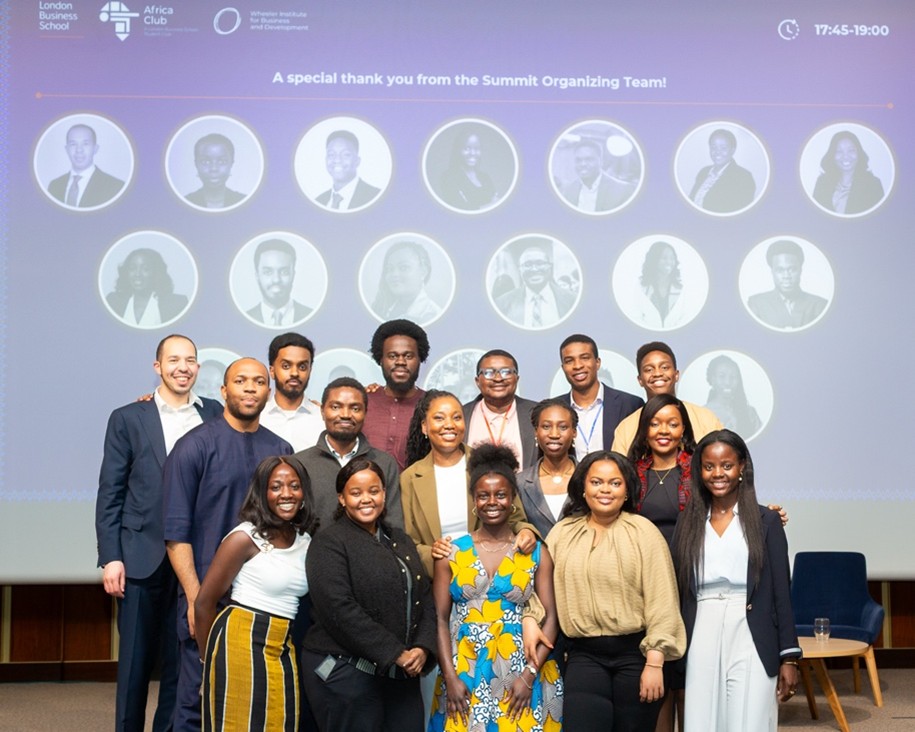
The Africa Business Summit Team
The Africa Business Club is a student-run club at London Business School. They exist to promote engagement on the Africa Business landscape within the school.
The organising team included: Precious Akinkuolie (MBA2026), Ahmed Abouelhassan (MBA2026), Alex Wambugu (MBA2026), Tebogo Seima (MBA2026), Tolu Sanni (MBA2026), Elizabeth Njenga (MBA2026), Lanre Adeoye (MBA2026), Joanne Ngotho (MBA2027), Adeyabo Folorunso (MBA2026), Olanike Salau (MBA2027), Kevin Gichungu (MBA2027), Tobi Anwoju (MBA2027), Effie Armah-Tetteh (MAM2026), Israel Thomas (MBA2026), Priyanka Doshi (MIM2026), Ridwan Ali (MiF2026), Savannah Maria-Tawk (MAM2026) and Woraba Dansua Abban (MAM2026).
About the writer

Woraba Dansua Abban, MAM2026 is a Research and Outreach Intern at the Wheeler Institute for Business and Development. She holds a BSc Business Administration from Ashesi University and has worked as an Associate Consultant at Deloitte and Touche (Accra), where she assisted clients in resolving their governance and risk management needs across diverse industries. Woraba aspires to bring lasting change to Africa’s developmental challenges through her passion for the international development industry.
[1] BCG Africa Unleashed Series, BCG Analysis, https://web-assets.bcg.com/1d/11/192182ea48cda59374270931d8e2/africa-unleashed-seizing-opportunity-in-a-shifting-geopolitical-landscape.pdf