
At London Business, Shri Piyush Goyal opened with a debt of gratitude to an LBS professor, Sumantra Ghoshal. The two met in December 1999, on a seven-day train journey (Palace on Wheels) across Rajasthan organised for faculty from the world’s leading business schools. Goyal, then an investment banker, was one of the few non-academics on board. Every few minutes, the pair would stand together at the open door of the moving train, soaking in the fresh December air. Somewhere in those conversations, getting to know the young banker, Ghoshal delivered a verdict Goyal never forgot. Even if you earn ₹500 crore (~£160 million today, adjusted for inflation and purchasing power), he said, you will never be truly happy. Politics is your calling; go for it.
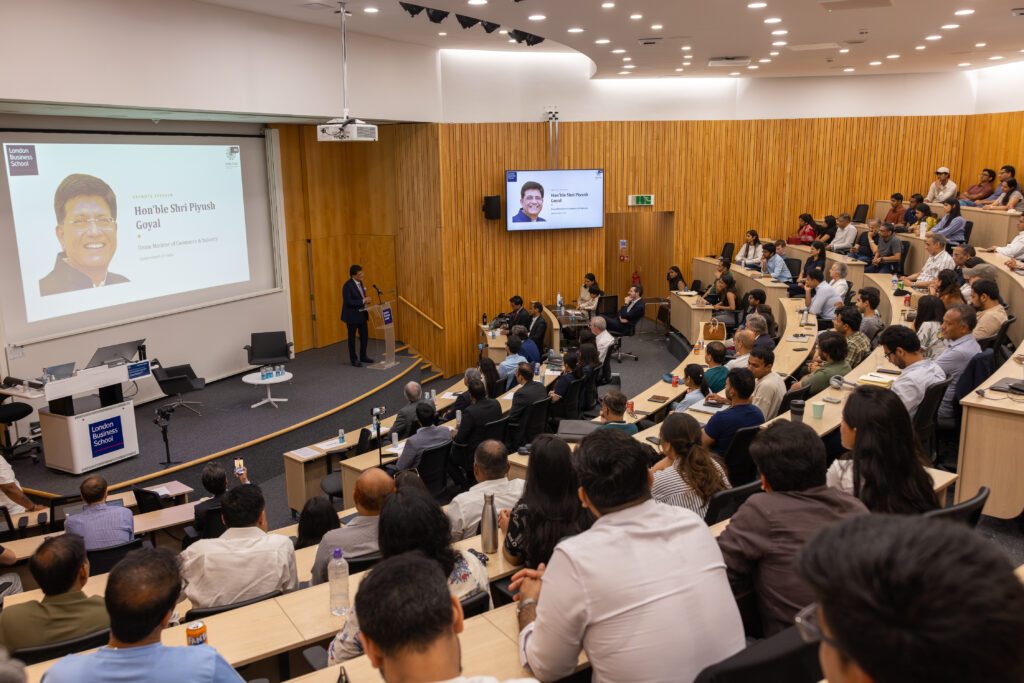
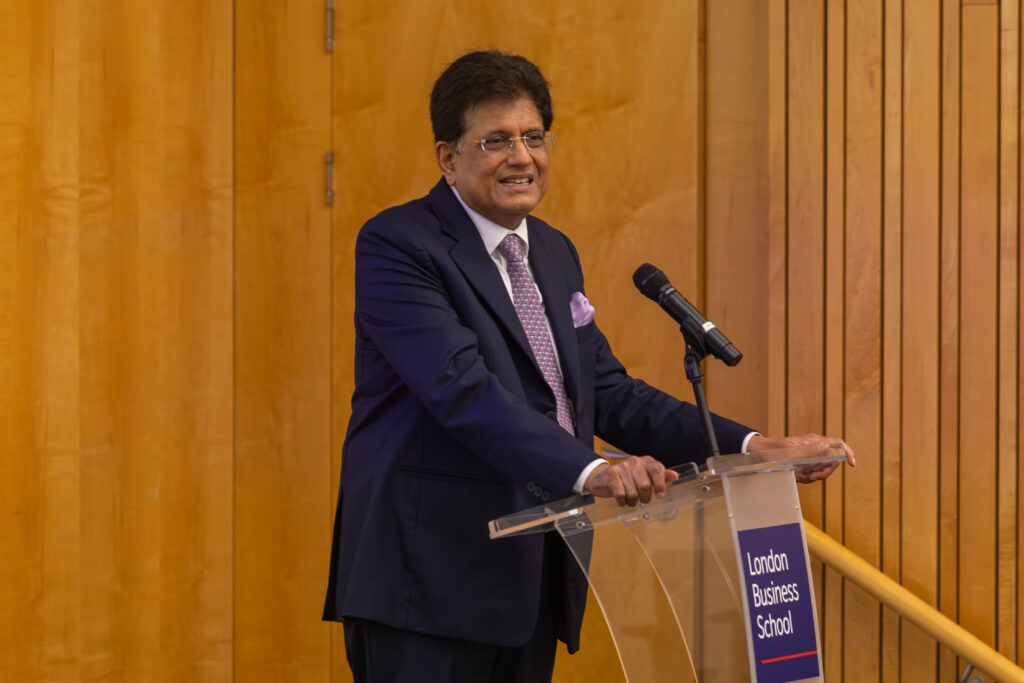
Goyal never looked back. A quarter of a century later, as India’s Commerce and Industry Minister, he stood in a packed lecture theatre at the school where Ghoshal once taught – a visit he described as “a little bit like a pilgrimage.” He opened by paying a heartfelt tribute to the professor who redirected his life. With the gratitude expressed, he turned to the argument at the heart of his address: that India’s economic transformation over the past decade is, at its core, a management story, run on the very principles taught in business classrooms.
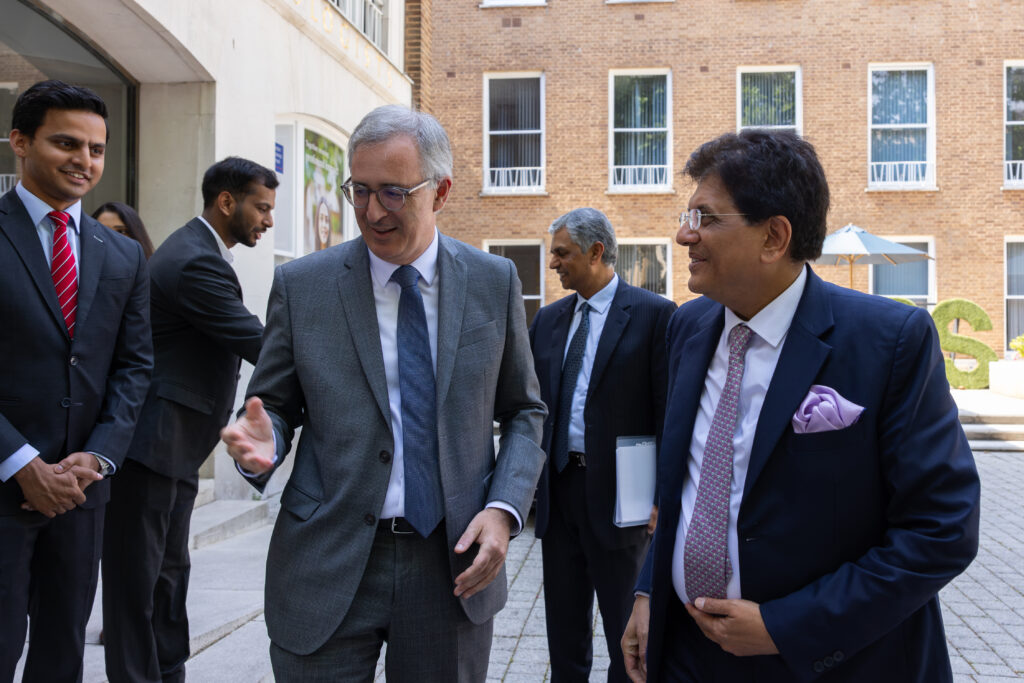
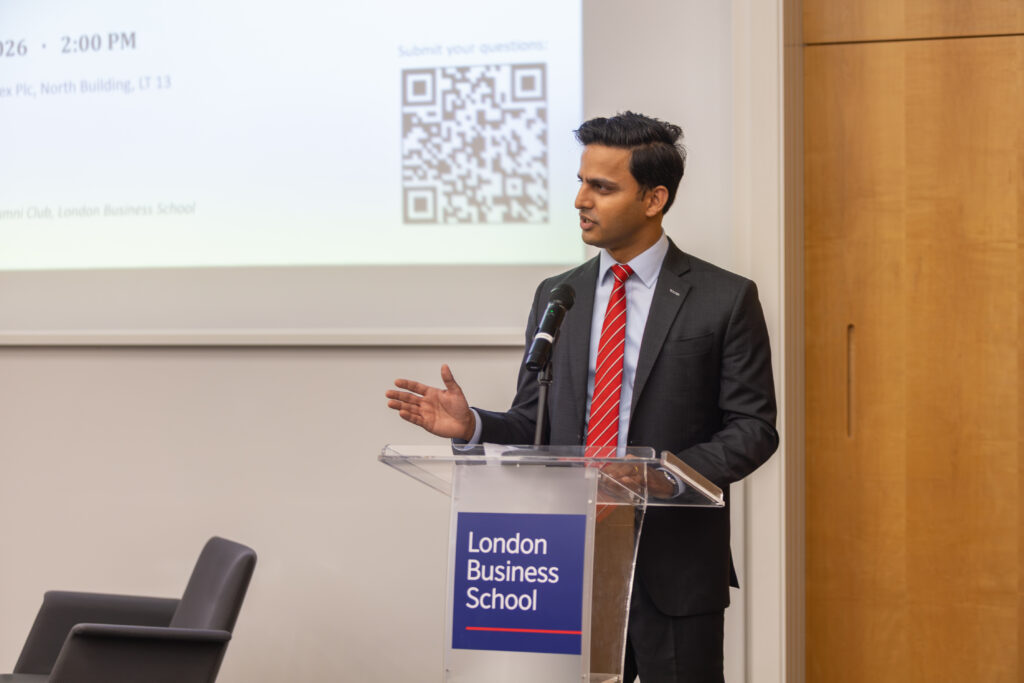
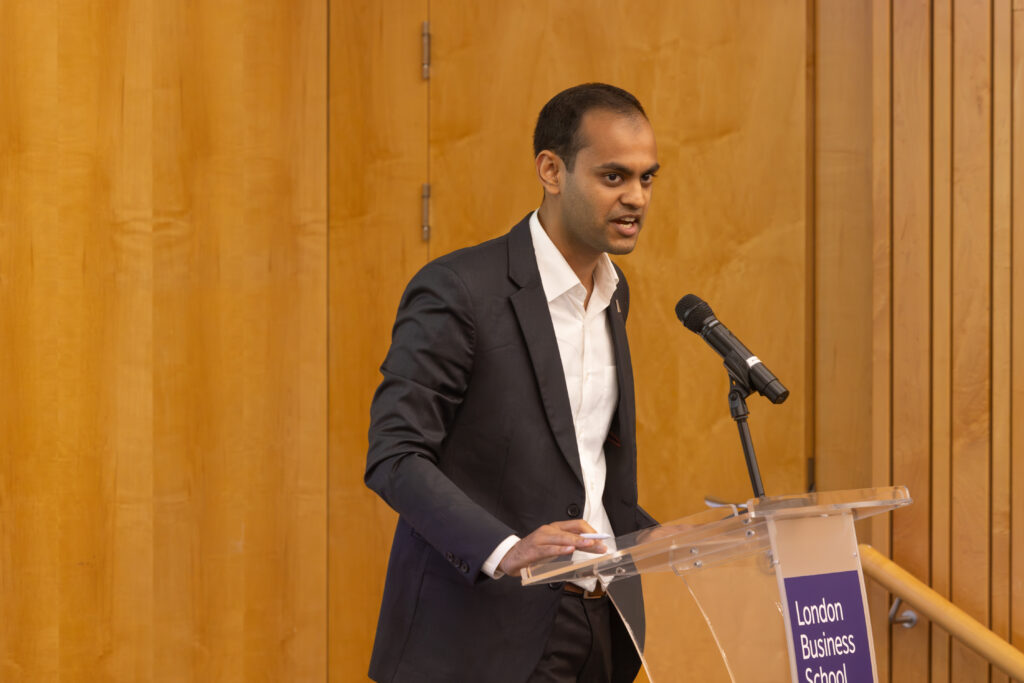
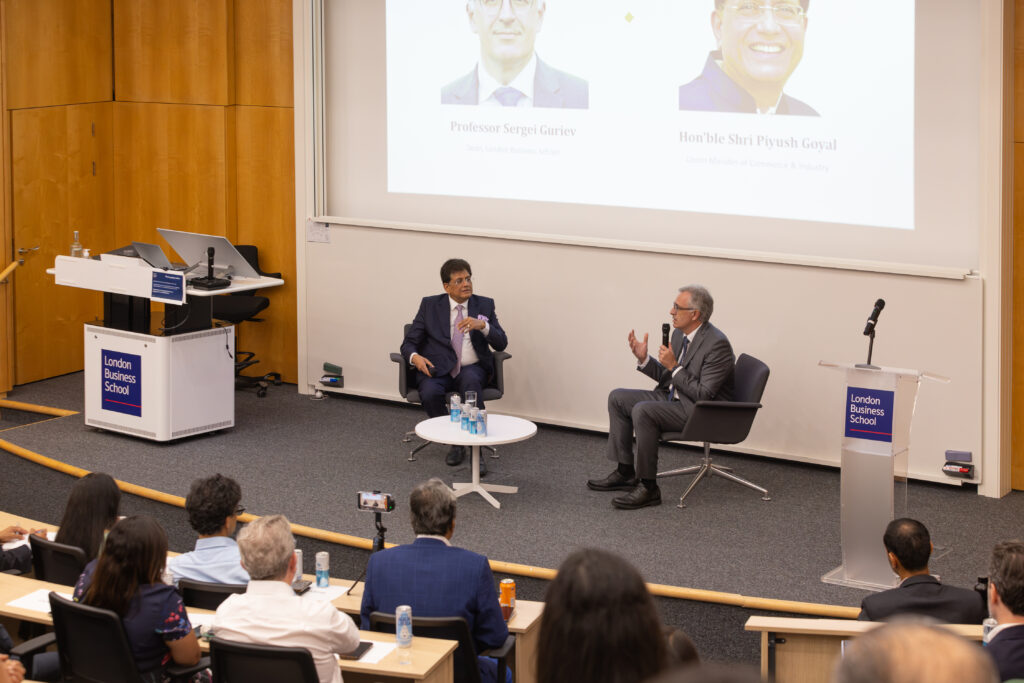
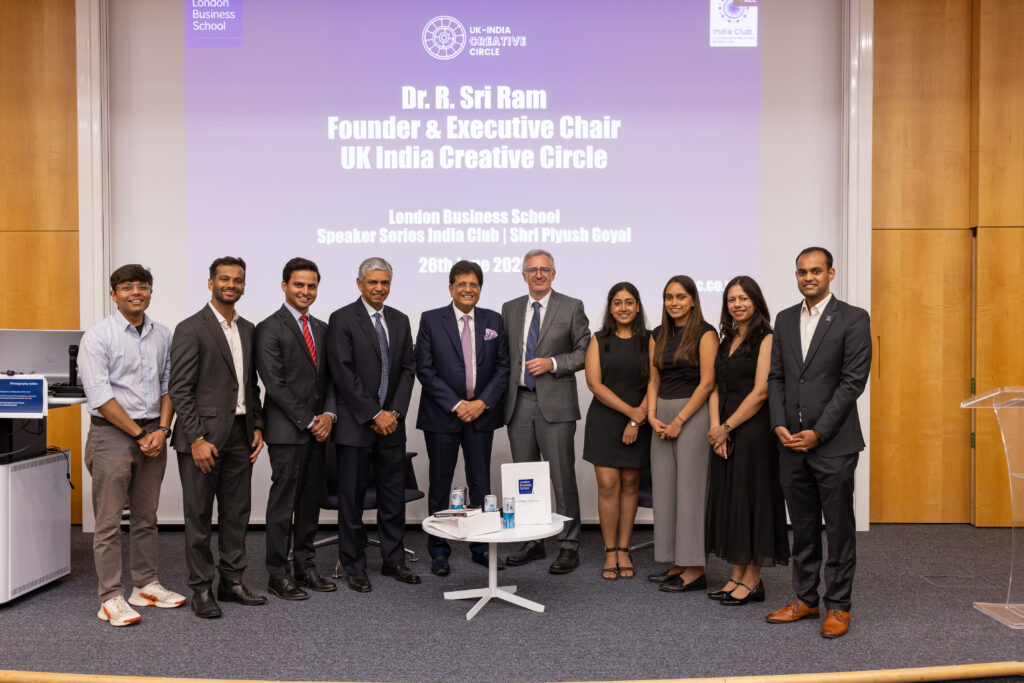
The event was opened by Ayush Bohara, MBA2027, Co-President of the India Club and Brian Dsouza, MIFPT2025, President of the LBS India Alumni Club and founder and convenor of the INDspire Speaker Series and was moderated by Dean Sergei Guriev of London Business School.
The Smell of the Place
Goyal’s own story could fill a case study. He qualified second in the entire country in his Chartered Accountancy examinations and second in law at Mumbai University. He won a place at Wharton, but labour troubles at the family factory forced him to defer, and a deferral quietly became a road not taken. Years later, he began an executive programme at Harvard Business School – and before he could return for the second module, he became a minister.
But it was Professor Ghoshal’s ideas, not just his advice, that Goyal kept returning to. He invoked the professor’s legendary “Smell of the place” lecture at the World Economic Forum: the idea that the atmosphere of an organisation, trust or suspicion, empowerment or fear, determines what its people are capable of. “Fear kills you”, Goyal argued, but “Trust gets the extraordinary out of the ordinary”. And what is true of a company, he suggested, is true of a country.
Trust as the Operating System of Government
That idea ran through his account of India’s last twelve years. The government’s philosophy today, he said, rests on trusting its citizens – and being trusted in return. He offered a small but telling example. One of the first cabinet decisions of 2014 was to scrap the requirement to have everyday documents notarised, replacing billions of attestations with simple self-certification. The same thinking shaped the two Jan Vishwas Acts – literally, “trust of the people”, which decriminalised a long list of minor infractions that once dragged small businesses and ordinary citizens through the courts. Deterrence stays strong for deliberate wrongdoing, he stressed. But honest mistakes should not be crimes.
Alongside trust came a decade of foundational empowerment. Electricity, tap water, toilets, cooking gas, and digital connectivity have reached millions of households that previously lacked them, with 5G now extending to some of the country’s most remote regions. Together, these initiatives support a collective mission: Viksit Bharat – a developed, prosperous India by 2047, the centenary of independence. The vision is to grow the economy from approximately$4 trillion today towards an aspiration of $30 trillion. As he told students, “Outcomes are not accidents. Outcomes are out of our intent.
Ten Management Principles for Running a Country
The intellectual centrepiece of the address was a list. Goyal set out ten management principles that, he argued, the Modi government has imported into governance: a way of working worthy of becoming a case study for business schools.
He began with decisive leadership, citing the constitutional integration of Jammu and Kashmir and long-pending structural reforms such as the Insolvency and Bankruptcy Code and GST. Then came root cause analysis, with a story from his first night as Power Minister in 2014 – spent without electricity in Delhi, days after a major grid collapse. The diagnosis: India’s fragmented regional grids. The fix: a single national grid. Power costs in the south fell as surplus northern power flowed in, and today, he noted, that same grid has made India one of the most attractive places in the world to build data centres.
Outcome orientation framed his account of trade policy. In 2021, India took a deliberate decision to pursue free trade agreements with developed economies – complements rather than competitors. By his count, that has yielded nine agreements covering 38 developed countries in under three and a half years, and preferential access to roughly two-thirds of the global economy.
Rule of law and transparency meant auctioning natural resources and licences through open processes, in contrast to the allocation scandals of an earlier era. Time-bound execution was embodied in the Prime Minister’s PRAGATI reviews, where stalled projects of national importance are unblocked over video conference with states and ministries. Most issues, Goyal noted with a smile, get resolved before the call even starts – nobody wants to explain a delay to the Prime Minister.
Prioritisation had its own story. As Railway Minister, Goyal set an ultimatum to eliminate every unmanned level crossing in the country, a known cause of fatal accidents. His own board told him it was impossible. Yet it was completed in roughly eighteen months. Today, India’s entire railway electrification is nearly complete. The remaining principles followed naturally: accountability and monitoring, increasingly enabled through technology dashboards; an embrace of emerging technologies, with India viewing AI and quantum computing as opportunities rather than threats; and stakeholder engagement, consulting businesses and citizens before decisions are made.
His most vivid principle, though, was innovative financing. The PM Svanidhi scheme provides street vendors with small working-capital loans – starting at ₹10,000, roughly £80 – on one condition: they embrace digital payments. For a hawker borrowing from a moneylender at 3-4% a month, it can be transformative. Seven million vendors have now joined, with loan sizes stepping up as each round is repaid. And the ‘go digital’ condition had a second effect: India now accounts for nearly half of the world’s digital payment transactions.
The India-UK Corridor: Trade, Talent, Technology
The fireside conversation turned to the India-UK Comprehensive Economic and Trade Agreement, which enters into force on 15 July. He resisted measuring it in isolation, placing it instead within a broader wave of agreements taking effect – EFTA and Oman already in force, New Zealand and the EU in the pipeline, and the United States as well, should negotiations progress favourably.
The gains, he argued, run far beyond tariffs. Eight to twelve UK universities are exploring campuses in India, and dual-degree programmes are on the way. Goyal even suggested Western students spend six months to a year of their degrees in India, because the world’s future growth will come from Asia, Africa and Latin America, and understanding those markets early will pay off in the long run.
He also highlighted technology partnerships, including, he noted, ASML’s decision to establish its first plant outside the Netherlands in India, in partnership with the Tata group. And he spoke about talent. A skill centre in his own constituency teaches Japanese to caregivers and nurses heading to Japan. The Indian diaspora in the UAE has grown from 1.8 million to 4.5 million in fifteen years. Inclusive, global and sustainable growth, Goyal said, remains the mantra.
“Just Follow Your Dreams”
When asked for career advice for students in the room, Goyal needed only a film reference: 3 Idiots. Don’t become a bad engineer when you wanted to be a photographer, he told students. Don’t come to business school to do what your parents told you. “Just follow your dreams… because there’s nothing to substitute happiness.”
His closing message circled back to the people. Management is not ultimately about spreadsheets, he said. Numbers matter, but the why behind them matters more. The boldest strategies are about how you treat people, build them, and carry them with you – and a career is not just for profit, but for purpose, measured by the lives it touches.
Opening Doors: The Creative Economy
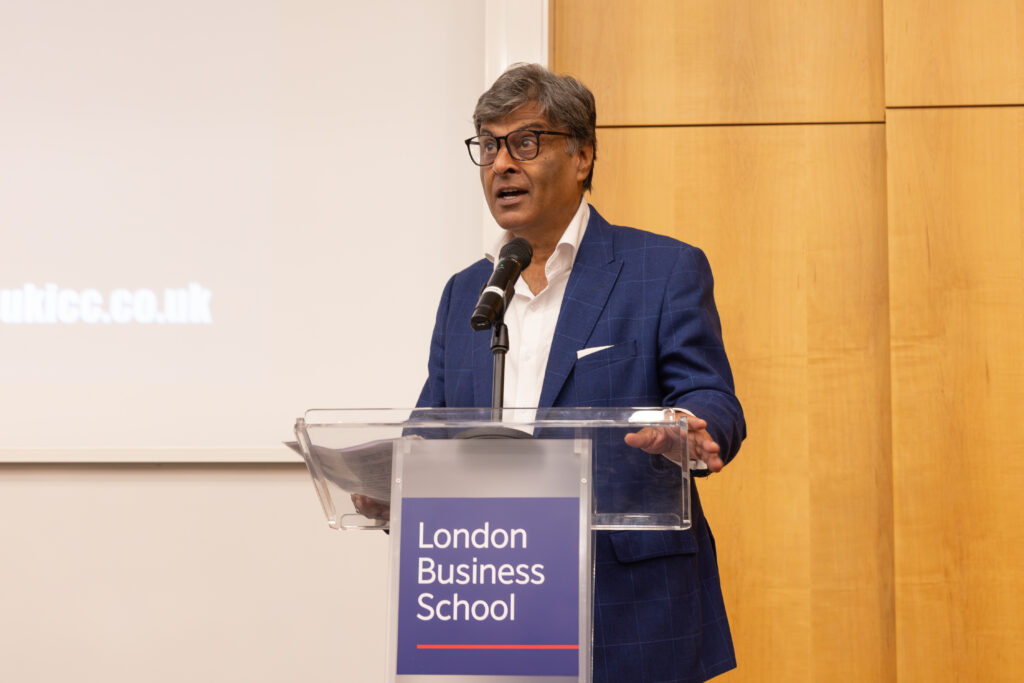
The afternoon closed with remarks from Dr R. Sri Ram, Founder, Chair, and CEO of the UK India Creative Council (UK ICC), a not-for-profit body focused on turbocharging the creative industries in both countries. The UK’s creative economy is already one of its fastest-growing sectors, he noted, and the free trade agreement offers a chance to accelerate that growth on both sides through jobs, investment and innovation. He ended, in true Indian fashion, with an ask from the podium: a formal partnership with the Government of India, and the nomination of a senior official from Goyal’s ministry to work alongside the Council’s UK advisory board. These, he argued, are not simply cultural exchanges; they are trade delegations powered by creativity.
Service – The Highest Form of Success
The event followed with remarks from Brian Dsouza, recalling a night years ago when, as a student, he searched for the most successful chartered accountants in India and found Piyush Goyal – a man who had topped every ranking yet walked away from personal reward to choose service instead, inspiring many in the room. The highest form of success, he said, is service. Sumantra Ghoshal saw it first; Shri Piyush Goyal has lived it. By the end of the afternoon, few in the room would have disagreed.
About the series
The INDspire Speaker Series is an exclusive leadership event hosted by the LBS India Club and the LBS India Alumni Club at London Business School. It convenes top-tier policymakers, global economists, and business leaders to discuss India’s economic trajectory, FinTech advancements, and global strategy. The India Club focuses on economic and professional opportunities in India by bringing together business leaders & entrepreneurs who are pioneers in their fields. It aims to provide a bridge between the global LBS community and the Indian subcontinent’s cultural heritage, global positioning & economic interests.
About the speaker
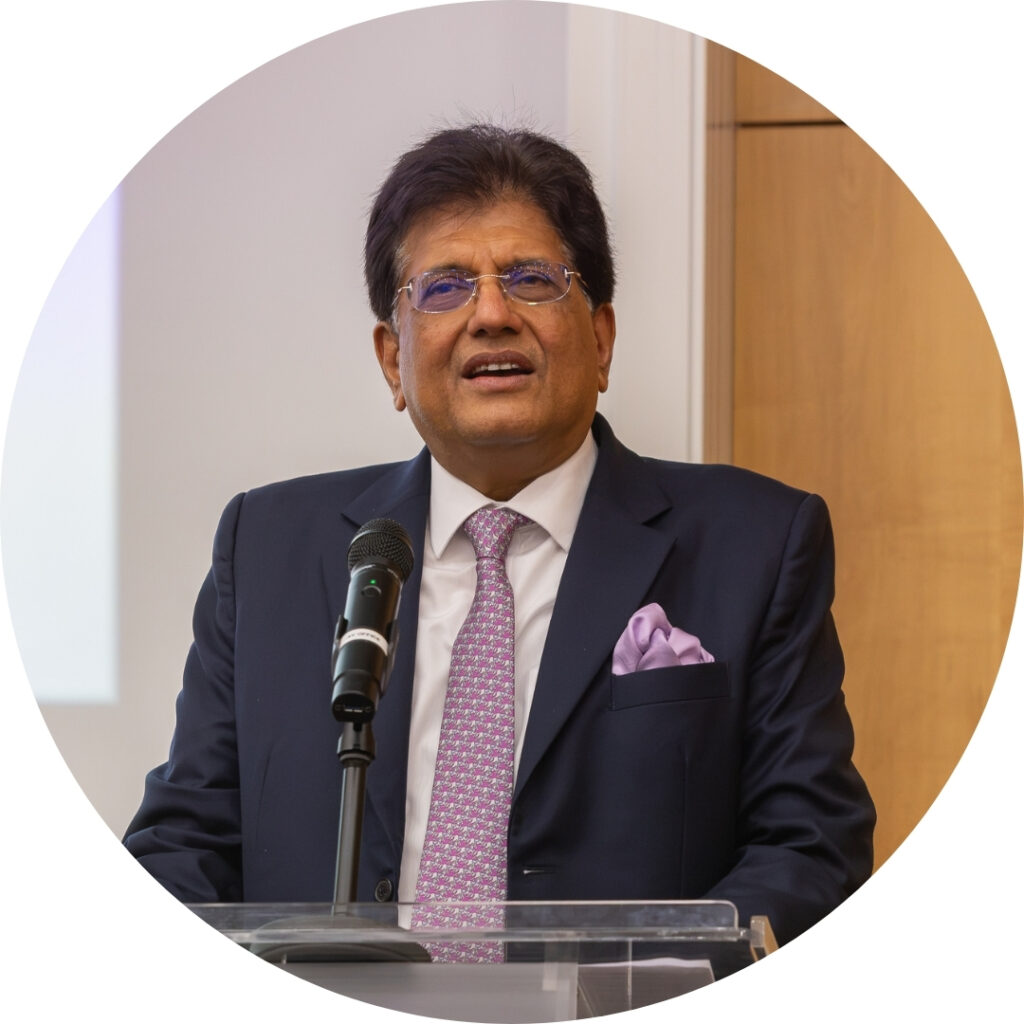
Piyush Goyal is the Union Minister of Commerce and Industry, Government of India – the longest-serving holder of the post – and Member of Parliament for Mumbai North. A Chartered Accountant with an all-India rank of two and a second-rank law graduate from Mumbai University. He entered the Union Cabinet in 2014 and has previously served as Leader of the House in the Rajya Sabha, where he sat for fourteen years, and has held the Railways, Coal, Power, New & Renewable Energy, Mines, Finance, Corporate Affairs, Consumer Affairs, Food & Public Distribution, and Textiles portfolios. As Commerce Minister, he has led India’s free trade negotiations with developed economies, including the India-UK Comprehensive Economic and Trade Agreement.
About the moderator
About the moderator
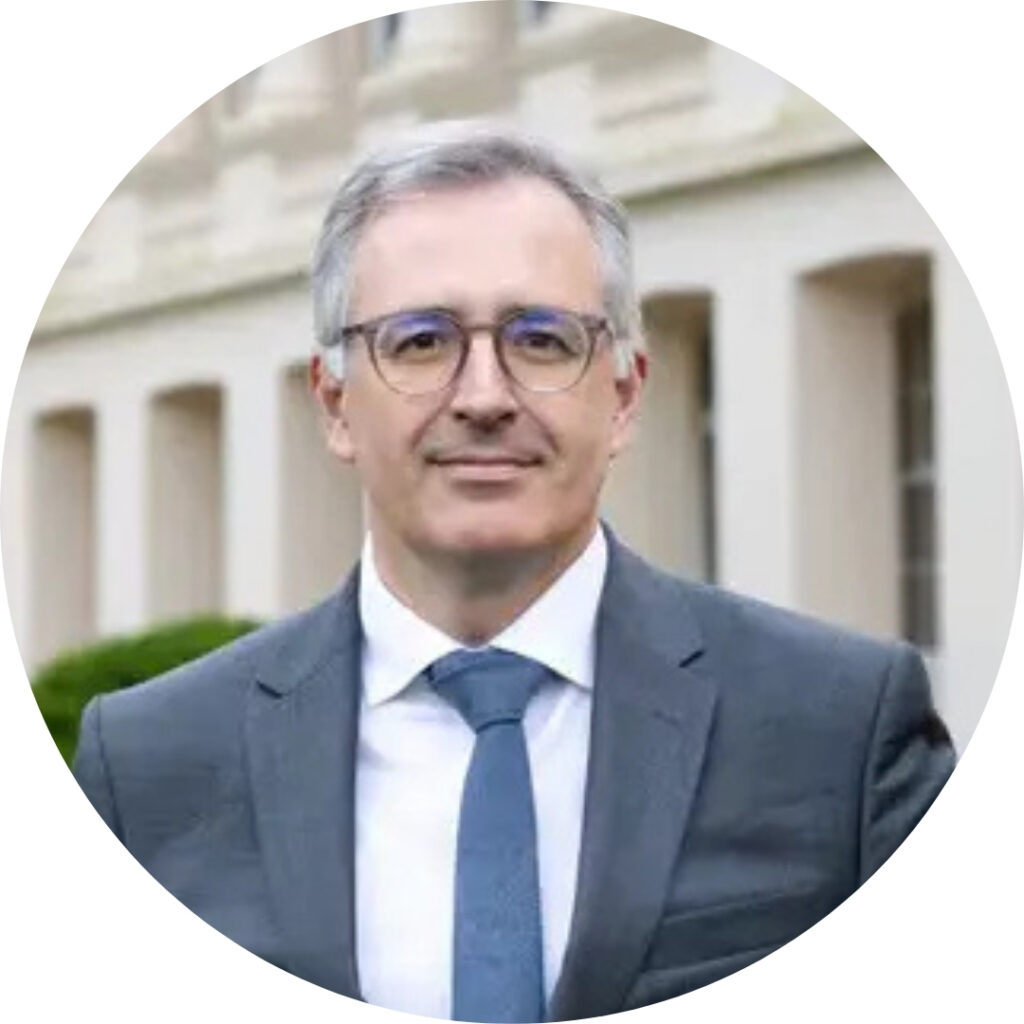
Sergei Guriev is Professor of Economics and Dean of London Business School. Prior to joining LBS, he was a tenured professor of economics at Sciences Po in Paris and served as its first Provost. Previously, he served as the Chief Economist of the European Bank for Reconstruction and Development. He is a Research Fellow at the Centre for Economic Policy Research, a Senior Member of the Institut Universitaire de France, an Ordinary Member of Academia Europaea, an Honorary Foreign Member of the American Economic Association and a member of the Group of Thirty. Professor Guriev’s work spans political economy, development economics, and institutional reform, and he has served as an advisor to governments and international organisations. You can watch here and here previous Wheeler Institute events with Sergei Guriev.
About the writer

Shivam Jain is a MiFFT 2026 candidate at London Business School and a Research Intern at the Wheeler Institute for Business and Development. Before joining London Business School, he was an Investment Specialist at Mercer, where he advised pension funds and endowments on global asset allocation and investment strategy. Shivam is focused on how channelling capital through innovation and policy design generates investment opportunities for sustainable growth. He is particularly interested in how capital allocation, and incentive drivers can be used to support long-term economic development in emerging markets.