Guns and Butter – Public Policy in the Age of Innovation. A conversation with Philippe Aghion, 2025 Nobel Laureate of Economics

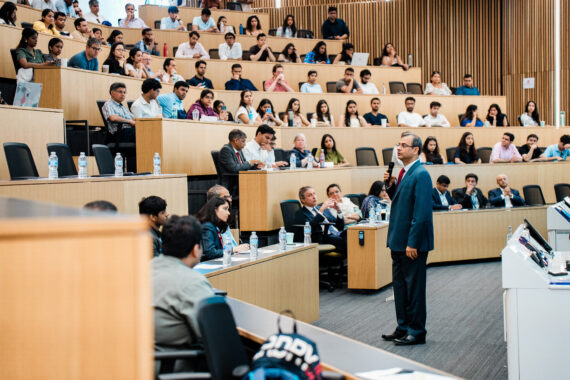
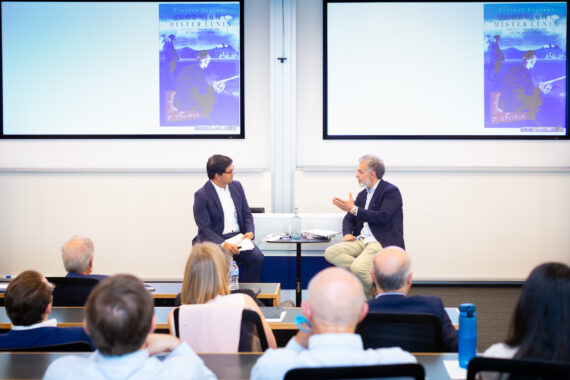
Artificial intelligence, technological disruption, and geopolitical instability are reshaping the policy landscape. In an era defined by overlapping economic and technological transitions, governments face renewed questions about prioritisation: how should states balance immediate social pressures (“butter”) with longer-term strategic and security demands (“guns”)? The Wheeler Institute for Business and Development was delighted to host Philippe…

Sustainable entrepreneurship as the hope for transformation in Sub-Saharan Africa: The Case Study of Ghana

Ghana has a significant political history, as it was the first Sub-Saharan African country to achieve independence from colonial rule in 1957. Despite its role as a forerunner for economic freedom, the country continues to face significant challenges at the core of its development, including but not limited to frequent global economic shocks, fluctuating inflation…

Rebuilding the Foundation: Why Early Learning Matters for Africa’s Future

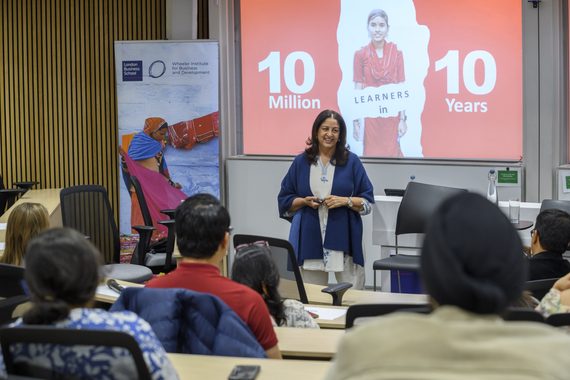
Across emerging markets, the pursuit of shared prosperity increasingly points to a quiet and often overlooked engine of progress: foundational learning. The ability to read, write, and reason by the early years of primary school shapes every subsequent stage of a student’s educational journey and a country’s economic trajectory. Yet, in many parts of Africa,…

Resilience Bonds: Financing Protection Before the Storm

When heavy rains once again pushed parts of Porto Alegre in Brazil underwater last year, it underscored a pattern across many emerging markets: climate shocks are arriving faster than cities can rebuild. For emerging economies, climate-related disasters can cost approximately 0.3% of GDP annually, yet nearly 70% of those economic losses remain uninsured [1]. Floods…

Democratising Corporate Governance: How to Implement Shareholder Assemblies

For over half a century, the doctrine of shareholder primacy has offered a simple moral compass for corporate executives: make as much money as possible. Popularised by Milton Friedman in his seminal 1970 New York Times article, the theory posits that by maximising profits within the bounds of law and custom, companies maximise social welfare.…

Europe, Greece, and Geopolitics in a Fragmenting World with George A. Papandreou

The Wheeler Institute had the pleasure of welcoming the former prime minister of Greece and current member of parliament, George A. Papandreou. Leveraging on his experience serving in public office and in diplomacy, Papandreou’s insights were timely given the current state of the world in which many countries seem to be more divided than they…

Europe, Greece, Business and Geopolitics in a Fragmenting World

With George A. Papandreou The Wheeler Institute was pleased to host George A. Papandreou, former Prime Minister of Greece, for a timely conversation on Europe, Greece, Geopolitics, and the Global Economic Landscape. George Papandreou brings a rare combination of experience across political leadership, European integration, and international diplomacy. He served as Prime Minister of the…

AI for Africa: Harnessing AI for jobs, growth and investment

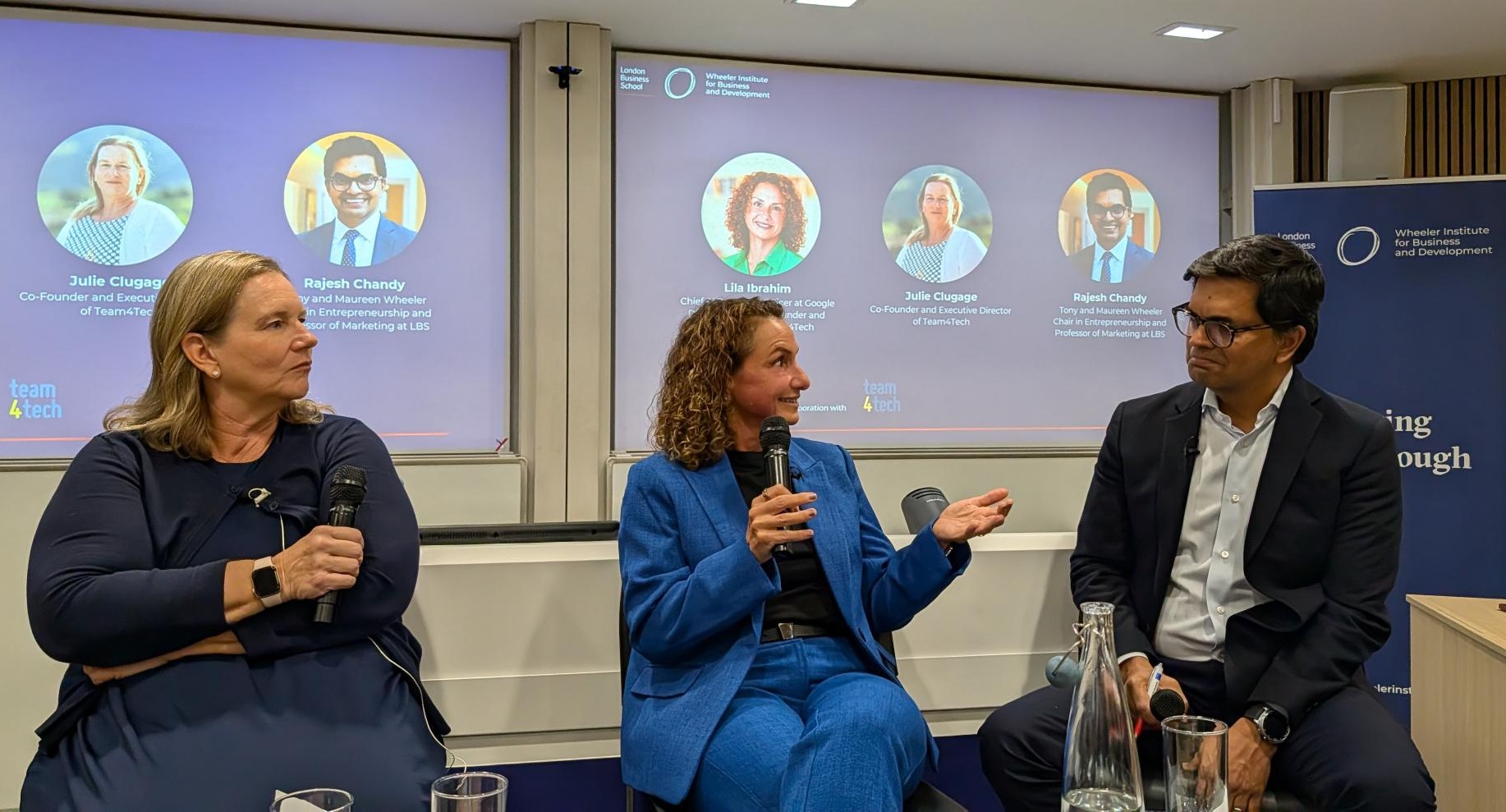
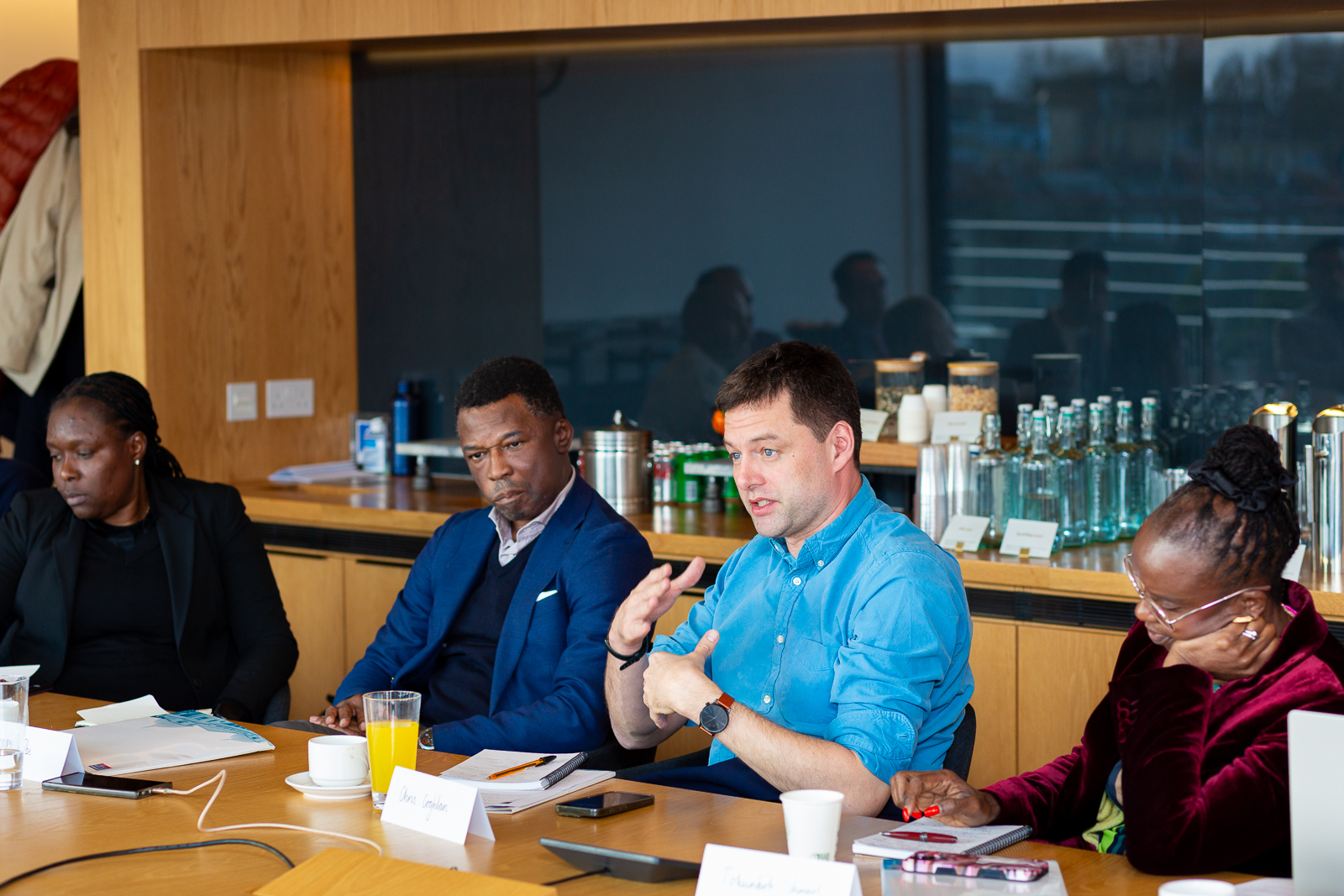
Artificial intelligence is reshaping labour markets worldwide. For African economies, where more than 20 million young people will enter the workforce each year between now and 2050, the stakes are especially high. The Wheeler Institute for Business and Development, DFS Lab, and the LBS Data Science and AI Initiative recently held a panel discussion that…